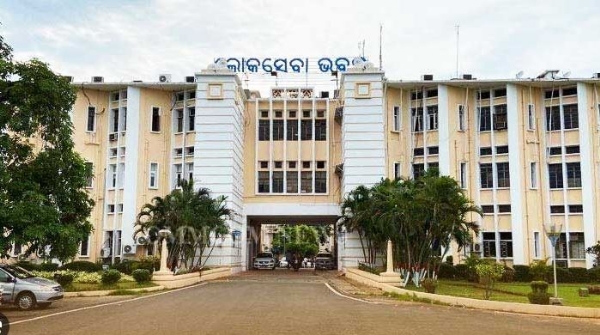
Bhubaneswar, 26 February (H.S.): A two-day state-level policy consultation titled “Vikash Manthan 1.0: Governance in Action” will begin on February 27, bringing together senior administrators, academicians, sectoral experts and civil society representatives to deliberate on Odisha’s future development trajectory. The initiative seeks to translate long-term policy vision into an actionable and participatory roadmap through structured dialogue and collaborative governance.
Organised with the support of the Odisha Centre for Integrated Development (OCID), the consultation will facilitate discussions on governance reforms, social inclusion, economic growth and institutional capacity building aligned with the State’s long-term development vision. The event comes at a critical juncture for Odisha, where strategic planning increasingly requires broader societal participation to ensure measurable outcomes.
The Government’s ambitious Vision Odisha 2036 and 2047 framework outlines a pathway toward inclusive growth, climate resilience, human development and economic transformation. The Vision documents, released on June 20, 2025 by Prime Minister Narendra Modi, generated public optimism and positioned Odisha as a key contributor to India’s goal of becoming a developed nation by the centenary of independence. The roadmap emphasises equitable prosperity, rural-urban balance, sustainable resource utilisation, improved social indicators and modern governance systems.
The inaugural session will set the tone for deliberations. Development Commissioner-cum-Additional Chief Secretary Deoranjan Kumar Singh will deliver the welcome address, followed by a presentation on the State’s vision roadmap by the Planning and Convergence Department. Chief Secretary Anu Garg will give the keynote introductory address, while Organiser editor Prafulla Ketkar will present the special keynote, highlighting collaborative policymaking and the importance of public participation in long-term development targets.
Experts note that while the Vision Odisha framework offers strategic direction, its success depends on stakeholder ownership. Without wider engagement, policies risk remaining aspirational rather than operational. The consultation therefore aims to bridge this gap through dialogue, collective learning and exchange of real-time experiences, identifying practical challenges, regional disparities, financing needs and implementation mechanisms required to meet 2036 and 2047 targets.
Seven thematic sessions will address the State’s development agenda comprehensively. The first focuses on academic and knowledge collaboration, examining the role of universities and think tanks in policy execution and monitoring. The second, Antyodaya Odisha, covers inclusive health and social welfare, including women-led growth and support for marginalised communities. The third session explores agriculture, fisheries, animal husbandry and environmental sustainability.
The fourth session, Samruddha Odisha, will discuss infrastructure, industry, urbanisation and startups as drivers of employment and economic expansion. The fifth, Surakshit Odisha, addresses energy transition, responsible mining and disaster resilience. The sixth, Saksham Odisha, focuses on education, skills and youth empowerment for a knowledge-based economy. The final session, Odia Asmita, examines heritage preservation, tourism development and governance reforms.
The programme will conclude with an open interaction and valedictory address by Chief Minister Mohan Charan Majhi, along with concluding remarks by former ICSSR Chairman Prof. P. Kanagasabapathi. Officials believe the initiative could evolve into a recurring platform for reviewing governance outcomes and strengthening coordination, transforming long-term planning into a collaborative development movement for the coming decades.
---------------
Hindusthan Samachar / Monalisa Panda