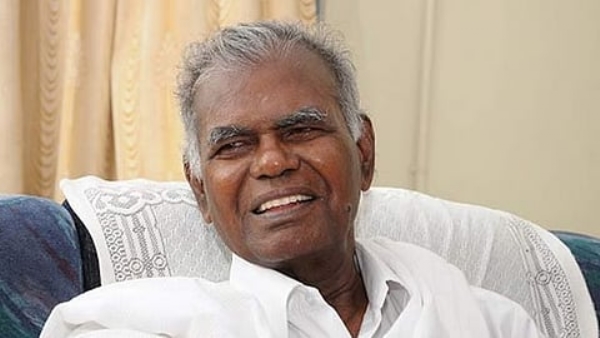
Chennai, 25 Feb (H.S.): R. Nallakannu, the towering Communist patriarch who embodied ideological conviction and personal austerity for over eight decades, passed away today afternoon at the age of 101. His death marks the end of an era in Tamil Nadu politics, where he stood as a rare symbol of unwavering principles and grassroots activism.
He died at 1.55 p.m. at the Rajiv Gandhi Government General Hospital, where he had been receiving advanced medical care for nearly a month. Doctors said he was under continuous monitoring in the intensive care unit after being admitted on February 1 with acute respiratory complications.
Over the past 24 days, a multidisciplinary team of specialists attended to him round the clock. According to an official medical bulletin, his condition had shown intermittent fluctuations, but from Tuesday morning onward, his body responded poorly to treatment. Despite sustained efforts to stabilise him, he succumbed to multiple organ failure.
Chief Minister M. K. Stalin and leaders from across the political spectrum had visited him during his hospitalisation. As news of his passing spread, tributes poured in from political parties, social organisations and civil society groups, who hailed him as a leader of integrity, moral courage and ideological clarity.
Born in 1925 in Thiruvaikundam in the then undivided Tirunelveli district to a humble agricultural family, Nallakannu’s political awakening began during his college years. He took part in mobilising students during the Quit India Movement against British rule, an act that resulted in his expulsion from college.
Deeply influenced by Marxist thought, he joined the Communist Party of India in 1943 at the age of 18. That decision set the course for a lifelong political journey devoted to class struggle, agrarian rights and social equality.
Throughout his public life, he remained steadfast in championing the rights of farmers, agricultural labourers and the oppressed. He led significant movements in the Nanguneri region demanding fair treatment for cultivators and consistently opposed caste discrimination and untouchability. Even after Independence, he was arrested in 1949 amid political crackdowns and reportedly endured severe custodial torture — an ordeal that only strengthened his resolve.
Nallakannu also advocated for prison reforms, including educational opportunities for inmates, drawing from his own experiences behind bars. He later served as the Tamil Nadu State Secretary of the CPI for 13 years, steering the party during turbulent political transitions. Although he contested Assembly elections in 1967, 1977 and 1999, he often maintained that people’s movements mattered more to him than electoral victories.
A recipient of the Tamil Nadu government’s Thagaisal Tamil Award and the Ambedkar Award, he donated a substantial portion of the prize money to party activities and workers’ causes. Known for declining personal comforts and even returning funds raised in his honour, he lived a life untouched by wealth or material ambition.
With his passing, Tamil Nadu loses not just a veteran political leader but a moral compass who represented a politics rooted in sacrifice and service. While R. Nallakannu may no longer walk among the people he fought for, his commitment to justice, equality and human dignity will endure in the struggles he inspired.
---------------
Hindusthan Samachar / Arun Lakshman
25 Feb 2026