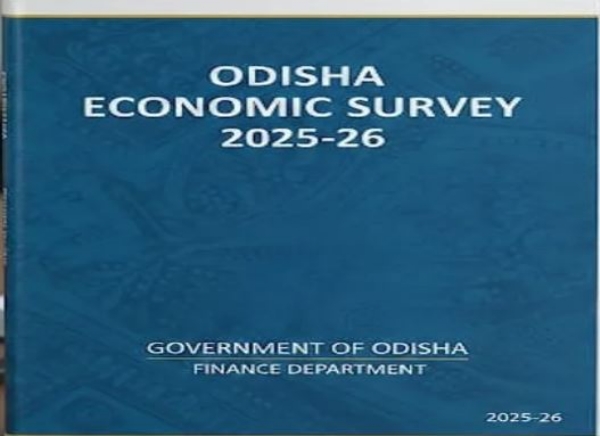
Bhubaneswar, 19 February (H.S.): The Odisha government on Thursday released the Economic Survey 2025-26, presenting a detailed picture of a rapidly expanding state economy powered by strong performance in agriculture, industry and services, increasing investments and improving social indicators. The survey shows Odisha’s growth rate has surpassed the national average while the state continues to maintain fiscal discipline and expand welfare measures.
Odisha’s Gross State Domestic Product (GSDP) at current prices is estimated at ₹9.9 lakh crore in 2025-26, marking a 9.5 percent rise from ₹9 lakh crore in 2024-25. The real growth rate is projected at 7.9 percent, higher than last year’s 7.2 percent and above the national average of 7.4 percent.
The survey attributes this growth to rising public and private investments across sectors and expects the momentum to continue in the coming years. Per capita income rose 9.2 percent to ₹1,86,761, compared to a national increase of 6.9 percent, indicating faster income convergence.
Labour force participation has increased significantly. The overall participation rate for those aged 15 and above rose from 58.1 percent in 2022 to 64.5 percent in 2024, exceeding the national average of 59.6 percent.
Female participation saw a major jump from 37.6 percent to 48.7 percent, much higher than the national figure of 40.3 percent, reflecting growing economic inclusion of women.
Agriculture and allied activities continue to be a major pillar of the state economy, contributing 19.6 percent — higher than the national share of 16.8 percent. The sector grew 5.3 percent, well above the national agricultural growth rate of 3.1 percent. Foodgrain production reached a record 150.5 lakh metric tonnes in 2024-25, including 118.6 lakh tonnes of rice. Crop diversification into cotton, maize, vegetables and spices is also expanding to enhance farmer income.
The state procured 92.6 lakh metric tonnes of paddy from nearly 20 lakh farmers, paying ₹21,300 crore as MSP and ₹7,140 crore in input subsidies. Government procurement accounted for 78 percent of total production, up from 61 percent the previous year.
Ragi procurement also increased to 8.8 lakh quintals, while irrigation coverage expanded to 74.2 lakh hectares and cropping intensity rose to 165 percent.
Milk production reached 27.1 lakh tonnes and egg production rose sharply from 242 crore in 2020-21 to 406 crore in 2024-25. Odisha became the fourth-largest fish producer in India with output of 11.92 lakh tonnes and marine exports worth ₹4,708 crore.
The industry sector contributed 41.3 percent of GSVA and grew 6.4 percent, with manufacturing expanding by 8.3 percent.
In 2025, the state approved 244 projects worth ₹5.66 lakh crore expected to create 3.35 lakh jobs. Eighty implemented projects alone attracted ₹1.75 lakh crore investment and generated 1.4 lakh jobs. Ease-of-doing-business reforms and the Jan Vishwas Bill simplified compliance procedures.
The services sector contributed 39.1 percent of GSVA and is projected to grow 9.3 percent, while financial services may grow 11.9 percent. Investments in technology parks, data centres, AI and semiconductor policies aim to position Odisha as a digital economy hub.
The state maintained strong fiscal health with a debt-to-GSDP ratio of 13.6 percent, well below the 25 percent limit. Interest payments account for only 2.8 percent of revenue receipts. Capital expenditure stands at 6.6 percent of GSDP — among the highest in major states.
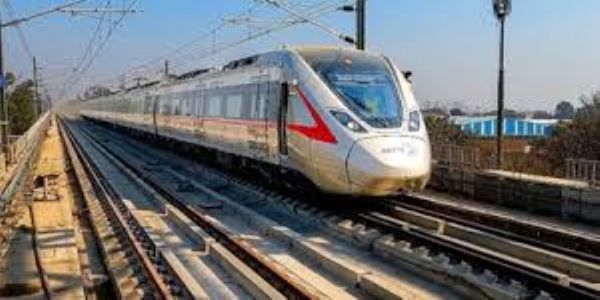
Port capacity expansion is underway, with three operational ports including Paradip. Railways added nearly 200 km of track, increasing the network to 3,243 km, while air connectivity expanded to 30 cities.
Health spending rose to ₹19.7 thousand crore with over 8,500 institutions functioning. Education allocation reached ₹31,185 crore and skill programmes achieved a 93 percent placement rate.
About 69 percent of the population falls in the working-age group. Women-centric programmes created over 16.42 lakh “Lakhpati Didis,” while SC and ST participation in education and industry improved.
---------------
Hindusthan Samachar / Monalisa Panda