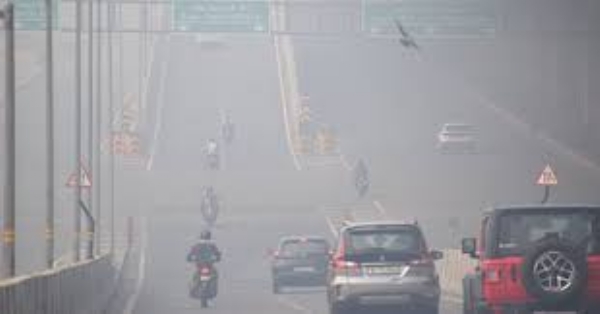
Delhi, 6 December (H.S.): Delhi woke up to a dense layer of smog on Saturday as the city’s air quality deteriorated sharply, pushing the overall Air Quality Index (AQI) to 333, firmly in the “very poor” category. Almost all monitoring stations across the national capital reported hazardous levels of pollution, raising fresh concerns over public health.
The India Meteorological Department (IMD) reported that Friday marked the coldest December morning of the season, with temperatures dipping to 5.6°C, further aggravating pollution stagnation.
According to Central Pollution Control Board (CPCB) data recorded at 7 am, Mundka registered the worst air quality with an AQI of 381. Out of Delhi’s 39 monitoring stations, 35 recorded ‘very poor’ readings, while the remaining four fell under the ‘poor’ category.
Major hotspots included RK Puram (364), Punjabi Bagh (348), Chandni Chowk (348), Rohini (374), Vivek Vihar (309), Bawana (375), Siri Fort (343), Wazirpur (359), Anand Vihar (366), Ashok Vihar (348) and Sonia Vihar (352). Around India Gate and Kartavya Path, the AQI stood at 311, while Ghazipur Mandi reported 366, all under “very poor”.
Delhi’s air quality has fluctuated through the week — from AQI 279 on Sunday to 304 on Monday, shooting up to 372 on Tuesday near the ‘severe’ threshold, before easing slightly midweek. It remained in the “very poor” range on Thursday (304) and climbed again to 327 on Friday.
The Decision Support System (DSS) for air quality management identified vehicular emissions as the largest local contributor at 15.3%, followed by industrial pollution (7.6%), residential sources (3.7%), construction dust (2.1%), and waste burning (1.3%).
Neighbouring NCR regions also contributed significantly, with Jhajjar (14.3%), Rohtak (5%), Sonipat (3.8%), Bhiwani (2.5%) and Gurugram (1.5%) adding to Delhi’s pollution load.
---------------
Hindusthan Samachar / Jun Sarkar

06 Dec 2025
66 Flights Canceled at Ahmedabad Airport as NSUI–Youth Congress Stage Protest Over Indigo Chaos

06 Dec 2025