NewDelhi, 20 December (H.S.): Union Minister for Textiles Giriraj Singh on Saturday emphasized that the Indian textile industry must enhance its technological capabilities to remain competitive in the global market. He urged greater focus on research and innovation to bring transformative changes across the textile sector.
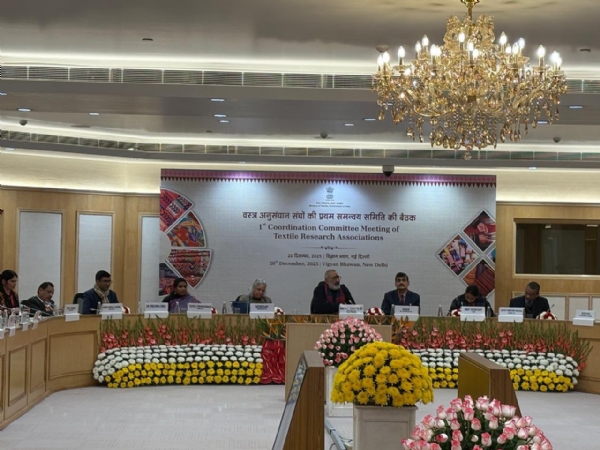
Addressing the first joint meeting of Textile Research Associations (TRAs) in New Delhi, organized by the Ministry of Textiles, Singh underscored the importance of building capacity for sustainable and technology-driven growth. The meeting discussed several crucial themes, including sustainability practices, innovation in new fibers, and the role of research associations in driving industrial transformation.
“Research and innovation are the pathways through which we can achieve the United Nations Sustainable Development Goals (SDGs),” Singh remarked. “It is through these efforts that we can address challenges like Earth Overshoot Day and strengthen our position in the global marketplace by adopting next-generation fibers and advanced textile technologies,” he added.
The minister highlighted that the government is promoting natural fibers such as bamboo, sisal, hemp, and pineapple fiber for industrial applications and employment generation. He revealed that efforts are underway to scale up domestic production of fibers like ramie and flax, which could help reduce India’s trade deficit.
Citing a successful example, Singh noted that India has already reduced sanitary napkin imports by developing indigenous technical fibers. The present challenge, he said, lies in effective disposal and waste management, for which research is being carried out on water-soluble fibers. He further mentioned ongoing work on developing carbon fiber cylinders for hydrogen fuel storage, signaling India’s growing focus on technical textiles and sustainability.
Textile Secretary Neelam Shami Rao and other senior ministry officials cautioned that “no research is truly successful until it moves from laboratory to industry applications.” They urged collaboration among research institutions such as TRA, ATIRA, SITRA, and NITRA, emphasizing the need to accelerate progress in man-made fibers (MMF) and new-age textiles to compete with global players like China.
The ministry, Rao added, envisions transforming India into a “global hub for all-season textiles,” with stronger implementation of the National Technical Textiles Mission and the Production Linked Incentive (PLI) Scheme serving as key enablers of this goal.
---------------
Hindusthan Samachar / Jun Sarkar

20 Dec 2025