Ramanuj Sharma
New Delhi, 15 December (H.S.): Throughout his long and eventful political career, former Prime Minister and Bharat Ratna Atal Bihari Vajpayee remained deeply imbued with the ideology, discipline, and cultural values of the Rashtriya Swayamsevak Sangh (RSS). His unwavering commitment to these ideals earned him the full ideological, moral, and political support of three successive Sarsanghchalaks (RSS chiefs). It was precisely this deep-rooted mutual trust that enabled Vajpayee to navigate ideological complexities and political challenges—even under the leadership of the fifth Sarsanghchalak, K. S. Sudarshan—with remarkable balance and without confrontation.
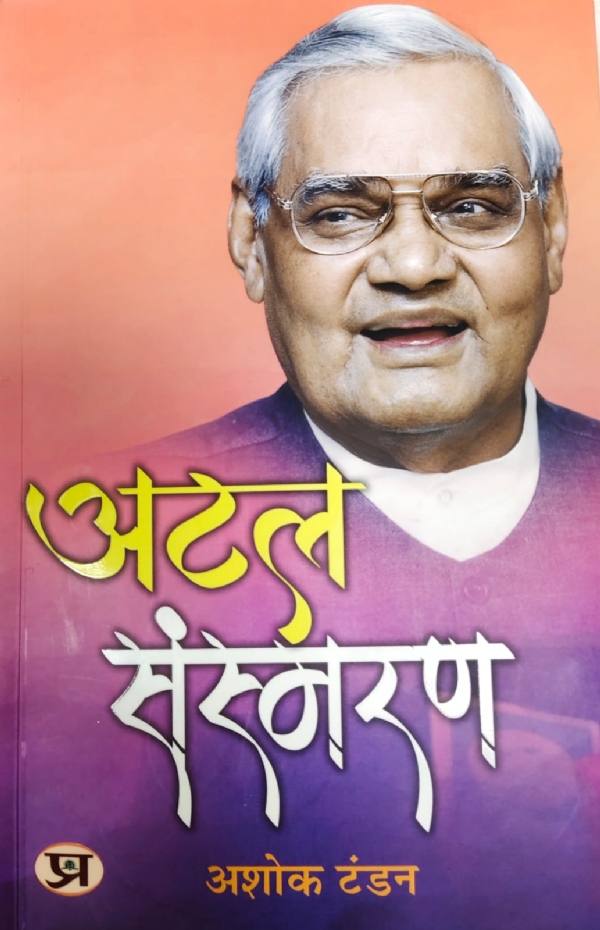
The recently released book “Atal Sansmaran” by veteran journalist and Vajpayee’s former media advisor Ashok Tandon offers an insightful exploration of Vajpayee’s lifelong association with the RSS. It dispels the myth that he ever distanced himself from the organization. Instead, the book demonstrates how deeply the values and cultural ethos of the RSS shaped Vajpayee’s political vision, which in turn earned him constant support from the organization. This ideological connection also enabled the RSS’s political arms—first the Bharatiya Jana Sangh and later the Bharatiya Janata Party (BJP)—to secure a central place in India’s political landscape.
The book is scheduled to be released on December 17 in the national capital, by Union Minister Nitin Gadkari.
The Ideological Compass of a StatesmanDescribing Vajpayee as the “North Star of Indian politics,” Tandon writes that his insight and charisma continue to guide and inspire. His blend of liberal nationalism and pragmatic politics found wholehearted endorsement from the second RSS chief, Madhav Sadashivrao Golwalkar (Guruji), the third chief, Balasaheb Deoras, and the fourth chief, Prof. Rajendra Singh (Raju Bhaiya).
All three recognized in Vajpayee a leader deeply rooted in the RSS’s moral and cultural values. His sincerity and national commitment convinced them to give him ideological space to experiment politically. This trust allowed Vajpayee to emerge as a moderate and inclusive leader accepted across political and social divides.
Even when differences arose with K. S. Sudarshan, the fifth Sarsanghchalak, over issues of ideological purity and political strategy, Vajpayee’s diplomacy and principled restraint ensured that respect remained intact. He managed to balance idealism with pragmatism, never allowing dissent to turn into division.
“RSS Taught Me to Live for the Nation”In his own words, Vajpayee’s connection with the RSS was not merely organizational but profoundly emotional, cultural, and spiritual. On August 27, 2000, as Prime Minister, he visited the RSS headquarters in Nagpur for the first time. There, he met Narayan Rao Tarte, the pracharak who had initiated him as a swayamsevak in Gwalior in 1939.Vajpayee’s tryst with the RSS began in his student days when he first started attending the local shakha. It was here that his political and social consciousness began to take form.
He often said, “The Sangh taught me how to live for my country and society.” That conviction guided his journey from a young swayamsevak to becoming independent India’s first Prime Minister who was himself a product of the RSS ideological ecosystem.
Influenced by Guruji but Never a PracharakThough Guruji Golwalkar influenced Vajpayee profoundly—through his lectures, thoughts, and fiery nationalism—the young leader chose not to become a full-time RSS pracharak. Yet, he remained intellectually and emotionally molded by the organization’s ideals of discipline, selfless service, and patriotism.
When the Bharatiya Jana Sangh was founded in 1951, the RSS recognized Vajpayee’s talent and pushed him into the political forefront. His eloquence, reasoned argument, and moderation made him the articulate face of the political wing. Vajpayee himself acknowledged that Guruji’s philosophy formed the core foundation of his own ideological values.
Among those swayamsevaks who entered politics, Guruji regarded Vajpayee as the most gifted—a natural statesman with the ability to connect ideology with public emotion.
A Relationship Defined by Vision and Mutual RespectThe third Sarsanghchalak, Balasaheb Deoras, viewed Vajpayee’s blend of idealism and realism as essential to the organization’s growth. He often remarked that Vajpayee was not merely an orator but someone who lived his ideas.When some RSS veterans criticized Vajpayee’s adoption of Gandhian socialism, Deoras defended him, arguing that every organization must evolve with time, and an honest leader committed to national service should be free to experiment politically.
Vajpayee deeply respected Deoras and often sought his advice whenever ideological or strategic dilemmas arose.Deoras, in turn, gave Vajpayee ample freedom to make context-sensitive political decisions. This mutual understanding allowed Vajpayee to gain the RSS’s full backing when he emerged as the symbol of a liberal, centrist nationalism, paving the way for his later rise as Prime Minister.
The Rarity of Friendship: Raju Bhaiya and Atalji
While Vajpayee maintained warm relations with numerous RSS leaders, his bond with the fourth Sarsanghchalak, Prof. Rajendra Singh (Raju Bhaiya), was especially personal and transparent.
A physicist and former professor at Allahabad University, Raju Bhaiya combined intellectual depth with organisational discipline. Their friendship transcended hierarchy—it was built on trust, ideological openness, and shared patriotism.
Even when certain RSS members criticized Vajpayee’s moderate image, Raju Bhaiya consistently defended him, stating, “Leaders like Atalji are RSS’s true strength; they bring our ideas closer to the masses.
”During his tenure as Prime Minister, Vajpayee often consulted Raju Bhaiya on issues of moral and ideological complexity. The latter, however, never imposed his views, always allowing Vajpayee the freedom to act according to his own moral conscience and political judgment.
Balancing Idealism and Governance:The Sudarshan ChapterAccording to Tandon’s account, the relationship between Vajpayee and the fifth Sarsanghchalak, K. S. Sudarshan, was marked by intellectual dialogue, mutual respect, and occasional friction.Sudarshan, a devout swayamsevak and committed ideologue, believed the BJP, being in power, should fully implement the RSS agenda—such as the Uniform Civil Code, Ram Temple, and the abrogation of Article 370.
Vajpayee, in contrast, upheld coalition governance, democratic consensus, and political pluralism as practical imperatives.This divergence of approach reflected their distinct temperaments: Vajpayee, the liberal statesman, and Sudarshan, the disciplinarian thinker.
Despite these differences, neither allowed personal bitterness to taint their relationship. Their shared objective—national interest and cultural renaissance—remained firm.As Tandon writes, Vajpayee subtly conveyed that “politics must follow its own wisdom, not merely organizational directives.”
While Sudarshan publicly expressed disappointment over the government’s hesitancy on core Hindu issues, Vajpayee preserved dignity and restraint, never allowing confrontation.
“Politics Runs on Conscience, Not Commands”
The tension became public in 2005 when Sudarshan, in a speech, suggested that Vajpayee and L. K. Advani should retire from politics to pave the way for younger leadership. Vajpayee, visibly hurt yet composed, responded, “I am in the BJP, not the RSS. Politics runs on its own conscience, not commands.”
Despite the remark, Vajpayee’s image as a statesman remained untarnished. His calm, democratic spirit and refusal to engage in polemics only reinforced his stature as a leader above partisan and organizational divides.
Enduring Legacy: Beyond Political MythsAshok Tandon notes that after Vajpayee’s retirement, some political commentators and rival parties attempted to portray him as detached from the RSS and the BJP. However, the massive public mourning that followed his passing—with Prime Minister Narendra Modi, Amit Shah, Rajnath Singh, and countless others walking for kilometers during his funeral procession—reaffirmed where Vajpayee’s heart and soul truly lay.
Tandon recalls, “During television debates, some anchors kept insisting that Atalji had serious differences with the RSS or felt uncomfortable within the BJP. But the truth is, his inner world, values, and inspiration always drew strength from the Sangh.”
Atal Bihari Vajpayee remains an enduring symbol of inclusive nationalism, principled politics, and moral leadership. In the words of those who knew him, he transformed politics into an instrument of human dignity, dialogue, and coexistence—a vision that remains profoundly relevant even today.
Hindusthan Samachar / Jun Sarkar