Kathmandu, 21 September (H.S.): Local authorities from Nepal and China have agreed to conduct technical studies of five glacial lakes located on the Chinese side of the Nepal-China border to assess and reduce the risks posed by potentially dangerous glacial lakes in the border region.
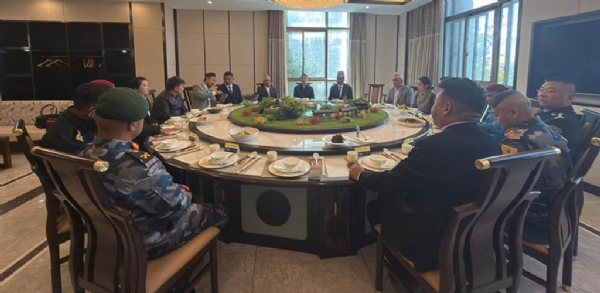
At a recent meeting held in Taklakot, China, the two sides discussed various issues, including potential threats to Nepal from glacial lakes, border management, trade and infrastructure. According to Bhola Nath Guragain, Chief District Officer of Humla, both sides agreed to approach their respective federal governments to initiate technical studies of the glacial lakes located in the Chinese Himalayan region through specialized technical teams.
He said that potential Glacial Lake Outburst Floods (GLOFs) and other natural disasters could cause damage in Humla, particularly in Hilsa and the Kit border areas. Therefore, a technical assessment is necessary to determine the condition of the glacial lakes, the volume of water they contain, the potential risks they pose and their possible impacts.
The meeting was held amid growing concerns over glacial lakes and natural disaster risks on the Chinese side following the devastating flooding of the Bhotekoshi River in Rasuwa, which caused extensive damage.
During the meeting, organized at the initiative of local authorities in Taklakot, the Nepali side shared information about various lakes located in Chinese territory, including Rakshas Tal, Manasarovar, Gonjuka, Abuka and Sirimal.
According to Chief District Officer Guragain, the two sides also discussed using satellite technology to obtain regular updates on the condition of the glacial lakes. They agreed on the need to establish a mechanism for exchanging information on snowfall and weather conditions and for promptly notifying each other in the event of a potential hazard.
Nepal also raised several issues concerning border management, including the condition of border pillars, border passes, the export of agricultural and livestock products, trade fairs, the operation of the Miteri Bridge at Hilsa and the construction of the Hilsa-Simikot road.
Nepal also raised with China the issue of repairing three border pillars. According to Guragain, Border Pillar No. 6 has pillars 2 on the Nepali side, while Pillar No. 7 has pillars 1 and 2 on the Chinese side. Some of these border markers have reportedly been identified as requiring repairs.
The two sides also discussed establishing quarantine arrangements to ensure quality inspections of food products and other goods entering from the border areas. The Chief District Officer said that the process for issuing border passes could be made more systematic and eventually converted into a digital system. The Chinese side also expressed a positive response to the proposal.
The two sides further discussed organizing the annual border haat, or local border market. Nepal raised the issue of creating a conducive environment to facilitate trade and business within an area extending approximately 30 kilometres along the border.
The construction of the Hilsa-Simikot road was also raised as a priority issue during the meeting. Discussions included the possibility of advancing the road project under China’s Belt and Road Initiative (BRI).
According to Mukesh Kesari, Chief District Officer of Bajhang, the meeting was attended by heads of local government bodies, chief district officers and heads of security agencies from the border areas of Bajhang, Darchula and Humla districts.
The Chinese side assured the Nepali delegation that issues that could be resolved at the local level would be implemented promptly, while matters requiring decisions by the central government would be forwarded to the relevant higher authorities.
The meeting also discussed arrangements for providing medical treatment in Taklakot, if necessary, to Nepali security personnel stationed in the border areas and local residents. In addition, a proposal was put forward to invite local officials from Taklakot to visit Humla next year.
To make district-level consultations on Nepal-China border affairs more regular and systematic, the Humla District Administration Office and the relevant authorities in Taklakot also agreed to maintain regular exchanges of information and discuss issues through email. Both sides have initiated the communication process for this purpose.
All issues raised during the meeting will be documented and submitted to the relevant agencies of the Government of Nepal. Matters that can be resolved at the local level will be pursued through coordination between local authorities of the two countries, while policy-level issues will be taken up through the respective federal governments.
Officials attending the meeting said regular coordination between local authorities of Nepal and China was essential not only to reduce the risk of natural disasters in the border areas but also to facilitate trade, movement and infrastructure development.
---------------
Hindusthan Samachar / Jun Sarkar

18 Aug 2026