New Delhi, 06 July (H.S.):
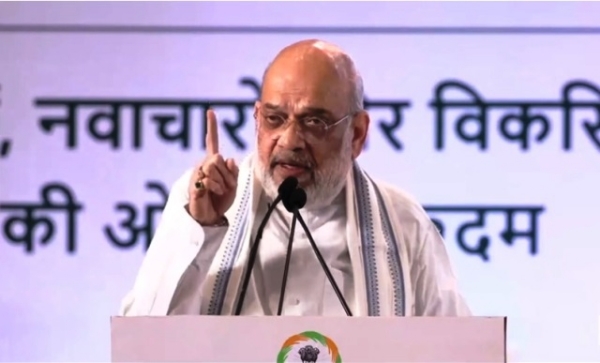
Union Home and Cooperation Minister Amit Shah on Monday said that under the leadership of Prime Minister Narendra Modi, the cooperative sector is no longer treated as a secondary priority in India. He said the creation of an independent Ministry of Cooperation five years ago gave a new identity to a long-neglected cooperative movement and made it clear that the Ministry was established not to interfere in the powers of states, but to strengthen them while making cooperative institutions modern, transparent, technology-driven, and globally competitive.
Addressing the fifth Foundation Day celebrations of the Ministry of Cooperation in New Delhi, Shah said that exactly five years ago Prime Minister Modi fulfilled a 75-year-old demand by establishing a dedicated Ministry of Cooperation, benefiting more than 300 million people associated with the cooperative sector and over 850,000 cooperative institutions across the country. He said the move infused new life into the cooperative movement and laid a strong foundation for its growth over the next century.
Shah said concerns had been raised at the time of the Ministry's formation that the Centre might interfere in the powers of states, as cooperation is a state subject. However, he noted that during the past five years no state had complained of such interference. Instead, he said, the Ministry has focused on supporting states through policy formulation and strengthening cooperative institutions.
He said the government has undertaken several major reforms over the past five years to make the cooperative ecosystem modern, transparent, technology-enabled, and competitive. According to Shah, the cooperative model has been expanded beyond primary-level societies to create a robust national framework covering agricultural credit, dairy, fertiliser distribution, and rural services, while also extending into secondary and tertiary sectors.
The Home Minister announced that a ranking framework has been introduced for cooperative institutions to identify and encourage top-performing societies across various sectors. He also said the proposed Tribhuvan Cooperative University will train professionals in banking, dairy, marketing, agriculture, fertilisers, and other cooperative disciplines, thereby promoting professional management, transparency, operational efficiency, and reducing corruption in appointments.
During the event, Shah inaugurated and laid the foundation stones for several projects. These included the transfer of 135 grain storage warehouses, the inauguration of 85 warehouses, and the foundation laying for 47 additional warehouses. The foundation stone was also laid for Sahakar Van, a joint initiative of Amul and the National Cooperative Consumers' Federation (NCCF), along with tissue culture facilities of the Bharatiya Beej Sahakari Samiti Limited (BBSSL) at Barabanki in Uttar Pradesh and Jalgaon in Maharashtra.
Several digital and institutional initiatives were also launched during the programme. These included NCD 3.0 and a geo-tagging mobile application, the National Dairy Development Board's milk supply review dashboard portal, an initiative to improve dairy animal productivity under the Cooperative Inputs and Services Delivery Multi-State Limited, the Cooperative Milk Producers Organisation Multi-State Limited, and the Gomaya Cooperative Society Multi-State Limited.
Shah also unveiled the National Urban Cooperative Finance and Development Corporation's Sahakar CBS centralised core banking system and Sahakar Sahayogi, an artificial intelligence-based interactive platform for urban cooperative banks.
One of the key highlights of the event was the conversion of 50,000 Primary Agricultural Credit Societies (PACS) into e-PACS, which Shah described as a major milestone in the digital transformation of the cooperative sector. A Memorandum of Understanding was also signed between BBSSL and the Indian Council of Agricultural Research (ICAR) to strengthen the country's seed ecosystem. The Minister also released model by-laws for dairy cooperative societies and a commemorative publication highlighting the achievements of the Ministry of Cooperation over the past five years.
During his address, Shah also paid tribute to Bharatiya Jana Sangh founder Dr. Syama Prasad Mookerjee on his 125th birth anniversary. He said Dr. Mookerjee dedicated his life to strengthening the spirit of nationalism and Indian identity, adding that without his intervention the histories of Kashmir, Assam, and West Bengal might have been very different. Shah said Dr. Mookerjee sacrificed his life while opposing the concept of two constitutions, two prime ministers, and two flags within one nation, and that Prime Minister Narendra Modi fulfilled his vision by abrogating Article 370. He added that the Central Government would commemorate Dr. Mookerjee's 125th birth anniversary across the country on a large scale.
The programme was attended by Union Minister for Fisheries, Animal Husbandry, Dairying and Panchayati Raj Rajiv Ranjan Singh alias Lalan Singh, Rajasthan Chief Minister Bhajan Lal Sharma, Minister of State for Cooperation Krishna Pal Gurjar, Minister of State for Cooperation and Civil Aviation Murlidhar Mohol, Secretary, Ministry of Cooperation Dr. Ashish Kumar Bhutani, Secretary, Ministry of Agriculture and Farmers' Welfare Atish Chandra, Secretary, Department of Animal Husbandry and Dairying Naresh Pal Gangwar, senior government officials, and representatives of national cooperative institutions, cooperative banks, dairy societies, PACS, and other organisations associated with the cooperative sector.
---------------
Hindusthan Samachar / Jun Sarkar

06 Jul 2026