




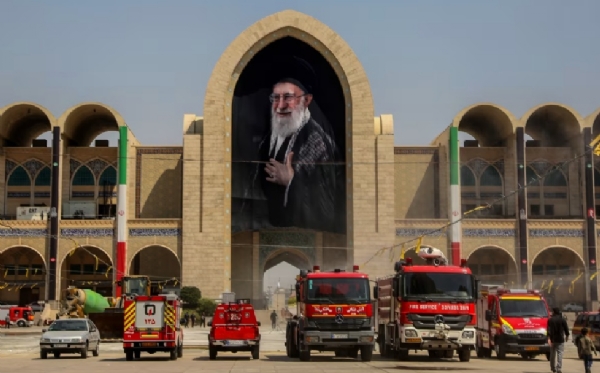
Tehran, 03 July (H.S.): Uncertainty continues over whether Mojtaba Khamenei, the son of Iran's former Supreme Leader Ayatollah Ali Khamenei, will attend his father's funeral ceremonies, despite Iran making extensive preparations for what officials describe as one of the largest state funerals in the country's history. Mojtaba has not appeared in public since his father's death in the joint US-Israeli military operation on February 28.
According to CNN, Iran has organised an elaborate week-long funeral programme across five cities in Iran and Iraq to honour Ayatollah Ali Khamenei, while also sending what observers describe as a strong political message to US President Donald Trump. The ceremonies have been scheduled to coincide with celebrations marking the 250th anniversary of US Independence Day, and millions of mourners are expected to participate.
Iranian officials have described the event as the largest public gathering in the history of the Islamic Republic. Millions of pilgrims are expected to travel through cities and holy sites in Iran and Iraq to pay their final respects to Khamenei. Iraq, where Shia Muslims form the majority, will also host parts of the funeral procession.
Iranian Parliament Speaker Mohammad Bagher Ghalibaf said on Thursday, We must raise our voice before the world to avenge the blood of our nation so that everyone knows the honourable and great people of Iran will never remain silent in the face of oppression. They will not rest until the blood of Khamenei is avenged.
Reports suggest Mojtaba Khamenei sustained serious injuries during the February 28 US strike and has since remained at an undisclosed location under heavy security. The funeral ceremonies were widely expected to provide the first opportunity for him to appear publicly as Iran's new Supreme Leader following the deaths of his father and several family members. However, uncertainty regarding his participation remains unresolved.
Khamenei's body will be placed for public viewing on the day the United States marks its 250th Independence Day.
Sina Toossi, Senior Non-Resident Fellow at the Center for International Policy, said the assassination had elevated Khamenei's symbolic stature.
The assassination has made Khamenei symbolically more powerful and more popular. He is being portrayed like the revered Shia saints, Toossi said.
Iran has previously witnessed only two funerals of comparable scale — those of Islamic Republic founder Ayatollah Ruhollah Khomeini in 1989 and Quds Force commander Qassem Soleimani in 2020. Both events witnessed massive crowds that resulted in fatal stampedes.
Khamenei's body will lie in state at the same venue where Ayatollah Khomeini's remains were displayed before burial. According to the official schedule, the coffin will be placed on an elevated platform inside Tehran's Imam Khamenei Mosalla mosque complex beginning at 6 a.m. local time on Saturday.
Authorities have announced that both international and domestic airports in Tehran will remain closed during the funeral period. Public holidays have also been declared in cities along the funeral route. Tehran, a city of nearly 17 million residents, will implement what officials describe as the largest traffic management operation in its history.
The Basij paramilitary volunteer force said arrangements have been made to distribute approximately 50 million loaves of bread to mourners. The Iranian Red Crescent has deployed 2,500 ambulances, 21 helicopters, 100 drones and thousands of rescue personnel across Tehran and other major cities. More than two dozen hospitals have been placed on standby, along with 500,000 litres of intravenous fluids, while 20,000 classrooms have been prepared as temporary shelters. The government has urged residents of Tehran, Mashhad and Qom to accommodate visitors arriving for the ceremonies.
On the third day of the funeral programme, the procession is expected to travel across Tehran from the eastern to the western parts of the capital. Khamenei's body will then be transported to the holy city of Qom for further religious rites before being flown to the Iraqi holy cities of Najaf and Karbala. The final burial will take place at the Imam Reza shrine in Mashhad, Khamenei's birthplace.
Iranian officials say taking the former Supreme Leader's body to Iraq symbolises the Islamic Republic's vision of itself as a revolutionary force extending beyond national borders and reinforces its influence across the region. Authorities estimate that between four million and 15 million people could participate in the funeral ceremonies.
Meanwhile, speculation continues over whether Mojtaba Khamenei will make his first public appearance during the funeral. Since February 28, he has remained out of public view, communicating with supporters only through written statements. He has neither appeared publicly nor addressed the nation in person. Iranian officials maintain that he has recovered and is leading Tehran's negotiations with Washington. If he attends the funeral, it would mark his first public appearance since the February attack. He also did not attend a memorial gathering held earlier this week for his wife.
Iran's military has warned against any attempt to disrupt the funeral procession. Foreign Minister Abbas Araghchi said Tehran would respond immediately and forcefully to any threat against the country's leadership. His remarks came after Israeli Defence Minister Israel Katz reportedly claimed that plans had been prepared to target Mojtaba Khamenei.
---------------
Hindusthan Samachar / Jun Sarkar
03 Jul 2026