S P Singh
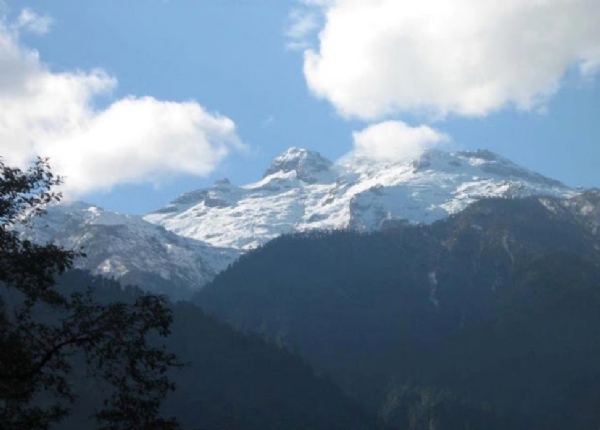
Hidden deep within the eastern Himalaya, the sacred peak of Dakpa Sheri, or the Pure Crystal Mountain, has for centuries stood as one of Tibetan Buddhism's most revered pilgrimage destinations. Rising to around 5,735 metres in the Tsari region, the mountain is not among the world's most famous summits, yet its religious and cultural significance extends far beyond Tibet, linking it closely with India's Himalayan heritage.
In classical Tibetan, dag pa means pure, shel means crystal, and ri means mountain. Together, the name symbolises spiritual purity and enlightenment. For generations of devotees, Dakpa Sheri has represented not merely a snow-clad peak but a sacred landscape believed to guide pilgrims on the path to liberation.
At the heart of its religious importance was the historic Tsari pilgrimage, one of the great pilgrimage traditions of southeastern Tibet. While devotees undertook a shorter circuit around the mountain in most years, every twelfth year—during the Monkey Year of the Tibetan calendar—thousands of pilgrims embarked on the far more demanding Ringkor pilgrimage, traversing dense forests, steep valleys and high mountain passes.
Historical accounts and scholarly research indicate that this longer pilgrimage route extended beyond Tibet into areas that today form part of Arunachal Pradesh. Following the Tsari Chu and Subansiri river systems, pilgrims travelled through territories inhabited by indigenous Himalayan communities, including the Mra and Na peoples. These communities played a vital role by providing shelter, supplies and safe passage, making the pilgrimage a shared cross-Himalayan tradition rather than an exclusively Tibetan religious practice.
The history of Dakpa Sheri highlights the deep cultural and spiritual links between Tibet and India's eastern Himalayan region. Long before modern political boundaries emerged, rivers, mountain trails and pilgrimage routes connected communities across the Himalaya, creating a shared civilisational landscape shaped by faith, trade and cultural exchange.
For the tribal communities of Upper Subansiri and the wider Arunachal Himalaya, this legacy serves as a reminder that their homeland was an active participant in the region's religious history. Scholars argue that the story of Tsari offers an alternative perspective on the eastern Himalaya—not merely as a strategic frontier, but as a landscape bound together by sacred geography, oral traditions and centuries-old pilgrimage networks.
Today, much of the knowledge surrounding Dakpa Sheri and the Tsari pilgrimage survives in academic studies, historical records and the oral traditions of Himalayan communities, as the continuous practice of the pilgrimage has largely faded. Researchers believe documenting ancient routes, place names, folklore and local memories has become increasingly important for preserving this shared heritage.
The story of the Pure Crystal Mountain ultimately underscores a broader truth: the Himalaya has historically served not only as a natural barrier but also as a meeting ground where faith, culture and communities flourished across borders. In that sense, Dakpa Sheri remains a powerful symbol of the shared spiritual and cultural legacy connecting India and Tibet.
Hindusthan Samachar / Satya Prakash Singh
28 Jul 2026