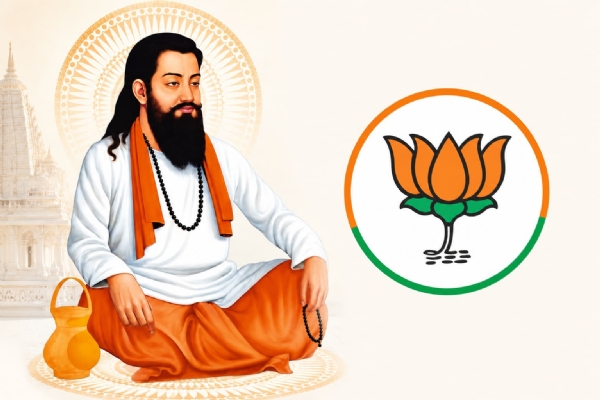
Lucknow, 25 July (HS): Ahead of the 2027 Uttar Pradesh Assembly elections,
the Bharatiya Janata Party (BJP) has outlined its largest socio-political
campaign. The party is now working on a strategy to reach out to the 66
sub-castes of Scheduled Castes, centering Guru Ravidas's message of harmony,
equality, and social harmony. Through this campaign, the organization aims to connect
various sections of the Dalit community with the common discourse of social
harmony, social solidarity, and broader Hindu society.
The Bharatiya Janata Party (BJP) has announced the Shri Guru Ravidas
Maharaj Samrasta Sankalp Abhiyan, a major nationwide social harmony and
outreach campaign that will run from July 29, 2026 to February 20, 2027, to
commemorate the 650th birth anniversary of Sant Ravidas, the revered Bhakti
movement saint. This initiative is a major Dalit outreach campaign ahead of
upcoming political milestones such as the 2027 Uttar Pradesh Assembly
elections.
Social Harmony Message: Led by BJP SC Morcha National President Lal Singh Arya,
the campaign seeks to communicate Sant Ravidas' core philosophies of equality,
social justice, and human dignity.
Electoral Mobilization: The drive strategically anchors the BJP's outreach
to Dalit, backward, and marginalised communities, building on previous
subaltern initiatives such as the construction of the major Sant Ravidas temple
in Sagar, Madhya Pradesh.
Governance Alignment: Senior party leadership emphasizes that the philosophy
of Antyodaya (uplifting the last person in line) driving central/state welfare
schemes is directly inspired by Shri Guru Ravidas Maharaj's vision of an
egalitarian society.
This is being seen in political circles as the BJP's biggest social
engineering move ahead of the 2027 elections. The party believes that sustained
social dialogue among the more than 41.3 million Scheduled Caste voters can
provide a strong foundation for its 2027 election strategy.
BJP State General Secretary for Organization, Dharampal Singh, said that the
campaign will begin on Guru Ravidas Jayanti and continue in phases until his
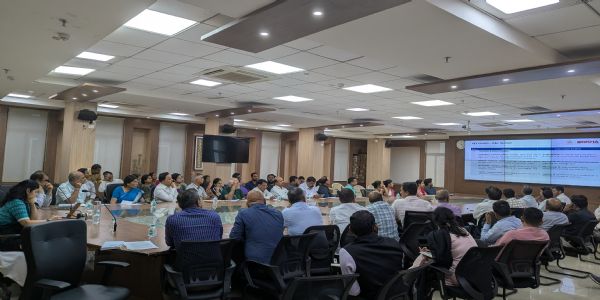
650th birth anniversary. Conferences, seminars, social dialogues,
temple outreach, door-to-door outreach, and meetings of intellectuals will be
held at the state, region, district, division, and booth levels. “Our aim is
not merely to organize religious events, but to transform Saint Ravidas's
message of harmony into a social campaign,” he opined.
An eye on the social base of BSP: The Scheduled Caste population in Uttar
Pradesh exceeds 41.3 million. These include 66 sub-castes, including
Chamar-Jatav, Pasi, Kori, Dhobi, Valmiki, Khatik, Dhanuk, Musahar, and Dusadh.
For decades, a large segment of these communities has been considered the
backbone of the Bahujan Samaj Party (BSP)'s politics. Now, the BJP's strategy
is to strengthen its base by establishing separate social contacts with all
these sub-castes. The organization has directed the party activists to prepare
a list of Ravidas temples, Dalit hostels, coaching institutes, teachers,
doctors, lawyers, entrepreneurs, social workers, and influential families in
each district. Through these individuals, contact campaigns will be conducted
at the village, ward, and booth levels.
Formula for social expansion through harmony: The BJP does not want to limit
this campaign to the Dalit community alone. The strategy is to connect various
sections of the Scheduled Castes with the broader Hindu society through social
harmony and convey the message of a shared social identity. The campaign will
involve continuous communication through temples, social organizations,
student-youth groups, and women's groups. The party believes that by bringing
together beneficiaries of government schemes, social leadership, and local
influential people, a lasting social network can be created. For this reason,
this campaign is also directly linked to organizational expansion and booth
management.
Strategy from history to the future: The Dalit community has always been a
decisive factor in power shifts in Uttar Pradesh politics. Kanshi Ram and
Mayawati transformed this social base into political power through the Bahujan
movement. In later years, the BJP expanded its reach among non-Jatav Dalit
communities. Now, the party is going a step further and attempting to reach out
to all 66 Scheduled Castes.
Political analyst Siyaram Pandey believes that the BJP is preparing to fight
the 2027 election battle with a discourse of social harmony and broad social
solidarity, rather than solely on caste equations. If the party succeeds in
increasing its acceptance among various sub-castes through this campaign, it
could impact the electoral equations in several assembly seats.
Campaign Blueprint
- The campaign will continue till
the 650th Prakash Parv of Guru Ravidas on February 20, 2027.
- The organization will reach out
to all 66 Scheduled Castes of the state.
- Target to reach more than 4.13
crore SC voters.
- Ravidas temple, hostel and
coaching institute will become contact centres.
- A network of influential people
of the society will be created at the district and booth level.
- Emphasis on social harmony,
organizational expansion and dialogue with the wider Hindu society.
Why is this campaign important?
- Special focus on areas with
traditional social base.
- Preparation to strengthen social
reach up to booth level.
- Attempt to convert social harmony
into organizational strength.
- Strategy to strengthen long-term
social base before the 2027 assembly elections.
Hindusthan Samachar / Abhishek Awasthi