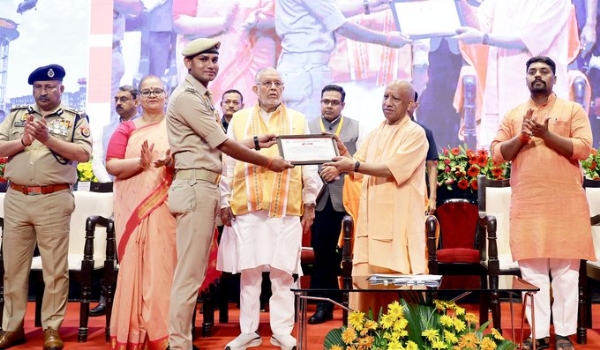
Lucknow, 19 July (HS): Chief Minister Yogi Adityanath on
Sunday claimed that Uttar Pradesh is the first state to designate human-animal
conflict a catastrophe and emphasized the need of boosting public awareness as
well as harnessing technology to reduce the number of lives lost. The chief
minister further stated that over 4,000 people have perished as a result of
human-animal conflict, while over 5,000 more have died in natural calamities.
Yogi Adityanath was speaking at the Lucknow ceremony to inaugurate the Uttar
Pradesh State Disaster Management Authority's new headquarters building.
Referring to the recent death of a 12-year-old kid in a
crocodile attack in Bahraich district, Adityanath stated, A crocodile
completely swallowed a 12-year-old boy near Bahraich only two days ago. If we
had used a little prudence. After all, people are already aware of where
crocodiles are likely to be found. Crocodiles don't go very far. They spend the
most of their life inside a 3 to 5 kilometer radius. On Thursday evening, Sunil
(12), a native of Tikuri village in Bahraich, went to the Ghaghara river to
relieve himself after assisting his uncle, Vijay Raj Singh, with paddy sowing
in the fields. Later, a crocodile appeared from the river and attacked him.
Adityanath spoke about leopards rescued in Bijnor, saying, I was in Bijnor
the day before yesterday. We have rescued 80 leopards in Bijnor during the last
two years. I inquired as to how a large number of leopards had ended up here.
They (officials) stated that their numbers have increased, and that they are
commonly found in the sugarcane belt. People have even begun dubbing them sugar
leopards. Now, if a person is unaware of this, he may easily fall victim to
one. Adityanath added that if we can raise public awareness by identifying the
nature of the threat and the areas at risk, we will be able to save many lives.
The chief minister also emphasized the use of technology to prevent fatalities
from lightning strikes. Adityanath cited an incident in which over 111 people
died in a single day due to storms and lightning. He conveyed his discontent
with the situation and urged on the use of technology, which prompted
authorities to design a strategy within three days. As a result, as thousands of people were
enjoying a 'bhandara' (community feast) at the Shakumbhari Devi temple in
Saharanpur, the government got an alarm and successfully evacuated everyone.
Moments thereafter, a five-foot-high flood of water poured down from the
Shivalik Hills. He stated that if no alarms had been sent at the time, hundreds
of lives may have been lost.
We frequently act and show our sympathy only after a calamity has hit,
resulting in significant loss of life and property. However, I feel that being
vigilant, prepared, and aware of calamities can help to reduce such losses.
This should be a part of our everyday existence. These
issues must be communicated through school curricula as well as family talks,
Adityanath stated. Adityanath stated that awareness campaigns should be held so
that even regular citizens may lend assistance during a calamity.
Disasters do not occur on a consistent basis. During times of tranquility, we
must concentrate on our own training. Furthermore, if we could visit schools
and colleges to educate students and teachers, perhaps by holding a Sunday
conference for district principals to inform them about the necessary
precautions for various disasters, I believe it would be a significant service
to the nation, Adityanath stated.
Our determination is to create Uttar Pradesh a state that is
completely equipped to deal with any tragedy, where every resident can rest
certain that both the government and the people are prepared to confront any
crisis. He stated that this should be a duty of all citizens and the nation.
He stressed the necessity of training, stating that the recruiting procedure
for 45,000 Home Guards had been finished. Aapda Mitras who have undergone
training will be given precedence in this recruitment. Aapda Mitra training
will be mandatory for home guards as well. They are first responders. He also
underlined the importance of improving the Early Warning System's
effectiveness. The chief minister also emphasized on simulated exercises at the
district, tehsil, police station, development block, and urban local body
levels.
All 17 Municipal Corporations should serve as SDMA
sub-centers to expand disaster management programs. He further stated that the
authorities should reach out to more than 200 Nagar Palika Parishads, which
have populations of roughly five lakh people.
Adityanath stated that in the coming years, technology should be further
integrated to improve Day-One Disaster Management by utilizing satellite and
remote sensing monitoring, AI-based risk mapping, predictive analytics-based
Early Warning Systems, mobile-based citizen alert systems, GIS-based
decision-making and digital control rooms, and drone-based search and rescue
operations.
Hindusthan Samachar / Abhishek Awasthi


20 Jul 2026
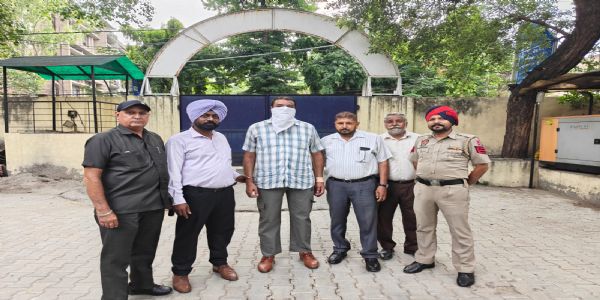
Bangladeshi trio held over illegal stay ,employment at TN scrap yard
Bangladeshi trio held over illegal stay ,employment at TN scrap yard..