Dubai, 24 June (H.S.):
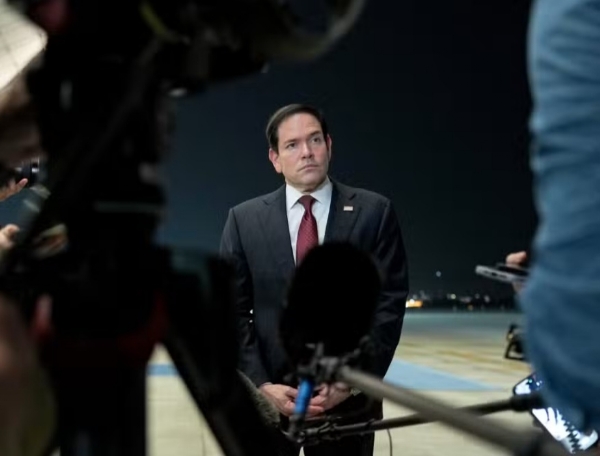
US Secretary of State Marco Rubio on Tuesday rejected any proposal that would allow Iran to impose tolls or transit fees on ships passing through the Strait of Hormuz, saying the strategically important passage is an international waterway that must remain free for global navigation.
Rubio made the remarks at the start of his Middle East visit in the United Arab Emirates, where he stressed that no country has the right to charge fees for passage through an international maritime route. His comments came as the United States and Iran entered a 60-day negotiation period following a preliminary agreement aimed at ending months of military confrontation.
The diplomatic process began after both sides concluded an initial round of talks in Switzerland. Negotiators are expected to discuss sanctions relief, Iran's nuclear programme and the future administration of the Strait of Hormuz, one of the world's most critical oil shipping lanes.
On Tuesday, Iran and Oman announced they would jointly examine the management of the waterway and the costs associated with maritime services while reaffirming their sovereignty over the strait. However, Washington signalled that it would oppose any move that restricts or commercialises international navigation.
The Strait of Hormuz witnessed severe disruption earlier during the conflict when an Iranian blockade sharply reduced commercial shipping, causing global oil prices to surge. Maritime traffic has since begun recovering after the preliminary ceasefire agreement, although vessel movement remains well below normal peacetime levels.
Iranian officials maintained a firm position on the country's defence policy. President Masoud Pezeshkian, speaking during a visit to Pakistan on Tuesday, said Iran would never negotiate over its ballistic missile programme, arguing that the country's missile capability is essential for national security.
Pakistan's Prime Minister Shehbaz Sharif confirmed that the preliminary agreement between Washington and Tehran does not include provisions concerning Iran's missile programme, reflecting one of several sensitive issues left outside the current framework.
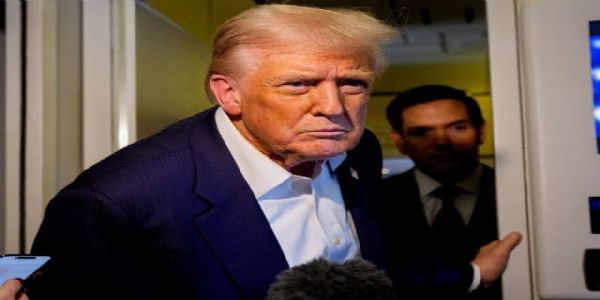
Another point of disagreement emerged over international nuclear inspections. US President Donald Trump said Iran had agreed to extensive inspections of its nuclear facilities. However, Iranian officials denied that any final decision had been taken to readmit inspectors from the International Atomic Energy Agency, highlighting continuing differences between the two sides.
Meanwhile, the United Nations' maritime agency announced plans to evacuate more than 11,000 sailors stranded during the conflict after receiving security assurances from Iran, Oman and the United States.
The United States has also temporarily eased certain sanctions to allow Iran to export crude oil and petroleum products during the negotiation period. According to Iranian state media, Washington has additionally agreed to release frozen Iranian funds as confidence-building measures.
Despite the diplomatic progress, analysts say significant disagreements over missile capabilities, nuclear verification and control of the Strait of Hormuz remain unresolved, making the next two months crucial for determining whether the preliminary agreement can develop into a lasting peace settlement.
---------------
Hindusthan Samachar / Jun Sarkar


24 Jun 2026