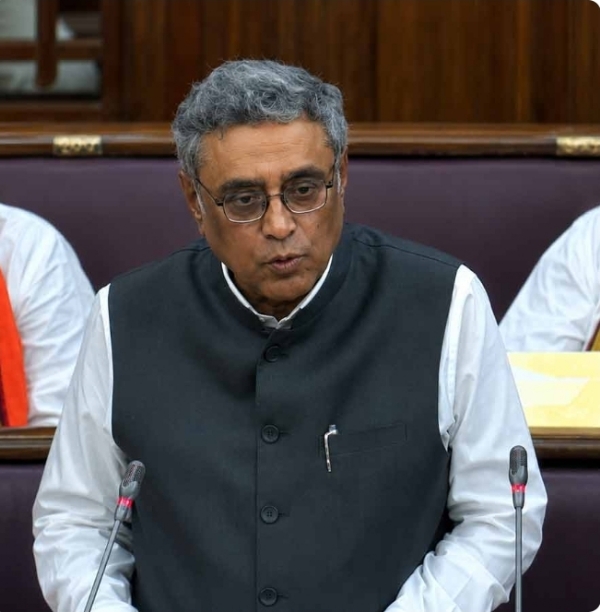
Kolkata, 23 June (H.S.) : The West Bengal government’s Budget for the financial year 2026-27 has indicated a clear policy shift towards industrial growth through region-specific infrastructure development, enhanced social investment and measures aimed at improving the investment climate in the state.
The most significant increases have been made for the North Bengal Development Department and the Paschimanchal Unnayan Affairs Department, which oversees development in western parts of the state. Both departments have received nearly double their previous allocations, underlining the government’s focus on geographically targeted development.
The allocation for the North Bengal Development Department has been increased to Rs 1,821.52 crore for 2026-27, compared to Rs 920.13 crore in the previous financial year. Similarly, the allocation for the Paschimanchal Unnayan Affairs Department has been raised to Rs 1,610.85 crore from Rs 810.04 crore earlier.
Economists believe that the sharp rise in allocations for these departments reflects a strategy to combine welfare-oriented spending with industry-led infrastructure development. The two regions have long faced developmental challenges, but they also possess substantial economic potential in tourism, natural resources, agriculture-linked industries and manufacturing.
North Bengal, with its large tribal population, hilly terrain and forest cover, requires substantial investment in social infrastructure. At the same time, the region offers considerable opportunities in tea, tourism, timber-based industries and medicinal herbs. The government’s increased allocation is expected to support road connectivity, public infrastructure, tourism facilities and livelihood generation in the region.
The western region, covered by the Paschimanchal Unnayan Affairs Department, includes Bankura, Birbhum, Jhargram, Paschim Bardhaman, Paschim Medinipur and Purulia. The region has a sizeable tribal population and has historically lagged behind other parts of the state in several development indicators.
However, the area also holds strong industrial potential. Its forests, red-soil landscape and natural surroundings offer opportunities for nature and eco-tourism. At the same time, the mineral-rich belt has significant coal and other natural reserves. Paschim Bardhaman, in particular, has traditionally been recognised as one of the major industrial zones of West Bengal.
The higher allocation for the region is therefore being seen as an attempt to improve social infrastructure while also creating the conditions for new industrial projects, logistics networks and employment-generating investments.
The Budget has also substantially increased funding for the Commerce and Industry Department. The department has been allocated Rs 3,266.59 crore for 2026-27, more than double the previous allocation of Rs 1,483.97 crore.
The increase comes alongside the government’s announcement of a new policy to improve ease of doing business in the state. Under the proposed mechanism, investment proposals worth Rs 100 crore or more will receive required approvals through a single-window clearance system. The move is expected to reduce delays caused by investors having to approach multiple government departments for separate permissions.
The state government has also signalled a stronger focus on attracting major investments in the services sector, particularly in information technology and information technology-enabled services.
The Information Technology and Electronics Department has received an allocation of Rs 506.18 crore for 2026-27, compared to Rs 217.16 crore in the previous financial year. The more than two-fold increase is expected to support expansion of digital infrastructure, technology parks, electronics manufacturing ecosystems and employment opportunities in the information technology sector.
Political observers have noted that the enhanced allocations also carry political significance. The North Bengal and western districts were among the strongest electoral regions for the Bharatiya Janata Party in the recently concluded Assembly elections.
According to political analysts, the government’s development push in these areas may serve a dual purpose: addressing long-standing regional disparities while consolidating support in districts where the party performed strongly.
With increased spending on regional development, industry, investment facilitation and technology, the 2026-27 Budget appears to lay the groundwork for a broader economic strategy focused on industrial expansion and balanced regional growth.
The success of the strategy, however, will depend on the pace of implementation, the quality of infrastructure created and the government’s ability to translate policy announcements into actual investment commitments and employment generation across the state.
Hindusthan Samachar / Satya Prakash Singh
23 Jun 2026
Pakistan Defence Minister's Remarks an Attempt to Divert Attention from Domestic Issues: India

23 Jun 2026