New Delhi, 18 June (H.S.):
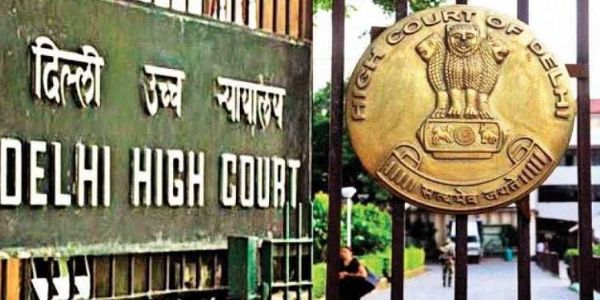
The Delhi High Court on Thursday reserved its judgment on a petition challenging the government’s order to temporarily restrict the messaging platform Telegram in view of the upcoming NEET-UG re-examination scheduled for June 21.
During the hearing, the Central Government submitted that Telegram had increasingly become a tool for illegal activities and described it as a “new dark web” being used by criminals to facilitate unlawful operations and evade detection by investigative agencies.
Solicitor General Tushar Mehta informed the court that the government had already filed its counter-affidavit, arguing that Telegram was being widely misused. He submitted that the platform had been significantly used in connection with alleged irregularities in the NEET examination, which ultimately led to the cancellation of the earlier test.
He further stated that the Ministry of Electronics and Information Technology had issued an order under Section 69A of the Information Technology Act to restrict Telegram until June 22. A separate directive required the platform to disable its message editing feature until June 30. According to the government, these measures were necessary to ensure transparency and prevent disruption in the upcoming re-exam.
Attorney General R. Venkataramani also appeared for the Centre and defended the orders, stating that the government’s action was lawful and proportionate. He argued that in a country like India, preventive measures were essential to maintain the integrity of examinations and prevent misuse of digital platforms. He further said that profit-driven platforms could not avoid regulatory scrutiny under the principle of proportionality, and noted that other platforms were not subjected to similar action due to their internal moderation systems.
During the proceedings, the court questioned Telegram on how such incidents could be effectively prevented, observing that even if action was taken after an alleged paper leak, the damage would already have been done. The court asked what concrete preventive mechanism the platform proposed.
Counsel appearing for Telegram submitted that the platform had complied with all applicable legal standards. He also referred to the Supreme Court judgment in the Anuradha Bhasin case while defending the company’s position. He argued that the government’s reliance on Section 69A was not justified in the present context and stated that no formal recommendation had been made by the concerned authorities for blocking any specific channel.
Telegram further contended that it has around 150 million users in India and warned that a temporary suspension would cause significant inconvenience to its user base. It also challenged the validity of the government’s orders, stating that the regulatory framework under the IT Rules permits emergency use provisions, which, according to the company, were not appropriately invoked in this case.
The High Court had earlier issued notice to the Centre on June 17 in response to the petition. The matter pertains to allegations that Telegram channels were used to circulate leaked NEET examination material, prompting the Ministry to issue orders restricting the app’s operations until June 22 and directing it to disable the editing feature until June 30.
With arguments concluded, the court has reserved its verdict on the matter.
---------------
Hindusthan Samachar / Jun Sarkar