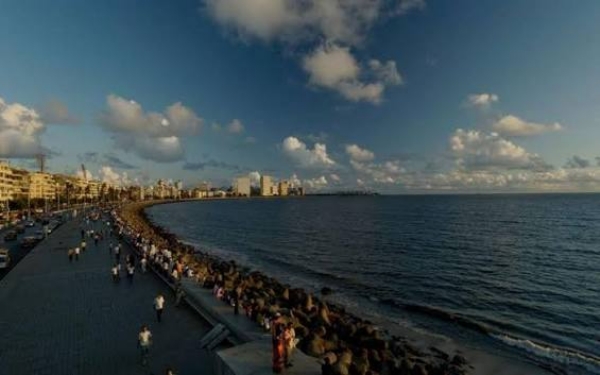
Mumbai, 16 June
(HS): The southwest monsoon of India has stalled after an early start, delaying
its arrival in Mumbai by more than a week. The slowdown has expanded rainfall
shortfalls, depleted reservoir storage, and heightened concerns about El Nino.
India's southwest monsoon has slowed drastically after a promising start,
generating new fears about rainfall shortages, water security, and the rising
effect of a stronger El Nino in the Pacific Ocean. Monsoon cloud cover is
decreasing throughout much of the nation, and rainfall activity has collapsed
since the seasonal rains arrived in southern and central India.
According to the
India Meteorological Department, the country got only 19.2 mm of rainfall
between June 4 and June 15, compared to a normal of 53.7 mm, leaving India with
a roughly 64% rainfall deficit during the time. The slowdown has been most
visible on India's west coast, where Mumbai is still waiting for the monsoon
despite approaching the second half of June. Monsoons often arrive in Mumbai
between June 9 and June 11. This year's arrival was delayed by more than a
week, with meteorologists anticipating another four to five days until the
system moves across the remaining sections of Maharashtra and the central
Arabian Sea.
According to weather forecasters, monsoon conditions in Maharashtra and Gujarat
have substantially decreased. While some development is likely after June 20,
widespread and significant rain may not occur until the last week of June.
A shaky start has
left significant areas of the country dry. According to data from 723
districts, just 103 districts have had near-normal monsoon conditions thus far,
while 236 districts have had light rainfall and another 202 districts have had
extremely weak rainfall.
Mumbai is currently on course to have one of its driest Junes in nearly two
decades. This month, Santacruz Observatory got just 13.1 mm of rainfall, while
Colaba received only 5 mm. The city receives an average of 526.3 mm of rainfall
in June. If the current trend continues, June 2026 might approach June 2014,
when Mumbai received only 87.3 mm of rain, one of the lowest totals ever
recorded. The delayed monsoon is already starting to have an impact on water
resources.
Maharashtra's
reservoirs presently retain just approximately 24.5 percent of their complete
storage capacity, while other reservoirs in Gujarat have reported far lower
water levels. The Sardar Sarovar reservoir alone has a substantial storage
shortfall. Meteorologists ascribe most of the slowing to the absence of
powerful meteorological systems over the Bay of Bengal and Arabian Sea, both
important drivers of monsoon progress. At the same time, global climate
organizations recognized the emergence of El Nino conditions in the Pacific
Ocean. Historically, El Nino has been associated with lesser Indian monsoons.
Since 1950, India has seen 16 El Niño years, several of which were accompanied
by droughts and large rainfall deficits. With Pacific Ocean temperatures rising
quickly, analysts warn that El Nino's effect may strengthen further, providing
a threat to the monsoon season.
Hindusthan Samachar / Abhishek Awasthi

16 Jun 2026
India's respect increasing worldwide, progressing rapidly in all sectors: MP Jagadambika Pal

16 Jun 2026
Assam Seeks Stronger Centre-State Collaboration for Irrigation and Agriculture Development

16 Jun 2026