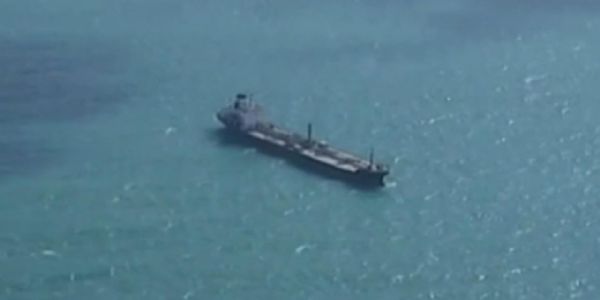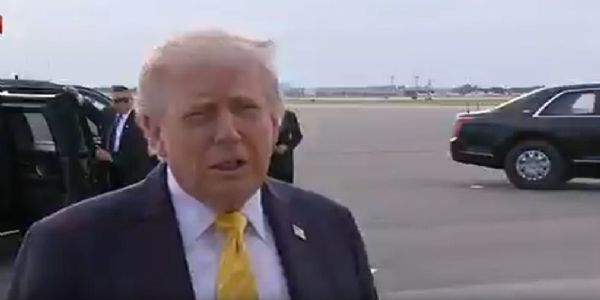
Washington, 08 May (H.S.): In a striking escalation of rhetoric and military action, U.S. President Donald Trump has issued a forceful ultimatum to Iran, demanding the swift signing of a new agreement or face even harsher American retaliation. The statement came hours after U.S. naval forces struck Iranian military targets following an attack on three American destroyers in the region.
Speaking on his Truth Social platform, President Trump declared that U.S. forces had inflicted “great damage” on Iranian attackers while confirming that the three naval destroyers remained unharmed.
“There was no damage done to the three Destroyers, but great damage done to the Iranian attackers,” Trump wrote, vividly describing drones falling “like a butterfly dropping to its grave!”
He followed with a clear warning:
“We'll knock them out a lot harder, and a lot more violently, in the future, if they don't get their Deal signed, FAST!”
The comments mark a continuation of Trump’s hardline approach toward Tehran during his second term, which has combined military pressure with an expressed willingness to negotiate a “complete and final agreement.”
According to Democracy Now, Trump announced on May 6, 2026, that he was pausing the so-called Project Freedom operation in the Strait of Hormuz, citing “great progress” toward a deal—while Iranian President Masoud Pezeshkian has rejected U.S. demands as “impossible.”
Trump’s messaging reveals a dual-track strategy: demonstrating overwhelming military force while keeping diplomatic channels open. The U.S. strikes reportedly targeted Iran’s Qeshm Port and Bandar Abbas, two critical naval and strategic sites. At the same time, senior administration figures, including Secretary of State Marco Rubio, have stated that the “offensive stage” of the U.S.-Israeli campaign against Iran is now over.
Despite the dramatic language, Trump emphasized that he remains open to a deal with Tehran, suggesting that the strikes are intended to bring Iran to the negotiating table rather than initiate prolonged war.
The escalating tensions have heightened global concerns over a wider Middle East conflict. Back-channel negotiations between the United States and Iran are reportedly accelerating, with Pakistani officials suggesting that a de-escalation agreement could be imminent.
However, Trump’s threat of “more violent” future strikes has raised anxieties among allied nations and global markets.
Earlier this week, Trump also expanded his pressure campaign by imposing sanctions on Iraq’s Deputy Oil Minister for supporting Iran, signaling a broader strategy to isolate Tehran economically and diplomatically.
This episode fits a broader pattern in Trump’s second administration, where he frequently employs sharp, confrontational rhetoric combined with decisive military or economic action. Recently, he gave the European Union a deadline of July 4 to finalize a trade deal or face increased tariffs, and has threatened military action against Cuba, calling it “next,” even as AP sources indicate no imminent strike is planned.
As U.S.-Iran tensions reach a critical juncture, all eyes remain on whether Tehran will accede to Washington’s demands—or whether Trump will follow through on his promise of significantly harder and more violent blows.
---------------
Hindusthan Samachar / Jun Sarkar