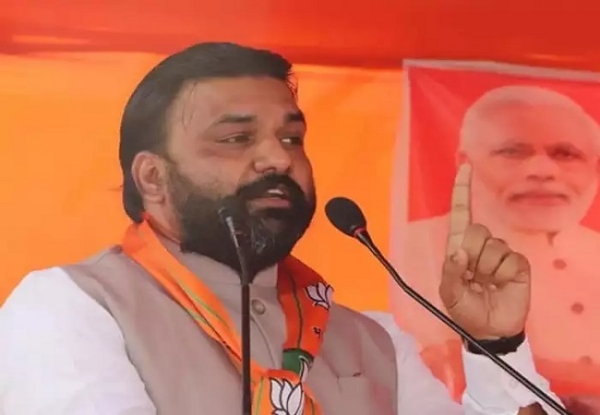
Patna, 04 May (H.S.): As vote‑count trends from the West Bengal Assembly elections show a clear edge for the Bharatiya Janata Party (BJP), a wave of euphoria has swept Bihar, where party workers are celebrating the prospect of the saffron surge in Bengal. Bihar Chief Minister Samrat Chaudhary has joined the chorus of approval, using social media to laud the party’s likely success in the neighbouring state and evoke the legacy of Dr. Syama Prasad Mukherjee.
In a post on X, Chief Minister Chaudhary wrote, “The Bengal that gave birth to Syama Prasad Mukherjee is ours. My heartfelt congratulations to the awakened and patriotic people of Bengal for giving the Bharatiya Janata Party a historic mandate in the West Bengal Assembly elections. Jai Bharat Mata.”
The message, which invokes the memory of the founding ideologue of the Jana Sangh and a towering Bengali nationalist leader, has quickly become a talking point in political circles, especially as the latest trends place the BJP in a commanding position in the 294‑seat West Bengal Assembly.
According to the Election Commission’s latest trend data as of 3 pm, the BJP is leading in 192 seats, while the Trinamool Congress (TMC) is ahead in 96. With the halfway mark pegged at 148, these figures indicate that the BJP is on course to secure a decisive majority and stage a dramatic turnaround in Bengal’s politics after years of TMC dominance.
The indication is that the 2026 Assembly polls could mark a sea change in Bengal, with the possibility of a saffron‑led government in the state for the first time since independence. For Bihar’s ruling leadership, the narrative of a BJP government in Bengal—two important eastern neighbours under the same national‑level alliance—enhances the broader claim of a “western‑to‑eastern” consolidation of the party’s footprint across India.
Chief Minister Chaudhary’s reference to Syama Prasad Mukherjee deliberately connects the party’s present momentum in Bengal with the historical roots of Hindu‑nationalist thought in the eastern region. In the current political climate, the phrase “Bengal hai humārā” (Bengal is ours) has become a rallying cry for BJP supporters, symbolising the party’s ambition to transform the state from a long‑standing TMC fortress into a hub of saffron power.
As the counting continues and the official results gradually supplant tentative trends, the mood in Patna remains one of cautious optimism, with the Bihar administration monitoring the Bengal verdict not just as a neighbouring‑state outcome, but as a potential template for future electoral strategies in eastern India.
---------------
Hindusthan Samachar / Jun Sarkar

04 May 2026