Washington, 12 May (H.S.): The United States has imposed stringent sanctions on 12 individuals and entities accused of facilitating Iran's illicit oil sales to China, intensifying its multifaceted campaign to curtail Tehran's revenue streams amid escalating regional tensions.
In a decisive move announced by the Treasury Department, the sanctions encompass three Iran-based operatives and nine firms primarily domiciled in Hong Kong and the United Arab Emirates, all implicated in obfuscating the Islamic Revolutionary Guard Corps' (IRGC) role within permissive economic jurisdictions. These measures, which freeze any US-based assets and prohibit American transactions with the designated parties, form a critical pillar of the Economic Fury doctrine—a parallel economic offensive accompanying military endeavors to starve Iran's weapons proliferation, proxy militias, and nuclear aspirations.
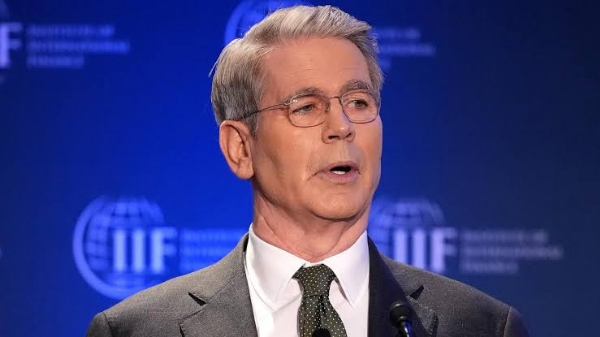
Treasury Secretary Scott Bessent underscored this resolve, declaring that such actions would persist in depriving the regime of vital funding as its forces grapple with reconstitution efforts.
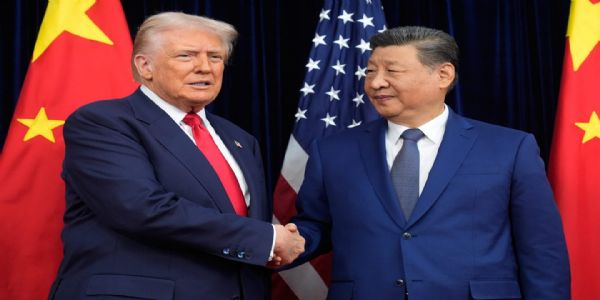
The timing of these sanctions is particularly salient, occurring mere days before President Donald Trump's forthcoming summit with Chinese President Xi Jinping in Beijing, where discussions are poised to address not only bilateral trade frictions but also Washington's imperatives for Beijing to exert leverage on Tehran. China, as Iran's paramount oil purchaser—absorbing over 80 percent of its seaborne exports—stands at the epicenter of this pressure tactic, with prior designations already ensnaring Chinese teapot refineries, shipping conglomerates, and satellite providers abetting Tehran's military logistics.
This latest salvo builds upon a barrage of over 1,000 Iran-related designations since early 2025, encompassing shadow banking conduits, drone component procurers, and ballistic missile precursors routed through intermediaries in Türkiye, Belarus, and beyond.
Compounding the geopolitical strain, the Iranian conflict has precipitated profound disruptions in global energy conduits, notably the near-total blockade of the Strait of Hormuz—a chokepoint for one-fifth of worldwide oil and gas transit—prompting Washington's brief sanctions respite on Iranian crude in March to mitigate supply scarcities, only to reinstate rigors thereafter.
As articulated by Bessent, this economic blockade synergizes with military operations to suffocate Tehran's fiscal lifelines, signaling an unyielding US-Israeli posture that demands accountability for energy market extortion and civilian-targeted assaults via missiles and drones.
Analysts anticipate Trump's Xi parley to foreground these imperatives, potentially catalyzing secondary sanctions on non-compliant Chinese financial institutions, thereby amplifying the transcontinental ripple effects.
---------------
Hindusthan Samachar / Jun Sarkar