New Delhi, 15 April (H.S.):
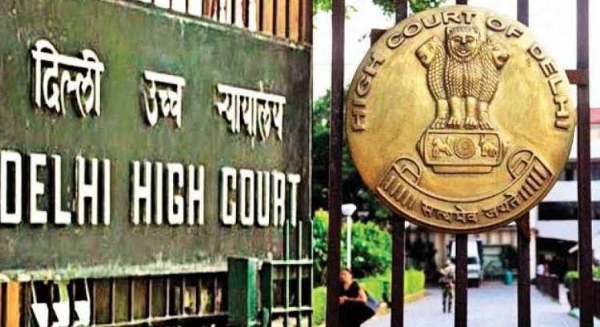
Former Chief Minister of Delhi, Arvind Kejriwal, has filed an affidavit in court on April 13 while personally presenting arguments, leveling allegations against Justice Swarnkanta Sharma of the Delhi High Court. In the affidavit filed on Wednesday in the Delhi High Court, he has reiterated accusations against Justice Swarnkanta Sharma and demanded her recusal from the hearing. In the affidavit, Kejriwal stated that both children of Justice Swarnkanta Sharma work under Solicitor General Tushar Mehta. Tushar Mehta assigns cases to his children.
The affidavit submitted by Kejriwal states that Solicitor General Tushar Mehta represents the Central Bureau of Investigation (CBI) in this matter. In such circumstances, how can Justice Swarnkanta Sharma issue orders against Tushar Mehta? Prior to this, on April 13, Arvind Kejriwal had personally presented arguments, raising questions on Justice Swarnkanta Sharma's bench and demanding her recusal from the hearing. While demanding that Justice Swarnkanta Sharma recuse herself from hearing the case, Kejriwal stated that the manner in which judicial proceedings have unfolded thus far offers no hope of impartial justice. Kejriwal's application included 10 such arguments that also cast doubts on the functioning of investigative agencies and the judicial process.
Expressing distrust in Justice Swarnkanta Sharma, Kejriwal stated that she had deemed the sessions court order incorrect without hearing the opposing side. He remarked that during the first hearing in the High Court on March 9, not a single accused out of 23 was present. Only the CBI was present in court, yet Justice Swarnkanta Sharma declared in the very first hearing, without hearing the other side's arguments, that 'prima facie,' the sessions court order appeared incorrect. Without summoning the records and without hearing arguments, how did the court arrive at this conclusion?
Kejriwal stated that a stay was imposed on the Enforcement Directorate (ED) proceedings without any application. He said that the hearing on April 9 pertained to the CBI's appeal, but Justice Sharma also imposed a stay on the ED proceedings.
According to the accused, neither the Central Government nor the ED had made any such prayer. Legally, if the main case's offense is not proven, the ED's case weakens automatically. The sessions court had concluded the CBI case, which would have ended the ED case as well, but Justice Sharma imposed a stay on her own initiative.
Kejriwal had labeled this matter a 'pre-orchestrated conspiracy' and ordered disciplinary action against the CBI investigation officer. However, Justice Sharma also stayed this action, even though the concerned officer had not filed any application for it. Kejriwal contended that this 'unnatural' proactivity breeds suspicion.
Kejriwal also questioned the court's timing, noting that Justice Swarnkanta Sharma typically grants dates ranging from 3 to 7 months in other cases. Yet, in this matter, she allotted merely one week for the accused to file their response. Responding to a voluminous 600-page order and the CBI's complex appeal within such a short timeframe is virtually impossible.
In his application, Kejriwal stated that when five accused had filed for bail last year, Justice Sharma rejected the bail while making highly stringent remarks. Legally, at the bail stage, no one is deemed guilty—that determination occurs post-trial—but Justice Sharma had already labeled them 'guilty' in her order, indicative of her 'preconceived opinion.'
Kejriwal stated in the application that all these bail orders passed by Justice Swarnkanta Sharma were subsequently quashed by the Supreme Court. Not only were the orders set aside, but the accused were also granted bail, and the Supreme Court made stern observations on Justice Sharma's stance. The application also levels the serious allegation that Justice Sharma accepts the CBI and ED arguments verbatim. Even oral submissions by Solicitor General Tushar Mehta result in immediate orders. The accused contend that acquiescing to every demand of the agencies dims the prospects of justice.
Raising questions on judicial impartiality, Kejriwal claimed that both children of Justice Swarnkanta Sharma are lawyers for the Central Government. They work under Solicitor General Tushar Mehta, who is representing the government and agencies in this case. The application states that due to these familial ties, expecting impartial hearing from Justice Sharma is difficult. The application also points fingers at Justice Sharma's ideological leanings. It claims that Justice Sharma has participated in at least four meetings of the 'Advocate Parishad,' the lawyers' wing of the Rashtriya Swayamsevak Sangh (RSS). Since the accused in this case are vocal opponents of RSS ideology, they fear that Justice Sharma's biases could influence her judgment.
The application references a recent interview of Union Home Minister Amit Shah. Shah had stated that Kejriwal would have to approach the Supreme Court against the High Court order. The accused allege that how did the Home Minister know in advance of the High Court decision, even before it was pronounced, that it would go against Kejriwal? They claim this directly indicates that the decision was predetermined.
Hindusthan Samachar / Jun Sarkar
17 Apr 2026