Islamabad, 11 April (H.S.):
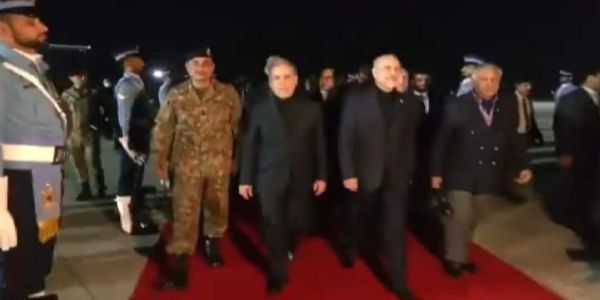
US Vice‑President JD Vance arrived in Islamabad on Saturday to lead Washington’s delegation in critical peace negotiations with Iran, marking one of the most significant direct diplomatic encounters between the two countries since the 1979 Islamic Revolution.
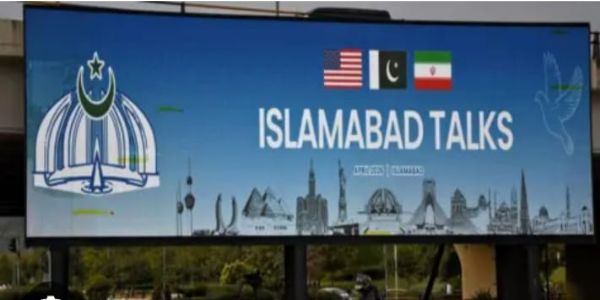
The talks, hosted by Pakistan under tight security, are aimed at shoring up a fragile ceasefire in the Middle East and defining the terms of a more durable truce.
Vance’s arrival and delegation
Vance stepped off Air Force Two at Islamabad’s airport alongside President Donald Trump’s special envoy Steve Witkoff and adviser Jared Kushner, underscoring the high political weight Washington is placing on the mission.
Satellite footage and local reports show a heavy security presence around the Serena Hotel, where the negotiations are expected to take place, with thousands of security personnel deployed and a strict “red zone” around the venue.
Iranian side and Pakistan’s role
Iran’s delegation is led by powerful parliamentary speaker Mohammad Bagher Ghalibaf, flanked by Foreign Minister Abbas Araghchi and key security and financial figures, including members of Iran’s Supreme National Security Council and the central bank governor.
Pakistan’s army chief, Asim Munir, and Prime Minister Shehbaz Sharif have positioned themselves as central mediators, with Sharif describing the talks as “make or break” for any chance of a lasting ceasefire.
What the talks are meant to resolve
Publicly, the agenda focuses on several intertwined issues: the reopening of the Strait of Hormuz, which has been effectively shut since the war began; Iran’s uranium enrichment programme; the status of Lebanon under the ceasefire; and the lifting or easing of US‑imposed sanctions.
Iran has insisted that a Lebanon truce and the unfreezing of its blocked overseas assets must be secured before substantive negotiations can proceed, while Washington has so far refused to extend the ceasefire to Israel’s operations in Lebanon.
Vance’s stance and Trump’s pressure
Before departing, Vance told US media that he believes the discussions can be “positive” if Iran shows genuine flexibility, but he also reiterated that Washington will not accept a deal that allows Iran to advance a nuclear weapons capability.
President Trump has publicly warned that the US is preparing fresh military options if the talks fail, telling the New York Post that American warships are being loaded with what he described as the “best weapons” as a contingency.
Regional tensions and humanitarian toll
Even as diplomats converge in Islamabad, the human cost of the conflict remains stark. Lebanese authorities have raised the death toll from Israeli strikes since early March to over 1,950 people, with more than 6,300 wounded, as another round of brutal attacks killed hundreds in a single day.
Meanwhile, Hezbollah leaders have denounced any direct Lebanon–Israel talks as a violation of Lebanese law and national unity, warning that such negotiations could deepen domestic fractures at a moment of intense pressure.
In the coming hours, the focus will be on whether Vance and his Iranian counterparts can translate their public posturing into concrete measures—particularly around the Strait of Hormuz, Lebanon, and sanctions—that could, at least temporarily, lower the temperature of a conflict that continues to ripple across the wider Middle East.
---------------
Hindusthan Samachar / Jun Sarkar
11 Apr 2026