New Delhi, 01 April (H.S.):
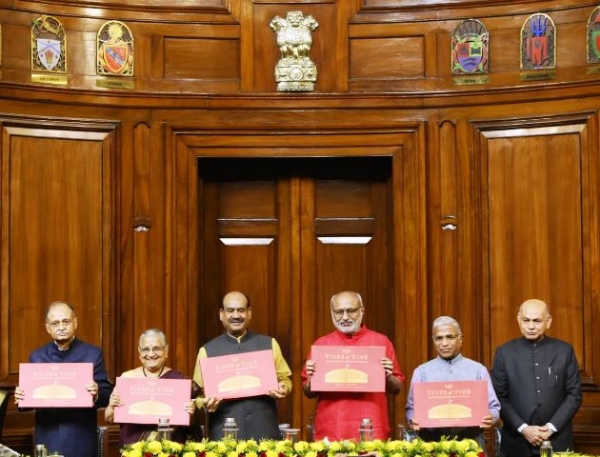
Vice‑President C P Radhakrishnan today released the book ‘Tides of Time: Bharat’s History through Murals in Parliament’, authored by Rajya Sabha member and renowned writer–philanthropist Sudha Murty, at an event in the Samvidhan Sadan (Old Parliament House) here.
Calling the 58 murals inside the Constitution Hall “visual narratives” of India’s millennia‑long civilisational voyage, Dr Radhakrishnan described the country as the “mother of democracy” and lauded the book for bringing history closer to future generations.
Murals as “Living Civilisational Tapestry”
Addressing the gathering, the Vice‑President said the murals in the Samvidhan Sadan are not merely works of art but “living chronicles” of India’s thousands of years of cultural and political evolution.He praised Sudha Murty for “capturing the timeless beauty and profound symbolism” of these panels and stressed that the book will help younger Indians connect with their civilisational past in an engaging manner.
Highlighting continuity in India’s democratic traditions, Dr Radhakrishnan cited ancient examples such as Vaishali in Bihar and the Kudavolai system of democratic decision‑making in South India to underline that India’s culture of dialogue, consensus and respect for divergent views long predates modern constitutionalism.
He argued that this enduring ethos of deliberation is what makes India the “mother of democracy”.
Dialogue, Dissent and the “Mother of Democracy”
Dr Radhakrishnan described Parliament as the living embodiment of democratic principles—dialogue, debate, dissent and discussion—but emphasised that all such processes must ultimately converge towards decisions in the larger national interest.
He noted that the murals bridge ancient philosophical traditions with contemporary governance, symbolising how India today draws strength from its civilisational roots.
The Vice‑President also quoted the Tamil poet Subramania Bharati in praise of India’s knowledge heritage, tolerance and cultural richness, saying these values provide the bedrock for social inclusion and respect for all schools of thought within the country.
Celebrating Heritage and Modernity
Referring to Prime Minister Narendra Modi’s leadership, Dr Radhakrishnan commended the integration of traditional symbols into the new Parliament complex, including the display of the Chola‑era Sengol sceptre during the President’s joint‑session address.
He described such initiatives as vital links between modern India and its civilisational foundations, reinforcing the idea that contemporary governance is rooted in a deep cultural continuum.
On the theme of “Viksit Bharat 2047” , the Vice‑President reiterated the slogan “development as well as heritage”, saying progress and tradition must complement each other rather than remain in tension. He asserted that the parliamentary murals translate this vision into visual form, making the ideals of development and cultural continuity tangible for citizens.
A Journey from Corporate Leadership to Public Service
Dr Radhakrishnan hailed Sudha Murty as a “unique example” of wisdom, humility and social commitment, praising her journey from the corporate world to social service and, finally, to the Upper House of Parliament.He called her parliamentary tenure and authorship of Tides of Time deeply inspiring, underscoring how her work bridges grassroots concerns with high‑level policymaking.
The book, published by the Lok Sabha Secretariat, uses 58 murals in the Samvidhan Sadan to chronicle India’s history from the Indus Valley Civilisation to the freedom struggle. It features depictions of great figures such as Maharishi Valmiki, Chanakya, Mahavira and Gautama Buddha, alongside emperors like Ashoka, Chhatrapati Shivaji Maharaj, and cultural landmarks such as the Konark Sun Temple and the Bhakti movement.
From Independence Struggle to Modern India
Dr Radhakrishnan pointed out that the volume also documents key moments of the independence movement, including the Dandi March, and the contributions of Mahatma Gandhi and Subhas Chandra Bose, weaving them into the broader narrative of India’s civilisational continuity. He stressed that recognising this long arc of history helps citizens understand that India’s democratic experiment did not begin in 1947 but is the latest chapter in an enduring tradition of collective self‑governance.
Calling for unity amid diversity, the Vice‑President asserted that despite India’s linguistic, regional and cultural pluralism, the nation has always been and will remain “one”.He urged citizens to adopt the ethos of “nation first”, serve the country with dedication, honesty and pride, and actively safeguard the values of democracy and pluralism.
High‑Level Attendees at the Event
The book‑launch ceremony was attended by Lok Sabha Speaker Om Birla, Union ministers J P Nadda and Manohar Lal, Rajya Sabha Deputy Chairman Harivansh, the author and Member of Parliament Sudha Murty, along with several other parliamentarians and senior officials.The event underscored an official effort to foreground India’s civilisational heritage within the very architecture where the nation’s laws are debated and shaped.
---------------
Hindusthan Samachar / Jun Sarkar
01 Apr 2026
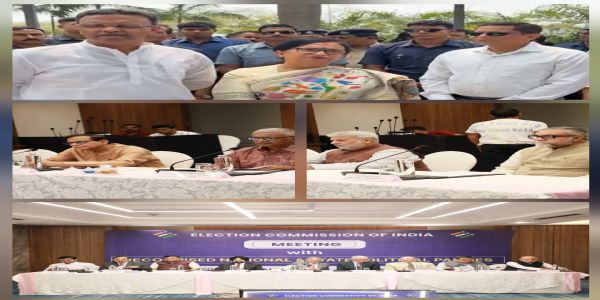
BDO Suspended After Violence At Poll Training Venue In Nadia, Election Commission Orders Action

01 Apr 2026