New Delhi, 01 April (H.S.):
Delhi Chief Minister Rekha Gupta has said that the Indian Council of Agricultural Research (ICAR) has played a pivotal role in strengthening the nation’s food‑producers and steering Indian agriculture from traditional farming to technology‑driven systems.
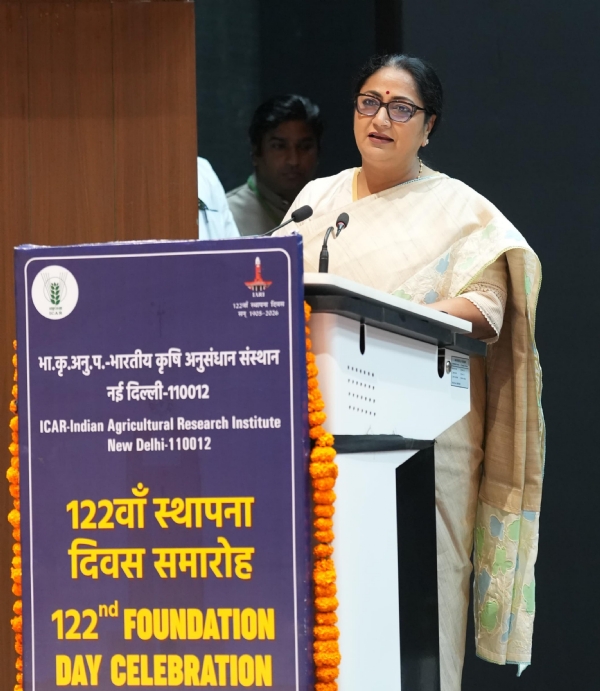
Speaking at the 122nd foundation‑day celebrations of ICAR at the ICAR–IARI campus in the capital, she praised the institution for bridging the gap between the field and the laboratory and giving the country’s farmers the tools and varieties they need to secure food, nutrition and livelihoods.
ICAR, Green Revolution and Modern Farming
Rekha Gupta underlined that ICAR had linked India’s farms with laboratories, laboratories with extension systems and scientists with farmers, thereby enabling the Green Revolution and later transitions to precision and climate‑smart agriculture. She noted that the Council’s research in high‑yielding, disease‑resistant and climate‑resilient crop varieties, improved seeds, efficient irrigation and sustainable practices had helped India achieve food‑grain self‑sufficiency and strengthen food security.
Highlighting the continuity of this work, she said ICAR had not only supported cereals, pulses and oilseeds but also advanced horticulture, dairy, fisheries and allied sectors, ensuring that a growing population could access nutritious food at more stable prices.
The Chief Minister described ICAR’s scientists and researchers as the backbone of this transformation, saying they deserved the gratitude of every Indian.
Book Launch on Crop Varieties, Precision Floriculture
At the event, the Chief Minister released two books authored by ICAR experts: one on “advanced crop varieties for food, nutrition and livelihood security” and another on “precision floriculture and landscape design”. The former focuses on improved and bio‑fortified varieties that help farmers raise yields while enhancing micronutrient intake for consumers, while the latter illustrates how scientific floriculture and urban‑landscape planning can combine beauty with ecological balance.
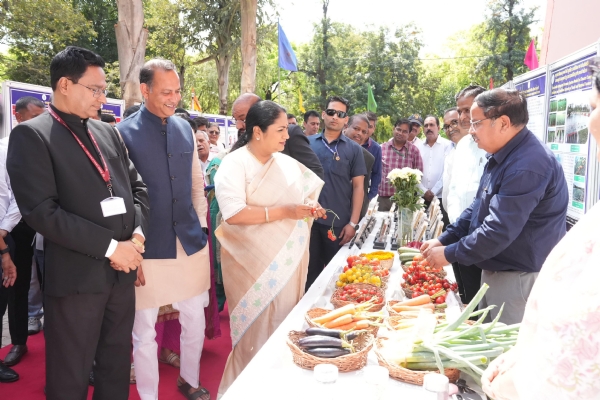
Rekha Gupta visited the exhibition set up on the campus, where ICAR showcased new agricultural technologies, research‑based innovations and models of modern farming, including digital advisories, mechanised operations and integrated pest‑management systems. She interacted with scientists, asked questions about soil‑health management, water‑saving practices and urban‑agriculture techniques, and urged them to scale up outreach to small and marginal farmers across the country.
Environment First: Greening Delhi, Saving Water
The Chief Minister described environmental protection as the most pressing need of the times and called for a concerted push to expand tree cover, practise vertical gardening and strengthen water‑conservation efforts. She urged citizens, institutions and local communities to actively participate in afforestation drives and to prioritise indigenous species such as peepal, neem, banyan and mango in planting programmes.
She also highlighted the Delhi government’s move to formally notify about 4,200 hectares of the Ridge area as a notified green belt, calling it a landmark step towards expanding the city’s green cover. The government has asked ICAR for scientific support on soil‑fertility improvement, urban‑greening strategies and evidence‑based plantation methods to ensure that newly planted areas survive and thrive.
Rekha Gupta stressed the need for balanced use of natural resources, asking scientists, researchers and students to contribute to improving groundwater levels, promoting sustainable agriculture and expanding urban‑farming models. She said Delhi, despite rapid urbanisation, still has nearly 50,000 hectares under cultivation, and the contribution of farmers to the city’s food supply and ecological health remains critical.
Delhi Government’s Commitment to Farmers and Innovation
Rekha Gupta reiterated that the Delhi government is committed to supporting farmers, agricultural research and technological innovation and will continue to invest in initiatives that strengthen the city’s agricultural base. She said the aim is to make the capital’s food‑producers more resilient to climate stresses, market fluctuations and resource constraints, so that the country’s food‑providers can keep feeding the nation while earning a dignified living.
Cabinet Minister Ravinder Indraj Singh, who also spoke at the function, underlined the importance of reviving Delhi’s traditional water bodies such as village ponds and tanks, now referred to as “water bodies”, to improve groundwater levels and water quality. He noted that the excessive use of chemical fertilisers in past decades had damaged soil and adversely affected health, but under Prime Minister Narendra Modi’s leadership farmers were shifting rapidly to organic farming.
Delhi’s farmers, he said, are increasingly adopting organic methods, which not only reduce ecological harm but also open up new market opportunities in high‑value segments. He urged organic producers to be ensured fair prices so that they gain both economic strength and long‑term motivation to continue sustainable practices. Praising the “Green Delhi” vision, he said the combined push for greening and sustainable agriculture would benefit both farmers and the environment, helping transform the national capital into a cleaner, greener and healthier city.
---------------
Hindusthan Samachar / Jun Sarkar

01 Apr 2026