New Delhi, 31 March (H.S.):
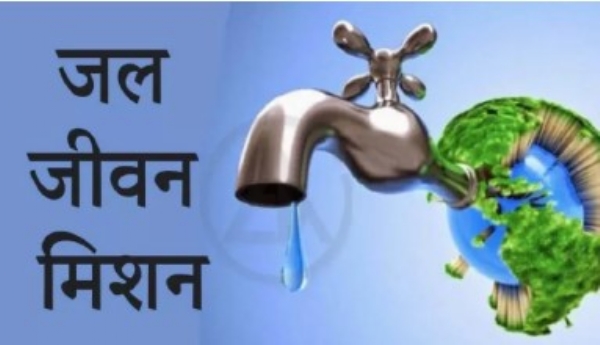
The Central Government has released ₹1,561.53 crore to five states under Jal Jeevan Mission 2.0 (JJM 2.0) for the financial year 2025–26, following Union Cabinet approval and the fulfilment of mandatory compliance conditions. The funds will be used to expand and strengthen rural drinking‑water infrastructure, ensuring safe tap water reaches every household in selected Gram Panchayats.
The Union Ministry of Jal Shakti has stated that the amount has been disbursed to Uttar Pradesh, Maharashtra, Chhattisgarh, Odisha, and Madhya Pradesh, which together account for a major share of the country’s rural population. The State‑wise break‑up is: Uttar Pradesh – ₹792.93 crore, Chhattisgarh – ₹536.53 crore, Madhya Pradesh – ₹154.02 crore, Odisha – ₹65.31 crore, and Maharashtra – ₹12.74 crore. These releases come after the states completed key structural‑reform benchmarks set under JJM 2.0.
The Union Cabinet, chaired by Prime Minister Narendra Modi, approved Jal Jeevan Mission 2.0 on 10 March 2026, authorizing a total outlay of ₹8.69 lakh crore, of which the Central Government’s share is ₹3.59 lakh crore. This represents an increase of ₹1.51 lakh crore over the original allocation of ₹2.08 lakh crore approved in 2019–20. The revamped scheme will now run until December 2028, with an explicit focus on service‑delivery reforms rather than just infrastructure creation.
Before fund release, states and Union Territories are required to meet several conditions, including signing a reform‑linked Memorandum of Understanding (MoU) with the National Jal Jeevan Mission, Department of Drinking Water & Sanitation; registering schemes in the ‘Sujalam Bharat’ GIS‑linked asset registry; providing technical‑compliance certificates; and ensuring financial‑reconciliation and expenditure matching. So far, 12 states have signed such MoUs, signalling their commitment to institutional reforms in rural water supply.
Union Jal Shakti Minister C. R. Patil recently held a meeting with state ministers in charge of public health engineering and rural water supply, where he emphasized that water is a state subject and the success of Jal Jeevan Mission hinges on state accountability and local‑level governance. He reiterated that the mission’s roadmap is now anchored on time‑bound implementation, sustainability, and community‑led management of water systems.
Under Jal Jeevan Mission 2.0, the target is to provide tap water to all 19.36 crore rural households by December 2028. Gram Panchayats will be certified as “Har Ghar Jal” only when assured arrangements for operation and maintenance of local water‑supply systems are in place. The Centre said the recent release of funds to the five states is a concrete step toward that goal, reinforcing India’s push for universal, reliable, and safe rural drinking‑water coverage.
---------------
Hindusthan Samachar / Jun Sarkar