New Delhi, 25 March (H.S.):
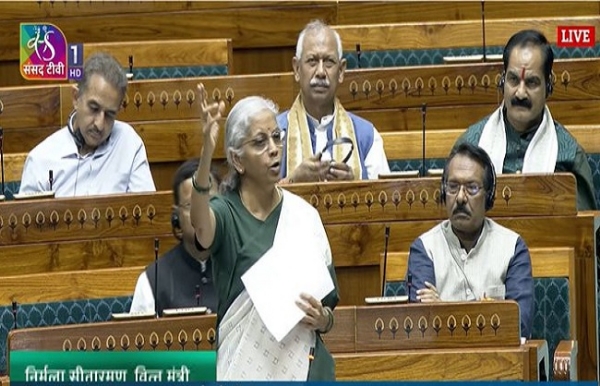
The Lok Sabha on Wednesday passed the Finance Bill 2026 after extensive discussion marking a pivotal step toward implementing the central government's budget proposals for fiscal year 2026-27. Finance Minister Nirmala Sitharaman had introduced the bill in the House on Monday for consideration and approval.
The legislation secured passage with 32 government amendments as Sitharaman responded to the debate asserting India is surging ahead on the path of bold reforms driven not by compulsion but by clear vision confidence and commitment.
Citing Prime Minister Narendra Modi's leadership she declared the nation aboard the reform express charging forward with unwavering resolve.
Sitharaman outlined that the Finance Bill 2026-27 rests on five clear principles including trust-based taxation benefiting the middle class while debunking claims it favors only big business. She noted cess collections from 2019-2024/25 totaled Rs 15.14 lakh crore yet Rs 15.97 lakh crore was disbursed to states via various schemes highlighting fiscal support to federal partners. Challenging critics she questioned why Tamil Nadu embraced PLI investments if the scheme failed to generate jobs.
Key Budget 2026-27 Priorities
The Union Budget emphasizes accelerating growth job creation and inclusive development through capex expansion for infrastructure private investment youth skilling initiatives like Yuvashakti and MSME support via credit incentives. Manufacturing industry agriculture benefit from production-linked schemes industrial corridors irrigation and rural infrastructure while green energy digital governance urban development connectivity education health and nutrition advance human capital.
What is a Finance Bill
A Finance Bill serves as the annual financial instrument presented post-budget to enact tax proposals revenue enhancement measures and taxation changes falling under Constitution Articles 110 (Money Bill) or 117 (Financial Bill). Introduced exclusively in Lok Sabha it becomes the Finance Act upon passage directly impacting income tax rates duties levies disposable income savings investment returns and corporate contributions to the exchequer.
---------------
Hindusthan Samachar / Jun Sarkar

25 Mar 2026