Islamabad, 22 March (H.S.):
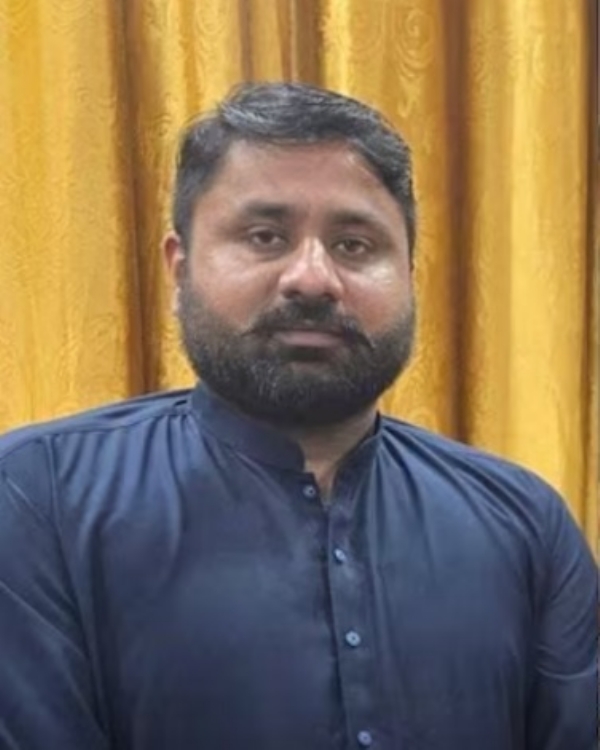
Bilal Arif Sarafi, a senior commander of the Pakistan‑based militant group Lashkar-e‑Taiba, was shot and stabbed to death on Eid day in the town of Muridke, near Lahore. The attack took place on Friday, 20 March 2026, just after Eid prayers, inside the “Markaz Tayyaba” complex, widely regarded as the group’s main headquarters and one of the most heavily guarded jihadist hubs in Punjab.
According to media reports, Sarafi was attending mass Eid prayers at the Markaz Tayyaba compound when unidentified attackers opened fire on him at close range and then struck him repeatedly with a knife. Eyewitnesses described the killing as a highly planned and professionally executed operation. Two assailants were reportedly seen at the scene, with one shooting him and the second stabbing him multiple times.
Despite being rushed to a nearby hospital, medical staff later declared him dead.
Markaz Tayyaba is the same Lashkar‑e‑Taiba complex that was destroyed by Indian armed forces in May 2025 during an operation referred to in Indian media as “Operation Sindoor.”
In the months following the strike, the nearly 1.09‑acre compound was rebuilt, restoring many of the structures and facilities associated with the group’s command and training infrastructure. The fact that the Eid attack occurred inside this fortified headquarters has raised questions about the security and internal control within the organisation and about the possible identity of the perpetrators.
A local intelligence source told media outlets that Sarafi was targeted within minutes of completing his Eid prayers, indicating that the attackers knew his schedule and movements in great detail and had managed to penetrate the security cordon around the Markaz. Initial reports suggest that the killers may have been former associates or rival factions within the broader jihadist ecosystem, though no group has yet claimed responsibility.
Some Pakistani security officials have also pointed to the possibility of a personal vendetta, in addition to the more obvious political and operational motives.
Bilal Sarafi, believed to have joined Lashkar‑e‑Taiba around 2005, was a well‑known figure in the organisation’s recruitment and financing network.
Investigative agencies say he was responsible for identifying and enrolling young men into the group and for helping raise funds through a network of charities and front organisations. The killing of such a senior operational figure inside the Markaz raises concerns about internal instability and potential fractures within Lashkar‑e‑Taiba, even as the group continues to pose a security threat in the region.
The Eid‑day assassination has already prompted tighter security screening at major religious sites in Punjab, and Indian intelligence agencies are monitoring for possible retaliatory moves or shifts in the group’s operational focus. The fact that the attack occurred in the heart of a militant stronghold, rather than in a crowded public space, adds another layer of complexity to the emerging picture of violence and rivalry within Pakistan’s jihadist underground.
---------------
Hindusthan Samachar / Jun Sarkar
22 Mar 2026