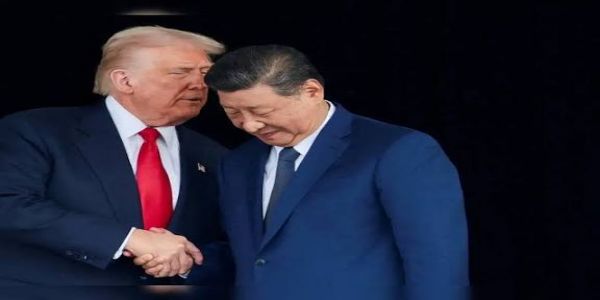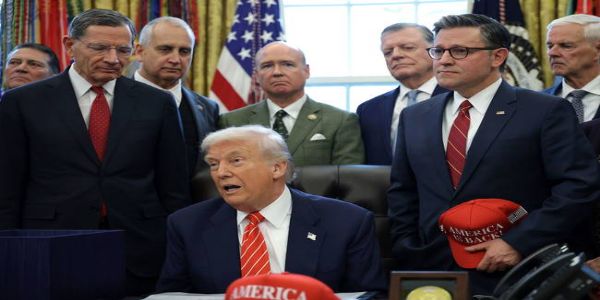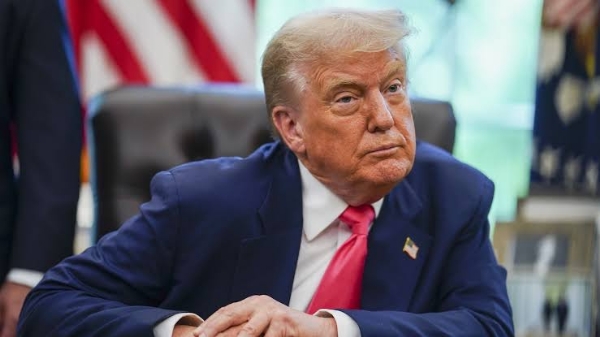
Islamabad, 05 February (H.S.): Pakistan confronts a torrent of domestic indignation following the February 2 announcement of the India-US trade accord, as critics lambast Islamabad's protracted sycophancy toward President Donald Trump—encompassing a Nobel Peace Prize nomination and advocacy for his global peace board seat—for yielding a tariff rate one percentage point steeper than New Delhi's hard-won 18 percent levy on exports.
Despite Army Chief General Asim Munir's and Prime Minister Shehbaz Sharif's assiduous Washington lobbying, Pakistan faces a 19 percent US tariff burden, exacerbating economic woes amid plummeting exports and evaporating foreign direct investment.
Trump amplified the asymmetry via social media, juxtaposing images of India Gate with an India Today cover glorifying his rapport with Prime Minister Narendra Modi, conspicuously omitting reciprocal Pakistani imagery despite overtures like proffered Balochistan rare earth minerals in ornate crates.
PTI stalwart Hammad Azhar excoriated the fiasco on X, positing that 21st-century diplomacy pivots on economic strength, tariffs, and market access rather than sycophancy & photo ops, contrasting India's EU and US pacts as paradigmatic.
X user Umar Ali's viral screed likened Munir to a mistress discarded post-utility, pairing an AI-rendered image of the Field Marshal clutching mineral largesse against Modi's triumphant cover.
Journalist Imran Riaz Khan derided the Salesman-in-Chief gambit as futile—You can give away Balochistan's minerals... but you cannot buy respect—while digital influencer Wajahat Khan framed Trump, the archetypal dealmaker, as discerning a manager and shopkeeper in Pakistan versus India's equitable partner, meting a shopkeeper's bargain accordingly.
PTI luminaries hailed New Delhi's strategic autonomy, personified by National Security Advisor Ajit Doval's reported defiance to Secretary Marco Rubio against coercive trade pressures, versus Islamabad's perceived genuflection bereft of public mandate ballast.
Journalist Asad Toor cautioned that the tariff sting compounds Pakistan's bargaining impotence, with the deal portending a US$150 billion Indian export windfall over a decade via tandem EU and US frameworks dubbed the mother of all trade deals.
The backlash underscores a perennial Pakistani foreign policy schism: personal diplomacy's allure clashing against structural exigencies, as opposition seizes the narrative to assail a regime presiding over eroded leverage.
---------------
Hindusthan Samachar / Jun Sarkar
05 Feb 2026
Would-Be Trump Assassin Doomed to Lifelong Chains: Judge Cannon Delivers Unyielding Verdict
05 Feb 2026