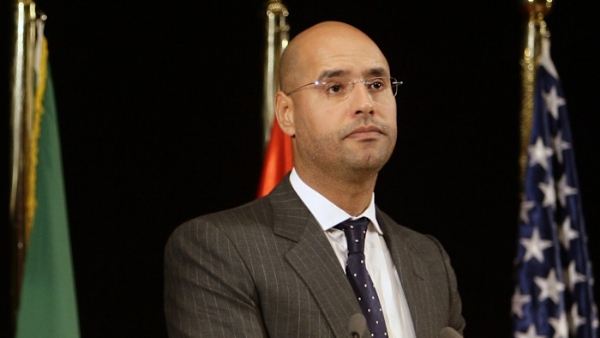
Zintan, Libya, 04 February (H.S.): Saif al-Islam Gaddafi, the once-presumptive successor to his father, the ousted Libyan autocrat Muammar Gaddafi, met a violent end on Tuesday, February 3, 2026, when a quartet of unidentified assailants infiltrated his heavily fortified home in the western city of Zintan.
His French lawyer, Marcel Ceccaldi, disclosed to Agence France-Presse that the brazen assault unfolded precisely at 2:00 p.m. local time (1200 GMT), with the intruders neutralizing surveillance cameras before executing the 53-year-old in cold blood.
Eyewitness accounts relayed through Saif's adviser, Abdullah Othman Abdurrahim, painted a chilling picture of premeditated treachery: the gunmen, described as a four-man commando, stormed the premises, disabled monitoring equipment, and dispatched their target amid a direct confrontation.
Ceccaldi revealed that a confidant had warned Saif mere days prior of deteriorating security, even offering tribal reinforcements from the head of the Gaddafi clan—a safeguard the reformist-turned-fugitive steadfastly declined.
The Libyan Attorney General's Office swiftly launched a formal probe into the slaying, though motives and perpetrators remain shrouded in ambiguity as of Wednesday morning.
Saif al-Islam's trajectory from Western-educated reformer to pariah encapsulates Libya's descent into factional anarchy. Long viewed as the de facto prime minister under his father's iron-fisted rule, he cultivated a veneer of moderation until the 2011 Arab Spring uprisings, when his vow of rivers of blood against protesters shattered that illusion.
Captured in November 2011 by Zintan militias shortly after his father's lynching, he endured a controversial death sentence in absentia from a Tripoli court in 2015 for suppressing the revolution— a verdict later commuted by amnesty amid Libya's schism between the UN-recognized Tripoli government and eastern rivals.
An International Criminal Court warrant for crimes against humanity lingered unfulfilled, even as he announced a quashed presidential bid in 2021.
Libya analyst Emadeddin Badi posited on social media that Saif's demise could martyr him among regime nostalgics while unclogging stalled electoral pathways, given his candidacy's role as a perennial flashpoint.
Muammar Gaddafi's erstwhile spokesman, Moussa Ibrahim, decried the hit as treacherous, recounting a recent conversation where Saif espoused visions of a unified, sovereign Libya. The powerful 444 Combat Brigade, a Zintan-based force, categorically disavowed complicity, underscoring the volatile interplay of militias in this oil-rich North African tinderbox.
This assassination, against the backdrop of NATO-fueled regime change that birthed enduring chaos—riven between Tripoli's fragile unity government and Khalifa Haftar's eastern fiefdom—heralds profound repercussions.
Experts caution it may ignite retaliatory spirals or foreign meddling, as regional heavyweights like Turkey eye Libya's fissures with mounting trepidation. With no official endorsement from Tripoli yet, the inquiry's revelations will test Libya's frayed institutions anew.
---------------
Hindusthan Samachar / Jun Sarkar

18 Aug 2026