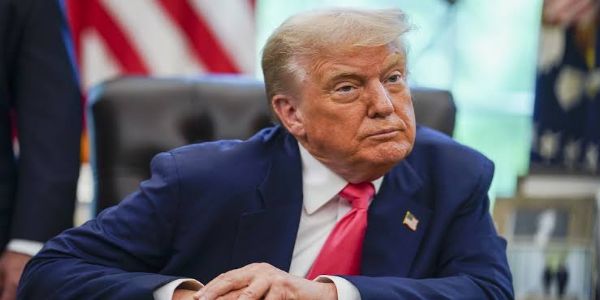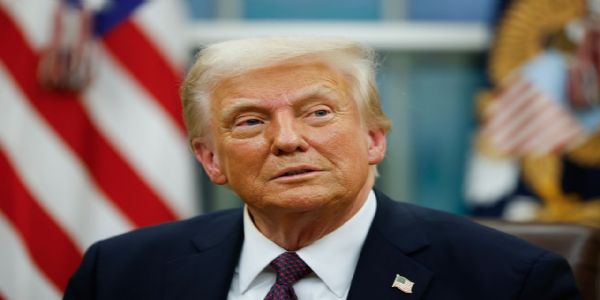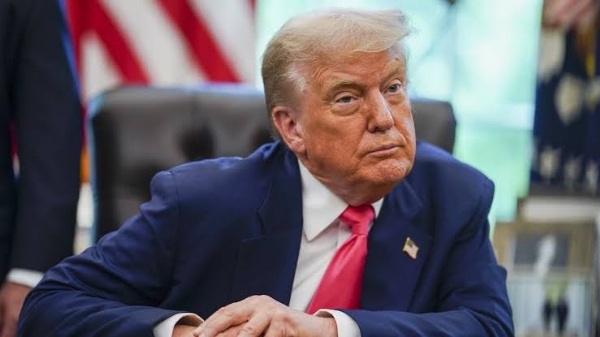
Washington, 20 February (H.S.): President Donald Trump escalated his rhetoric against Iran on Thursday, declaring that Tehran faces a maximum 15-day window to forge a comprehensive nuclear agreement, lest the United States unleash dire repercussions amid an unprecedented military buildup in the Middle East.
Dual Timelines Signal Imminent Deadline
Speaking aboard Air Force One en route from the inaugural Board of Peace summit in Washington—where India participated as an observer—Trump refined his earlier 10-day admonition, stating, We're either going to get a deal or it's going to be unfortunate for them... I would think that would be enough time—10, 15 days, pretty much maximum.
At the morning conclave, he had cautioned, It's proven to be over the years not easy to make a meaningful deal with Iran. We have to make a meaningful deal otherwise bad things happen, adding that revelations would unfold over the next probably 10 days.
The compressed timeline, potentially culminating around March 5-6, follows indirect Geneva parleys on Tuesday, February 17, 2026, mediated by Trump's envoy Steve Witkoff and son-in-law Jared Kushner with Iranian Foreign Minister Abbas Araghchi, who reported modest headway but rebuffed missile curbs or proxy severances.
A senior U.S. official disclosed Iran's commitment to a written rejoinder, with national security principals briefed on February 18 that requisite forces would align by mid-March for prospective operations.
Military Momentum Underpins Diplomatic Brinkmanship
Complementing the verbal salvo, U.S. forces surged on February 17, 2026, dispatching 50 combat jets—F-22s, F-35s, F-16s—bolstered by tankers to Gulf bases, forming the heftiest aerial armada since 2003.The USS Gerald R. Ford carrier, pivoted from Venezuelan waters on February 13, neared the Mediterranean's eastern flank by February 19, pairing with the USS Abraham Lincoln for twin-carrier deterrence capable of shielding Israel and Jordan.
These maneuvers, per Soufan Center analysis, empower sustained airstrikes eclipsing last summer's degradations of Iranian nuclear infrastructure, which Trump claimed obliterated yet yielded unverifiable outcomes sans IAEA access.
Iran's riposte included Hormuz live-fires earlier that week and Russia-joint naval drills commencing February 19 in the Gulf of Oman and Indian Ocean, featuring Revolutionary Guard boardings and anti-ship barrages.
Regional Volatility and Ally Vigilance
Tehran's theocracy reels from January's suppressed protests—commemorated fractiously on their 40th day, February 19—and last year's U.S.-Israeli salvos, yet retains retaliatory reach against regional assets. Polish Premier Donald Tusk urged nationals' exodus from Iran that day, deeming evacuation untenable soon; Germany repatriated Iraqi base non-essentials.
Israeli PM Benjamin Netanyahu, prepping February 28 talks with Secretary Marco Rubio, vowed unimaginable ripostes to aggression, advocating holistic restraints.As oil chokepoints like Hormuz—conveying one-fifth global trade—teeter, Trump's Davos-spawned Board of Peace casts nuclear forbearance as stability sine qua non, with the 15-day fuse igniting a high-stakes dénouement.
---------------
Hindusthan Samachar / Jun Sarkar