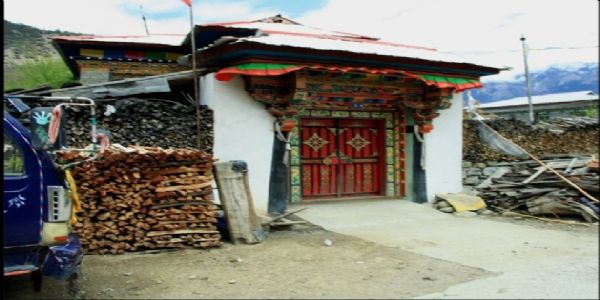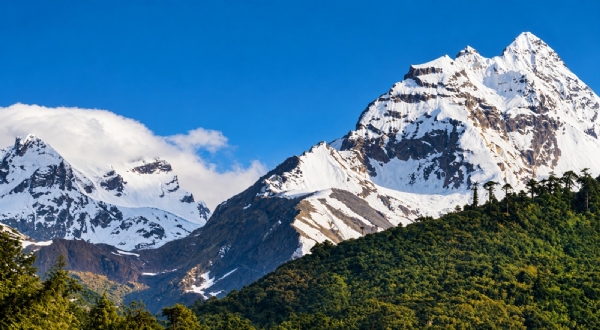
The Himalayas are more than a vast expanse of snow, rocks, and towering peaks; they bear the indelible marks of human faith and ancient traditions. In the Eastern Himalayas lies Dakpa Sheri, a 5,735-meter mountain revered by Tibetan Buddhists for centuries as the Sacred Crystal Mountain. Derived from the Tibetan words Dakpa (sacred), Shel (crystal), and Ri (mountain), the peak is situated in Tibet, yet its spiritual significance significantly predates modern political boundaries. In the Tibetan Buddhist tradition, Dakpa Sheri is not merely a geographical summit but a living divine realm. Its rugged peaks, passes, caves, lakes, and pastures serve as symbols of a profound divine presence, where every stone holds a narrative and every mountain pass offers a deep spiritual experience.
Historically, the mountain was the center of a monumental pilgrimage undertaken every twelve years, during the Monkey year of the Tibetan calendar. Thousands of devotees would embark on a grand circumambulation known as Rongkor Chenmo or Ringkor. This spiritual journey, or Kora, was believed to possess the power to cleanse the sins of multiple lifetimes. However, this path to liberation was fraught with peril. Pilgrims were forced to navigate dense forests, sheer cliffs, and fast-flowing rivers entirely devoid of modern infrastructure such as roads, bridges, or medical aid. Devotees viewed the journey as a walk on the very edge of life and death, where the frequently fog-shrouded, invisible summit of the mountain stood as a powerful symbol of the Buddha's omnipresence.
Central to the mystique of Dakpa Sheri is the reverence for Goddess Dolma, known as Tara in Tibetan Buddhism, the compassionate mother who liberates humanity from worldly sorrows. Sharing deep spiritual roots with the Hindu tradition, where Tara is worshipped as one of the ten Mahavidyas, both cultures revere her as the embodiment of compassion, power, and salvation. Legend dictates that Goddess Dolma grazed her sacred yaks in the mountain's remote pastures, rendering the surrounding stones, lakes, and caves eternally sacred and transforming the physical geography into a living spiritual memory. This sacred geography formed a cross-border route that originated in Tibet, traversed the tribal territories along the Tsari Chu river in what is now Arunachal Pradesh, and concluded back in Tibet. Rather than a political barrier, this landscape functioned as a vibrant corridor for cultural and human exchange. Safe passage heavily depended on the cooperation of local indigenous communities, historically referred to as Lhopa in ancient texts and colonial records, and currently associated with the Tagin and other local groups. To ensure the safety of the pilgrims, the Tibetan administration maintained a mutual social pact, providing these communities with salt, textiles, iron goods, and traditional swords known as Dah, emphasizing mutual trust over political mandates.
The ancient tradition suffered a fatal blow following the last major Rongkor Chenmo in 1956. Escalating tensions between India and China abruptly transformed the spiritual corridor into a highly militarized zone, strictly restricting movement and severing centuries-old cultural ties. Today, Dakpa Sheri finds itself at the center of a modern conflict concerning cultural heritage and geopolitical claims. Cultural historians and advocates argue strongly against the renaming of the mountain to suit contemporary nationalist or administrative agendas. They assert that the ancient Tibetan name, Dakpa Sheri, encapsulates the language, faith, and history of a community and predates modern nation-states. Imposing a new artificial name or external transliteration would be a grave injustice to the mountain's authentic identity. While reviving the perilous physical pilgrimage remains highly improbable under current diplomatic and environmental circumstances, advocates stress the urgent need to preserve its memory. By documenting the ancient routes, safeguarding oral histories, and integrating this heritage into educational curricula, the legacy of Dakpa Sheri can be protected. The mountain remains not just a pinnacle of faith, but a timeless testament that the soul of the mountains will always transcend the artificial borders drawn by humanity.
(The views expressed here are solely the personal opinions of the author, and Hindusthan Samachar holds no responsibility for or association with them )
---------------
Hindusthan Samachar / Satya Prakash Singh