Pakistan Announces Rs 160 Billion Development Package for Terrorism-Hit Province
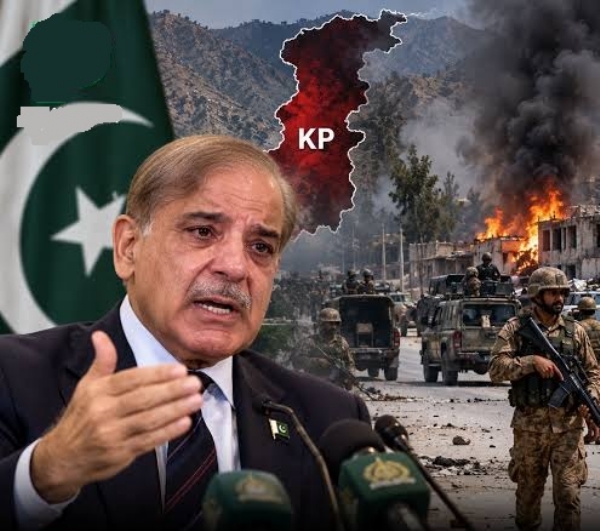
Islamabad/Peshawar, October 23 (H.S.): Pakistan Prime Minister Shehbaz Sharif has defended the imposition of emergency rule and governor’s rule in Khyber Pakhtunkhwa (KP), describing the move as a measure adopted under extreme compulsion. He blamed the previous provincial government led by Pakistan Tehreek-e-Insaf (PTI) for the deteriorating security situation in the province. Meanwhile, the federal government has announced a development package worth 160 billion Pakistani rupees to strengthen security arrangements and accelerate development projects.
According to Pakistani Urdu-language television channel Dunya News and international media outlet Geo News, Sharif reviewed the law-and-order situation, counterterrorism operations and measures to restore peace at a meeting of the provincial apex committee held in Peshawar on Thursday. The meeting was attended by Pakistan’s Chief of Army Staff and Chief of Defence Forces, Field Marshal Asim Munir; Khyber Pakhtunkhwa Governor Faisal Karim Kundi; Deputy Prime Minister Ishaq Dar; Interior Minister Mohsin Naqvi; federal ministers; and newly appointed provincial advisers. The visit marked Sharif’s first trip to Khyber Pakhtunkhwa since emergency and governor’s rule were imposed in the province on October 11.
Sharif said the federal government had been compelled to take the step in view of the deteriorating security situation. He accused the PTI of negligence in tackling terrorism and weakening the province’s security framework. According to the prime minister, Khyber Pakhtunkhwa had become a centre of peace around six years ago, but concerns over renewed militant violence have since intensified. He said the federal government would work alongside the military leadership to restore peace and prosperity, assuring residents that the province would receive development opportunities on a par with those available to other provinces.
The prime minister alleged that Pakistan had begun moving towards stability after a prolonged struggle against terrorism, but the previous PTI-led provincial government had allowed militants to return, contributing to a renewed deterioration in the situation. He stressed that security personnel and ordinary citizens had made enormous sacrifices in the fight against terrorism. According to Sharif, the conflict had claimed approximately 80,000 lives and inflicted economic losses worth billions of dollars on Pakistan.
Sharif also accused the previous provincial administration of neglecting education, healthcare and public safety. He claimed that approximately 5,000 police positions had remained vacant and that the ‘Safe City’ project had not been completed. He further criticised the PTI over alleged failures to strengthen the Counter-Terrorism Department (CTD), improve police training and equip security personnel with modern weapons and equipment. These allegations were made by the prime minister; an independent confirmation of the PTI’s response to them was not available.
The prime minister said Khyber Pakhtunkhwa had received more than 800 billion Pakistani rupees under the National Finance Commission (NFC) Award to support its fight against terrorism. Referring to the 2010 NFC Award, he said it had been agreed that the province would receive additional resources because of its status as a border region affected by terrorism. Sharif questioned why militancy was resurging despite the allocation of such substantial funds.
He also levelled corruption allegations against the previous provincial government. According to the prime minister’s claims, alleged irregularities involving 100 billion rupees in a drinking-water project and 37 billion rupees in a case related to Kohistan had come to light. He further alleged that contracts under a placer-gold project had been awarded to favoured individuals.
Alongside measures to strengthen security, Sharif announced a development package worth 160 billion Pakistani rupees to accelerate projects across the province. Addressing a development council comprising representatives of the tribal districts in Peshawar, he said the federal government stood firmly with the people of Khyber Pakhtunkhwa and would provide the resources necessary to address their concerns. He noted that tribal elders had long expressed concern over the lack of development, terrorism and corruption. The prime minister also directed the relevant authorities to ensure an adequate supply of wheat to these areas.
The meeting also discussed improvements in police training, security arrangements and the implementation of development projects in the tribal districts. The government said security measures and development initiatives would be pursued simultaneously.
The federal government has established a separate ‘Regional Development Secretariat’ to monitor development projects in 12 terrorism-affected districts of the province. These include Dera Ismail Khan, Tank, Lakki Marwat, Bannu, Bajaur, Mohmand, Khyber, Kurram, Orakzai, Upper South Waziristan, Lower South Waziristan and North Waziristan.
In addition, an 11-member advisory council has been constituted to assist the governor in administering the province. The government has also approved the deployment of the Pakistan Army under Article 245 of the Constitution to assist the civil administration.
On the recommendation of the federal cabinet, President Asif Ali Zardari approved the imposition of emergency rule under Article 232 and governor’s rule under Article 234 of the Constitution on October 11. Following the decision, the terms of Chief Minister Sohail Afridi, his provincial cabinet and provincial advisers came to an end, and administrative powers were transferred to Governor Faisal Karim Kundi.
The federal government cited the deteriorating security situation and the alleged lack of adequate cooperation from the then PTI-led provincial administration in counterterrorism operations as the reasons behind the move.
Sharif said the people of Khyber Pakhtunkhwa had endured years of terrorism and inadequate access to basic facilities. He pledged to prioritise peace, education, healthcare and development projects across the province. He reiterated that the federal government would work with the military leadership and local administration to improve security and provide better public services.
However, the political and constitutional implications of imposing emergency and governor’s rule, as well as the actual implementation of the development package, will remain under scrutiny. The coming months will reveal the extent to which the government’s security commitments and development announcements translate into tangible improvements on the ground.
---------------
Hindusthan Samachar / Jun Sarkar

18 Aug 2026