#Dr. R. B. Chaudhary
The challenge posed by stray and unproductive cattle, particularly in India's agricultural heartlands, is widely acknowledged. However, this crisis is increasingly being viewed through a new lens as the foundation for a massive, sustainable rural economy. The movement to harness the untapped potential of cow dung (Gobar) and cow urine (Gomutra) is gaining significant momentum, transitioning from a niche concept to a national priority backed by economic data and political will. This economic shift, often termed the 'Cow Economy,' promises not only a solution to the stray cattle problem but also a path to empowering villages, generating vast employment, and fostering organic farming.
State Response for the Stray Cattle Crisis:
Official data from the 2019 Livestock Census indicates that Uttar Pradesh alone had approximately 11.84 lakh stray cattle roaming in the open. The presence of these animals results in colossal agricultural losses, estimated to run into crores of rupees annually for farmers across the state, who often spend nights guarding their fields against crop damage. The scale of this problem has necessitated significant governmental intervention.
Increasing Movement of the Gaushala:
To address the menace of stray cattle, both registered and unregistered organizations across the country operate cow shelters. In Uttar Pradesh, the state government has been actively working to provide refuge for these destitute animals. Under various schemes, including the establishment of 6,889 Kanha Upvans (cow shelters), the state currently protects an estimated 11.89 lakh bovine animals. This massive care operation involves substantial expenditure, with crores of rupees being spent annually.
The Sincere Efforts of the UP Govt.:
A significant portion of this expenditure comes from government funding. For instance, the Uttar Pradesh government spent approximately ₹355 crore in just three years (2018-2021) to address the stray cattle problem, with additional funds sourced from donations. A key component of the state's ambitious welfare programs is the Mukhyamantri Nirashrit Besahara Govansh Sahbhagita Yojana, which provides a grant of ₹50 per day per animal for the upkeep and nourishment of cattle housed in these shelters, a vital step in ensuring the well-being of the bovines and alleviating the economic burden on shelters.
Unleashing the Cow Economy:
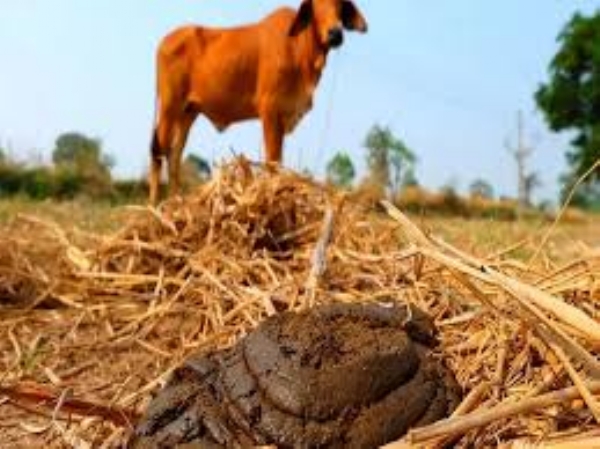
Beyond welfare, the focus is now shifting to making these cow shelters self-reliant and converting their by-products into valuable commodities. Research and studies across the country have highlighted the profound economic potential lying within cow dung and urine. Data suggests that an average cow produces between 9 to 15 kilograms of fresh dung daily. Utilising this output efficiently could lead to the creation of as many as 8.4 million new jobs in rural India.
Manufacturing and Sale of Gaushala Products
Furthermore, authentic figures indicate that the manufacture and sale of various products derived from cow dung and urine could contribute between 1.2 to 1.8 per cent of India’s total national income by the year 2030. Should this projection materialize, the total economic value of this sector could soar to approximately ₹1,49,180 crore. The potential revenue streams are broken down broadly into three key areas: 57 per cent from energy production (biogas/bio-CNG), 29 per cent from agriculture and related activities (organic fertilizers, pesticides), and 14 per cent from the substitution of chemical fertilizers and other industrial raw materials.
Economic Benefit of Bio-products:
The environmental and economic benefits of bioproducts are also quantifiable. Setting up a standard biogas plant, for example, can save 8.5 kg of firewood, 0.29 kg of petroleum fuel, and 1.6 kg of chemical fertilizer daily. An alternative calculation shows the potential for 30 lakh tonnes of cow dung and urine manure to be directly utilized in agricultural fields. This shift from viewing cattle as a liability to considering them part of a system of 'Dry Cattle Farming'—a term more suitable than 'stray' or 'destitute'—marks a crucial change in economic perspective.
National Call to Action:
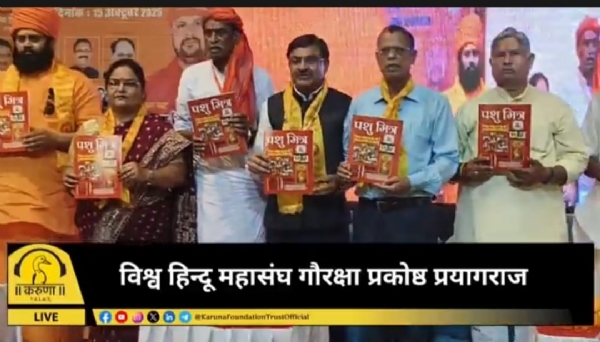
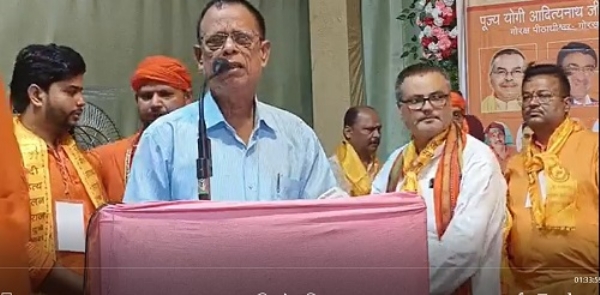
To accelerate this mission of making cow shelters self-sufficient and integrating them into the formal economy, the Uttar Pradesh unit of the Vishwa Hindu Mahasangh (World Hindu Mahasangh) organized a national symposium in the holy city of Prayagraj on October 15, 2025. The event brought together scientists, experts, and policymakers from across the nation to discuss strategies for leveraging the cow-based rural economy. Under guidance of the President, Vishva Hindu mahasangh Uttar Pradesh, Bhikhari Prajapati and President -Gau Raksha Unit aap Vishva Hindu mahasangh, Uttar Pradesh Pravin Dube , the National Seminar on Sustainable Gaushala in ine Prayagraj Uttar Pradesh was organised and more than 700 Gaushala representative and animal lovers attended the seminar. The Seminar was coordinated by Sushil Kumar Pandey, Sarvesh Sharma and Engineer Kuntak Mishra of the Hindi sahitya Sammelan, Prayagraj.
Seminar Attended by Several Eminent Experts: The seminar featured contributions from several eminent personalities, each presenting their unique perspectives on the implementation and potential of this economic model:
Dr. Vallabhbhai Kathiria , the Founder and former Chairman of the Rashtriya Kamdhenu Aayog, shared his extensive vision for leveraging the national commission's framework to boost the cow-based economy.
Dr. Niranjan Verma , Vice-Chancellor of the Panchgavya Vidyapeeth in Tamil Nadu, spoke on the scientific validity and educational requirements for scaling up the production of Panchgavya-based products and he elaborated the activities by setting up Wiliness Centres at Gaushala.
Engineer Gaurav Gupta , founder of Rural Hub Innovation Limited, highlighted the success of his organisation in providing national and international market access to a group of 490 farmers engaged in organic farming using cow dung and urine.
Professor Dr. Siddharth Jaiswal, an Agri-Business Professor at Birsa Agricultural University, presented a business perspective on transforming cow shelters into viable agri-business hubs through effective management and marketing strategies.
Justice Dr. Shekhar Yadav of the Allahabad High Court addressed the legal and administrative support required to protect the cow and ensure the successful operation of cow shelters as economic entities.
Ajit Mahapatra, the National Cow Protection Chief of the Rashtriya Swayamsevak Sangh (RSS), emphasized the cultural, social, and national security implications of protecting and utilizing bovine resources.
Shyam Bihari Gupta, Chairman of the Uttar Pradesh Cow Service Commission, detailed the state government's commitment and the institutional mechanisms being put in place to support the goshala economy.
Prof. Sunil Kumar Dubey from the Faculty of Ayurveda at Banaras Hindu University (BHU) provided a scholarly review of the traditional and modern medicinal applications of cow-derived products.
Special Address of Other Experts : Additionally, key addresses were read out in the absence of several high-profile invitees, including Dr. Girish Jayantilal Shah, a member of the Animal Welfare Board of India (Government of India); Gopalbhai Sutariya, founder of Bansi Gir Goshala, Ahmedabad; Shriman Shravan Kumar Garg, Chairman of the Haryana Gau Seva Aayog; and Shekhar Mundada, Chairman of the Maharashtra Gau Seva Aayog.
Nano Scientist Dr Satya Prakash Verma : A particularly compelling presentation was delivered by Dr. Satya Prakash Verma, a Nano Scientist and founder of Nano-Verse Bio-Materials Private Limited from Jaipur, who was specially invited to the event. Dr. Verma elucidated a groundbreaking technique for extracting valuable substances from cow dung cellulose, showcasing how the adoption of this technology could potentially generate income amounting to thousands of rupees from just one kilogram of cow dung.
The Conclusion : The national dialogue sparked by events like the Prayagraj symposium signifies a decisive move towards establishing a formalized, profitable, and circular 'Cow Economy.' By shifting the perception of non-milking cattle from a welfare concern to a productive asset, the movement aims to solve the stray cattle crisis while simultaneously providing employment, promoting organic agriculture, and contributing significantly to the national GDP. The integration of traditional knowledge with modern science, as highlighted by the diverse array of speakers, is the driving force that will turn the economics of cow dung and urine into a powerful engine for rural revival.
(#Author is associated with the Hindusthan Samachar as Representative of the Tamilnadu State)
---------------
Hindusthan Samachar / Dr. R. B. Chaudhary