By, Prof. Arvind Kadbe, Olava Foundation
India, proud of its identity as 'Sujalam Sufalam'-a land blessed with abundant water and prosperity-today faces a serious water crisis. The country receives substantial rainfall every year. Rivers originating in the Himalayas receive water not only from rainfall but also from melting snow during summer. Despite this, many rivers, streams and smaller water channels have now become seasonal. Groundwater levels are continuously declining, several water sources have become polluted, and agriculture is facing a severe water challenge.
The fundamental problem is not merely the quantity of rainfall. The real issue is how much rainwater enters the soil, how it is conserved, how groundwater is recharged, and how the natural flow of rivers is maintained.
From Traditional Agriculture to Chemical Farming
For a long time, Indian agriculture was based on traditional practices and locally available natural resources. Different crops were cultivated according to the local climate, soil conditions and availability of water. Agriculture and livestock complemented each other.
After Independence, the need to increase agricultural production grew alongside industrialisation. During the Green Revolution, the large-scale use of chemical fertilisers, pesticides, high-yielding varieties and irrigation began. This agricultural model resulted in a significant increase in production in Punjab, Haryana and other parts of the country.
However, over time, the adverse effects of this model also needed serious consideration. The increased requirement for irrigation associated with chemical farming, excessive groundwater extraction, depletion of organic carbon and biodiversity in the soil, and chemical pollution have affected the environment.
As agriculture's water requirement increased, dependence on wells, borewells, canals and dams also grew. In areas where canal water could not reach, groundwater-based irrigation expanded. As a result, groundwater levels have continued to decline in many regions.
Why Is It Necessary for Rainwater to Enter the Ground?
Instead of flowing away directly, allowing a substantial amount of rainwater to enter the ground is an extremely important part of the natural water cycle.
Healthy soil rich in organic matter and biologically active soil can absorb rainwater more effectively. Earthworms, microorganisms, organic matter and soil structure play an important role in water infiltration and groundwater recharge.
When rainwater enters the ground, groundwater reserves are replenished. A portion of this groundwater eventually emerges on the surface through natural springs, streams and river flows. This can enable a river to remain a perennial watercourse rather than flowing only during the rainy season.
Conversely, if soil erosion increases, its water-holding capacity declines and rainwater flows away rapidly, it can lead to flood-like conditions on one hand and drying up of water sources during summer on the other.
Therefore, if rivers are to be saved, it is essential to understand and conserve the entire water cycle-from the river's source to the agricultural land across its entire catchment area.
Groundwater: The Invisible Reservoir Beneath the Earth
Groundwater is a crucial foundation of India's water security. However, in many areas, groundwater extraction through wells and borewells has exceeded the capacity of natural recharge.
The demand for water is continuously increasing due to agriculture, industry and growing urban populations. Changing rainfall patterns, rising temperatures, water pollution and shortcomings in water management have further complicated the situation.
Simply digging more borewells cannot solve this crisis. For the amount of water we extract from the ground, it is equally necessary to ensure that sufficient water is returned to the ground.
Dams, Canals and the Growing Water Needs of Cities
Over the past several decades, large numbers of dams and canals have been constructed across the country for irrigation. These water structures have played an important role in providing water for agriculture, industry and cities.
However, circumstances have changed. Increasing population, urbanisation and industrialisation have placed growing pressure on many reservoirs to meet multiple water requirements.
Cities need drinking water, industries require water, and farmers need irrigation. Meeting all these requirements has placed enormous pressure on water resources.
Therefore, building more large dams alone cannot be the final solution to the water crisis. Along with large reservoirs, small-scale water conservation works, retaining water in fields, groundwater recharge and management of local catchment areas are equally important.
Who Is Responsible for River Pollution?
When a river becomes polluted, we often look towards the government. The government certainly has a responsibility, but as citizens, we also have a responsibility.
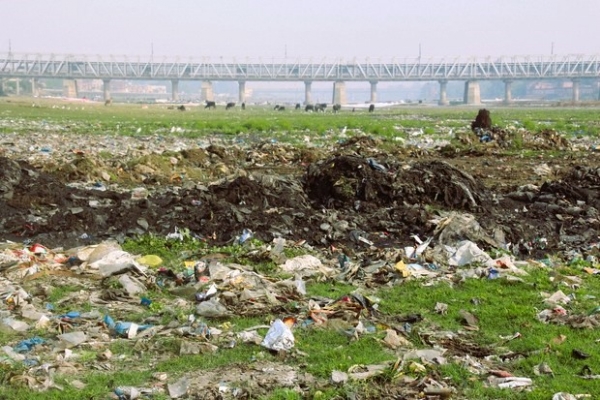
Domestic sewage, plastic, solid waste, industrial waste, chemical pollutants and encroachments in river areas collectively affect rivers.
India has a very large population. Therefore, the cumulative impact of the activities of individual citizens is also enormous.
Keeping rivers clean is not solely the responsibility of the government. Preventing pollution from reaching rivers is also a collective responsibility of society.
Cities Must Reuse Their Wastewater
Sewage is a major problem in urban areas, but with appropriate technology and management, it can be converted into a resource.
Large residential complexes need to operate sewage treatment plants effectively and reuse treated water for gardening, flushing, industrial purposes or other appropriate uses.
Similarly, municipal corporations, municipalities and municipal councils should increase the capacity of sewage treatment plants and ensure that untreated sewage does not enter rivers or drains.
Industries must also give priority to the principle of 'Recycle and Reuse'. Wherever possible, technologies based on Zero Liquid Discharge, or those that minimise liquid waste discharge, should be seriously considered.
Agriculture Needs a New Perspective
Indian agriculture today faces numerous challenges, including water availability, production costs, market prices, declining soil fertility, climate change and the problems faced by small farmers.
A large number of Indian farmers are small and marginal landholders. Therefore, it is not possible for every farmer to create large wells, farm ponds or irrigation systems.
The government should promote water conservation, micro-irrigation, increasing organic matter in the soil, soil conservation and crop planning suited to local conditions.
If agriculture is to transition towards organic or natural farming, merely advising farmers will not be enough. They will need training, markets, financial assistance during the transition period, locally available organic resources and appropriate technical guidance.
The Need for an Independent 'Farmers' Budget'
India's food security depends on its farmers. Therefore, the farmer's income, cost of production and conservation of natural resources must all be considered together.
Ensuring fair prices for agricultural produce, reducing production costs, using water and electricity efficiently, expanding storage and processing industries, and providing farmers with better markets must receive policy priority.
An empowered farmer will not only improve his or her own standard of living but will also strengthen the country's economy.
Time to Return to the Villages
India's development should not be based solely on the expansion of metropolitan cities.
Given the increasing migration towards cities and the growing problems of population, traffic, water, waste and employment, it is essential to strengthen employment opportunities and basic infrastructure in rural areas.
If agriculture, livestock, food processing, small-scale industries, organic products and local employment opportunities are expanded in villages, unnecessary migration towards cities can be reduced.
If villages survive, agriculture will survive; if agriculture survives, food security will survive; and if water sources survive, villages will survive.
The Concept of 'Biosanitizer' and Biological Technology
The concept of using biological technology to restore the ecological relationship between rivers, sewage and agriculture is gaining attention.
In this context, the use of a biological sanitation-support technology called 'Biosanitizer' has been proposed.
Such technologies can be scientifically studied for objectives including improving the effectiveness of sewage treatment, increasing the reuse of treated water and reducing the quantity of pollutants entering rivers.
However, before adopting any technology, it is extremely important to independently evaluate its scientific validity, environmental impact, safety, effectiveness and cost-effectiveness.
Rather than relying on a single technology for river rejuvenation, it is necessary to implement catchment-area management, sewage treatment, water reuse, soil conservation and biodiversity conservation in an integrated manner.
Livestock, Biological Resources and Agriculture
Livestock has traditionally held an important place in Indian agriculture.
Cow dung, cow urine and other biological resources were traditionally used to increase organic matter in the soil.
Today, there is a need to revisit this traditional knowledge from a modern scientific perspective.
By studying the relationship between livestock, organic manure, compost, organic agricultural inputs and soil health, appropriate agricultural models can be developed according to local conditions.
Instead of creating a conflict between tradition and modern science, a judicious integration of both is the need of the hour.
The Way Forward to Make India 'Sujalam Sufalam' Again
To take India out of its water crisis, simply building more dams, drilling more borewells or introducing more water-supply schemes will not be enough.
We must focus on the entire water cycle:
Ensuring that as much rainwater as possible enters the ground.
Increasing groundwater recharge.
Improving soil health.
Using water efficiently in agriculture.
Using chemical agricultural inputs judiciously and giving organic/natural farming a scientific foundation.
Maintaining strict control over industrial wastewater.
Treating sewage in cities and reusing the treated water.
Preventing solid waste and untreated sewage from entering rivers, streams and water sources.
Strengthening local water conservation and catchment-area management.
Providing farmers with appropriate financial and technical support.
Rain is a gift of nature. But when rainwater falls on the ground and simply flows away, we lose a large portion of it.
If the same water enters the soil, replenishes groundwater reserves, revives springs and streams, and provides rivers with a natural flow throughout the year, the water cycle becomes stronger.
If we want to save rivers, it is not enough merely to release water into them. It is equally necessary to ensure that water enters the ground in the areas surrounding the rivers.
India's future water security cannot depend solely on government schemes. Farmers, industries, local self-government institutions and every individual citizen must actively participate.
Beyond the emotional symbols of Gaumata, Bhumata and Gangamata, there is a need to understand the biological, environmental and economic relationships that lie behind them.
If India is to become 'Sujalam Sufalam' once again, we must choose a development path that works in harmony with nature's water cycle rather than against it.
Saving water does not merely mean storing water. Where water falls,
it must be allowed to enter the ground; where water is used,
it must be reused; and where a river flows,
its natural life must be preserved.
That is the right direction for India's water future.
---------------
Hindusthan Samachar / Indrani Sarkar