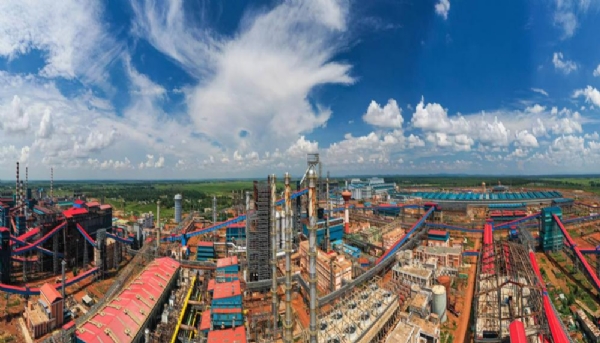
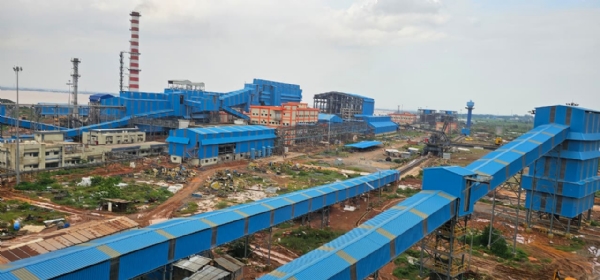
RAIPUR, 30 September (H.S.): A ₹5,427-crore integrated iron-ore processing, slurry transportation and pellet-making project commissioned by NMDC has connected its mining operations at Bacheli in Bastar with its steel plant at Nagarnar, creating a continuous production link from iron-ore processing to steelmaking in Chhattisgarh.
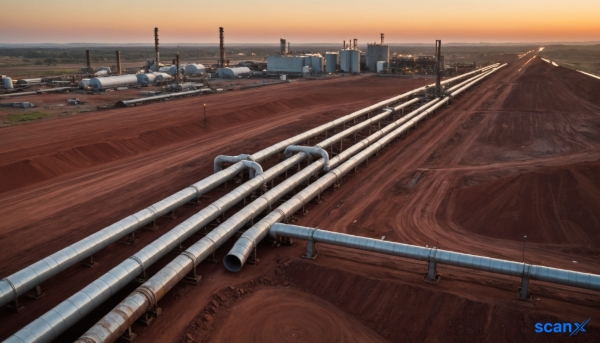
Commissioned on September 27, the project includes a new iron-ore processing plant at Bacheli, a 15-million-tonne-per-annum slurry pipeline and a 2-MTPA pellet plant at Nagarnar. The 135-km pipeline carries processed iron-ore concentrate from Bacheli to Nagarnar, providing an alternative to transporting the material by road.
The maiden production from the pellet plant was recorded as part of the commissioning. The facilities enable NMDC to process iron-ore fines and slimes from its Bailadila mines into concentrate and subsequently convert the concentrate into pellets for steelmaking. The pellet plant uses Straight Grate Induration technology.
From Bailadila to Nagarnar
The new infrastructure brings several stages of the iron-ore value chain together.
At Bacheli, NMDC processes iron ore from its Bailadila operations. The concentrate is then transported through the dedicated slurry pipeline to Nagarnar, where the pellet plant converts it into pellets for use in steelmaking.
The project covers mining, beneficiation, slurry transportation and pellet production within one connected NMDC system. The company said the facilities will allow greater use of iron-ore fines and slimes generated from its Bailadila operations while adding pellets as a value-added product to its portfolio.
The slurry pipeline passes through 61 villages in Bastar and Dantewada districts. NMDC says it provides an alternative mode of evacuation, reduces the movement of processed ore by road and lowers dependence on the Railways, while establishing a dedicated link between Bacheli and Nagarnar.
Nagarnar's Downstream Role
Nagarnar is the downstream end of this production chain, where NMDC operates its 3-MTPA integrated steel plant.
The addition of the 2-MTPA pellet plant introduces another processing stage between iron-ore mining and steel production.
The resulting chain links iron-ore extraction at Bailadila with processing at Bacheli, transportation through the dedicated pipeline and pellet production at Nagarnar before the material enters the steelmaking process.
For NMDC, the project strengthens its presence across the iron-ore value chain. The company has also identified the project as part of its broader expansion and diversification strategy as it works towards increasing its iron-ore production capacity to 100 million tonnes in the long term.
A Dedicated Logistics Link
The 135-km slurry pipeline adds a dedicated transportation route between Bacheli and Nagarnar.
Instead of relying only on conventional road and rail movement for processed ore, the integrated system provides an alternative mode of evacuation. NMDC has specifically stated that the pipeline will reduce road movement of processed ore and lower dependence on the Railways.
The project therefore combines a processing facility, a dedicated transport system and downstream pellet production within the same production chain.
NMDC's wider production expansion is also moving ahead. During April-August 2026, the company produced 23.23 million tonnes of iron ore and recorded sales of 18.72 million tonnes. Its Kirandul, Bacheli and Donimalai mines recorded their highest-ever August production, according to the Ministry of Steel.
A New National Steel Roadmap
The Bastar-Nagarnar project comes at an important time for India's steel industry.
The Centre is preparing a new National Steel Policy to provide a roadmap for the sector through 2047. Steel Secretary Sandeep Poundrik said on September 29 that the draft policy will target more than 600 million tonnes of steelmaking capacity and over 500 million tonnes of consumption by 2047. The draft is expected to be placed in the public domain for stakeholder consultation shortly.
The proposed policy will replace the National Steel Policy, 2017, whose horizon extends to 2030. The new roadmap is expected to address technology upgradation, artificial intelligence and machine learning, decarbonisation, sustainability and raw-material security.
The projected expansion of steel capacity will also increase demand for raw materials. The Steel Secretary said India could require more than 700 million tonnes of iron ore by 2047.
That places greater emphasis on the domestic processing and movement of iron ore alongside the expansion of steelmaking capacity.
Value Addition Within the Production Chain
The Bacheli-Nagarnar project directly connects several stages of that chain.
Iron ore is extracted from the Bailadila mines, processed at Bacheli, transported as concentrate through the slurry pipeline and converted into pellets at Nagarnar for use in steelmaking.
The project therefore establishes a connected system covering mining, beneficiation, transportation and pelletisation before the steelmaking stage.
This is also relevant to the raw-material requirements outlined in the proposed 2047 steel roadmap. The Steel Secretary has said that securing adequate raw materials will become increasingly important as India's steelmaking capacity expands.
Bastar's Industrial Link
For Bastar, the project strengthens the physical connection between the region's iron-ore resources and downstream steel production.
The Bailadila mines have long been central to NMDC's iron-ore operations. With processing at Bacheli, dedicated slurry transportation and pellet production at Nagarnar, additional stages of the production chain are now connected within the same regional industrial system.
The project also allows greater utilisation of fines and slimes generated at Bailadila and adds pellet production to NMDC's operations.
The 2047 Context
India's proposed National Steel Policy places the sector on a much larger long-term scale, with more than 600 million tonnes of steelmaking capacity and over 500 million tonnes of consumption envisaged by 2047.
The policy is still a draft and is due to undergo stakeholder consultation. The figures therefore represent the government's proposed roadmap rather than an adopted 2047 target.
The same roadmap identifies raw-material availability as an important issue, with projected iron-ore requirements of more than 700 million tonnes by 2047.
Against that backdrop, the Bacheli-Nagarnar project is a concrete example of integrated infrastructure already being commissioned within India's domestic iron-ore and steel production chain.
It connects the resource base at Bailadila with processing at Bacheli, a dedicated 135-km transportation system and pellet production at Nagarnar.
For Chhattisgarh, the project strengthens the link between its mineral resources and downstream steel production. For NMDC, it expands value addition across its iron-ore operations. For India's steel sector, it comes as the Centre prepares a new long-term roadmap for substantially higher steel capacity and consumption.
---------------
Hindusthan Samachar / Indrani Sarkar