Kathmandu, 24 September (H.S.): The Nepal government is preparing to declare people who went missing in the devastating floods dead and register their deaths if they remain untraced for three months. According to Nepal Police spokesperson and Deputy Inspector General Avinarayan Kafle, 4,655 people are still missing following the floods, and search operations are continuing.
The government has initiated the process of establishing a legal framework for the measure through the proposed “Act to Amend Certain Nepal Acts Relating to Disasters, 2083.” The proposed legislation is expected to come into immediate effect and will introduce special provisions for managing disasters of a severe nature.
The government has proposed amending the Disaster Risk Reduction and Management Act, 2074, by adding Section 33(A). The proposed provision would establish procedures for locating, preserving and handing over the bodies of people who die in major disasters to their families.
1,436 Bodies Recovered, 1,292 Remain Unidentified
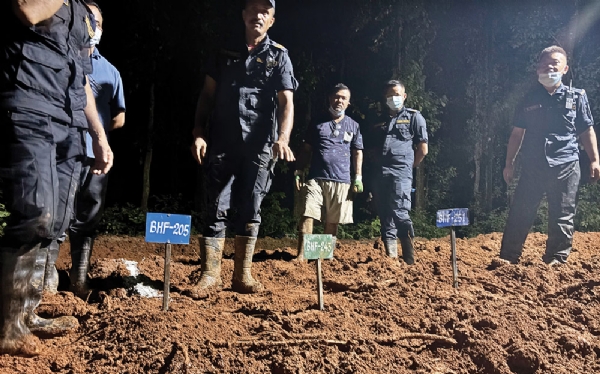
As of Wednesday, 1,436 bodies had been recovered. Of these, 1,292 remain unidentified and have been buried. Arrangements have been made to identify the deceased through DNA testing and hand over their remains to the respective families once their identities are established.
Unidentified bodies have been separately packed in bags and preserved along with available details. Once a body is identified, the concerned family members will be able to claim the remains, including those that have already been buried.
So far, DNA samples have been collected from 1,286 bodies and 1,997 family members. According to DIG Kafle, reports for nearly half of the samples collected so far have already been received.
Under the proposed legislation, if a person cannot be located despite search efforts for three months following a disaster, the individual may be presumed dead and their death may be officially registered. The proposed law also seeks to establish clear provisions concerning relief for the families of missing persons. After three months, such families would be eligible for government relief on the same basis as families of other deceased victims.
The government has declared the Bhotekoshi area a disaster crisis zone for three months. Search and rescue operations will continue throughout this period. If a missing person remains untraced even after the search operation concludes, their death may be registered under the proposed legal framework.
The proposed amendment also seeks to introduce changes to the National Identity Card and Registration Act. A new mechanism has been proposed for cases in which all members of a family go missing in a disaster, leaving no family member to report the death for registration.
If a missing person has no guardian or legal heir, information provided by the head of the local government or the concerned ward chairperson would be treated as official. In the case of a foreign national, the relevant embassy or diplomatic mission of the concerned country in Nepal, or a mission accredited to Nepal, would be authorised to provide the necessary information.
Under the proposed arrangement, if a missing person cannot be located despite search efforts following a disaster, an application for death registration may be submitted to the office of the registration officer at the person's permanent place of residence or at the local government level where the incident occurred. Such information may be submitted after the period for which the area has been declared a disaster crisis zone expires or after search and rescue operations have concluded.
For death registration, a copy of the missing person's citizenship certificate and a copy of the citizenship certificate of the person providing the information would be required. In the case of a foreign national, copies of the deceased person's and informant's passports and visas, along with a recommendation from the local government where the incident occurred, would be required.
If the information is submitted by an embassy or diplomatic mission, its recommendation letter would also be required. Once the required documents are submitted to the registration officer of the concerned local government, the death would be formally registered and a death certificate issued.
Hindusthan Samachar / Jun Sarkar

18 Aug 2026