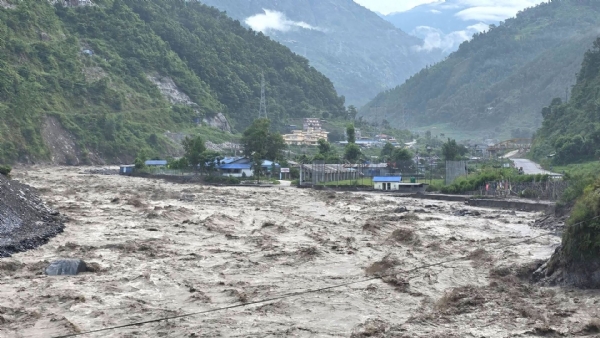
Kathmandu, 16 September (H.S.): The Nepal government has constituted a seven-member expert study committee to gather scientific evidence and determine the scientific basis and causes of the devastating flood in the Bhotekoshi River in Rasuwa district.
The Ministry of Energy, Water Resources and Irrigation constituted the committee on Wednesday under the chairmanship of water policy expert Debesh Belbase. The committee comprises water expert Dr. Narendra Man Shakya, glaciologist Dr. Rijhan Bhakta Kayastha, remote sensing expert Dr. Uttam Babu Shrestha, geologist Dr. Meghraj Dhital, hydropower infrastructure expert Dr. Hari Pandit and disaster risk reduction expert Anil Pokharel as members.
According to ministry spokesperson Mohan Shakya, the committee will conduct field studies from the possible source of the flood through the entire downstream and riverbank area. The study aims to scientifically analyse the origin of the Bhotekoshi flood, the associated Himalayan geo-hazards, the sequence of events and the possible role of climate change.
The Secretariat of the Water and Energy Commission had proposed studying the Bhotekoshi flood as a potential “cascading disaster” resulting from the interconnected development of geological, glacial and hydrological hazards in the high Himalayan region. Based on this proposal, the ministry decided to undertake a comprehensive scientific investigation.
Earlier, the Hydrology and Water Resources Research Centre under the Secretariat of the Water and Energy Commission had conducted a preliminary study. However, it did not find sufficient scientific evidence to establish where exactly the disaster in Rasuwa originated, what physical process triggered it, or how the process travelled downstream through the Lhende-Bhotekoshi river system.
The centre had recommended that the entire sequence of events be scientifically investigated before climate change was identified as the cause of the flood. The new study will now comprehensively examine geological, thermal and hydrological factors.
Spokesperson Shakya said the Bhotekoshi flood had affected the Trishuli Corridor. A similar disaster in other river systems in the future could directly affect various infrastructure projects under the Ministry of Energy. This is one of the reasons why the ministry has initiated the study.
Study to be Conducted in Three Phases
In the first phase, the committee will examine the chronology of the event and the geographical extent of the damage from the high Himalayan region through the Lhende-Bhotekoshi river system to the downstream areas. The study will examine the relationship between glacier conditions, instability of rocks and soil slopes, landslides, debris, river flow and flooding.
The second phase will focus on identifying the immediate and underlying physical causes of the flood.
In the third phase, experts will scientifically assess the extent to which human-induced climate change may have influenced the likelihood or intensity of these hazards or exacerbated pre-existing vulnerable conditions.
According to the ministry, the expert committee will conduct an on-site inspection of the potential source area. Detailed photographs and video recordings will be made during the investigation, while drones and satellite-based observations will also be used as required.
The committee has been given two months to complete the study. Based on the scientific evidence gathered during the investigation, the Ministry of Energy plans to clarify the nature and origin of the Bhotekoshi flood and assign it an appropriate scientific classification.
---------------
Hindusthan Samachar / Jun Sarkar

18 Aug 2026