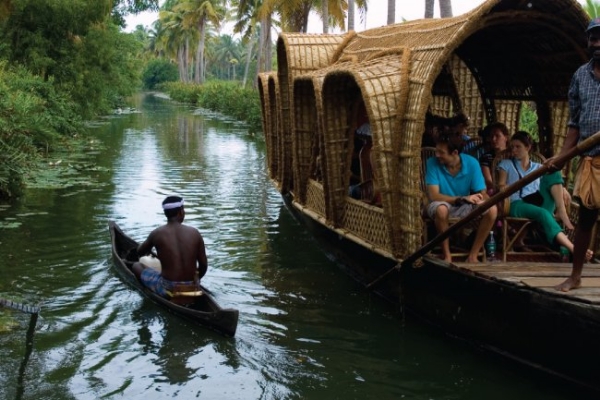
Thiruvananthapuram, 14 September (H.S.) : Kerala’s responsible tourism programme is reshaping the state’s appeal by taking visitors beyond its famous beaches, backwaters and hill stations into farms, fishing villages, traditional craft centres and local kitchens, while ensuring that tourism income reaches the communities sustaining these experiences.
The initiative connects hotels, tour operators and travellers with small producers, women’s groups, artisans, farmers, local guides and homestay owners. Instead of treating residents merely as spectators in a tourism economy dominated by large establishments, the model makes them suppliers, hosts, entrepreneurs and storytellers.
Visitors can participate in village walks, learn traditional cooking, observe coir-making and pottery, explore paddy fields, visit plantations, travel by country boats and purchase handicrafts or agricultural products directly from local producers. These activities give travellers a closer understanding of Kerala’s culture while creating additional income for rural families.
Kerala began experimenting with responsible tourism at destinations including Kumarakom in 2008. The initiative sought to address concerns that conventional tourism was producing limited benefits for local communities despite bringing large numbers of visitors to popular destinations.
The state subsequently established the Responsible Tourism Mission in 2017 to spread these principles across Kerala. The mission also became the state nodal agency for implementing the Union Tourism Ministry’s rural tourism development project.
Its growing network has now become a significant part of Kerala’s tourism identity. Tourism Minister P C Vishnunadh said the state had about 26,000 responsible tourism units, directly benefiting nearly 1.5 lakh families. Women operate around 80 per cent of these units, while more than 20,000 people have received training under the programme.
“Responsible tourism can empower women, strengthen the rural economy and present Kerala’s culture to visitors in its authentic form,” Vishnunadh said. He described the initiative as both a livelihood programme and a strategy for developing distinctive tourism experiences.
For travellers, the principal attraction is authenticity. A conventional itinerary may include a resort stay, a houseboat cruise or visits to familiar sightseeing locations. A community-based programme adds interaction with local people and introduces visitors to the food, occupations, traditions and everyday rhythms of a destination.
This allows Kerala to market not merely its natural scenery but also meaningful experiences increasingly sought by travellers concerned about sustainability, cultural preservation and the local impact of their spending.
The programme also helps distribute tourism revenue beyond established destinations and major hospitality businesses. Local procurement of vegetables, fish, meat, handicrafts, meals and other services allows a larger share of visitor spending to remain within the community.
Women who may have limited access to formal employment can earn through food production, guiding, handicrafts, cultural programmes, farming experiences and home-based enterprises. Tourism can consequently supplement traditional occupations such as agriculture and fishing instead of displacing them.
International recognition has strengthened Kerala’s responsible tourism narrative. The state won the Global Responsible Tourism Award in 2023 for initiatives connecting tourism with local sourcing, food and crafts. Rural destinations such as Kanthalloor and Beypore have also received attention through projects built around agricultural heritage, community participation and local culture.
UN Tourism has described rural tourism as a potential “game changer” capable of keeping traditions alive, supporting small businesses and protecting nature. These objectives reflect Kerala’s attempt to convert local knowledge into a tourism asset without taking ownership or economic benefits away from communities.
The strategy is gaining importance as Kerala records strong visitor growth. Official figures show that the state received 2,50,58,366 domestic tourist visits and 8,21,999 foreign tourist visits in 2025. Domestic visits increased by 12.64 per cent over 2024, while foreign visits grew by 11.33 per cent.
Although the increase cannot be attributed to responsible tourism alone, community-based experiences have broadened the range of attractions that Kerala can promote. They also encourage travellers to move beyond crowded destinations, stay longer and return for experiences unavailable through conventional package tourism.
Challenges, however, remain. Unregulated growth can strain water resources, increase waste, commercialise cultural practices and place additional pressure on ecologically fragile areas. Responsible tourism therefore requires credible standards, proper waste management, fair pricing, environmental safeguards and continuous consultation with residents.
Benefits must also reach small participants consistently and not remain confined to promotional campaigns or a few successful destinations.
Kerala’s advantage is that it treats responsibility as a tourism experience as well as a policy. When visitors consume locally grown food, meet artisans, travel with community guides and purchase directly from village enterprises, sustainability becomes tangible. This combination of landscape, culture and shared economic benefit is generating fresh interest in Kerala and offering the state a path towards tourism growth that local communities can welcome rather than endure.
---------------
Hindusthan Samachar / Arun Lakshman