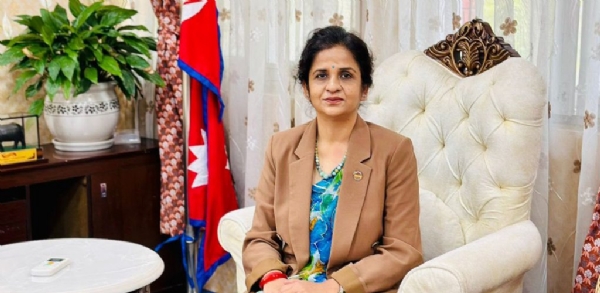
Kathmandu, 10 September (H.S.): Nepal’s Minister for Industry, Commerce and Supplies Gauri Yadav has resigned from her post. She submitted her resignation to Prime Minister Balendra Shah amid escalating tensions between the government and LPG industry operators following her alleged threatening remarks against gas traders.
Minister Yadav made the controversial comments during a meeting of the Industry Committee on Wednesday. LPG industry operators objected to her remarks and also brought the matter to the attention of the Prime Minister.
During the meeting, Yadav reportedly said that LPG industry operators were responsible for the ongoing gas crisis and that the shortage would not be resolved unless strict action was taken against them. She further called for the licences of all 58 LPG industries operating in Nepal to be cancelled.
Yadav argued that Nepal did not need such a large number of LPG industries and that only two plants would be sufficient to meet the country’s requirements.
The controversy comes at a time when Kathmandu Valley is facing a severe shortage of cooking gas. Consumers have been forced to stand in long queues, often for hours and even overnight, to obtain LPG cylinders. Although the official price of a cylinder is 2,060 Nepalese rupees, consumers are reportedly being forced to pay as much as 3,000 rupees amid the shortage.
Consumers have complained that even after waiting in queues for several hours, they are often unable to obtain a cylinder. The prolonged LPG crisis has been further aggravated by a recent natural disaster. Since the road at Krishnabhir was damaged by a landslide on Bhadra 14, adequate supplies of LPG have not been reaching the Kathmandu Valley.
Although authorities have been using alternative routes to transport LPG, a smooth and adequate supply to consumers has yet to be restored.
Nepal also faces structural challenges in its LPG supply system. The government does not have sufficient infrastructure of its own for the import, storage and distribution of cooking gas. All 58 LPG industries currently operating in the country are privately owned.
The state-owned Nepal Oil Corporation does not own a single LPG bottling plant. Salt Trading Corporation, in which the government holds a 20 per cent stake, also sells LPG in limited quantities, but it is not capable of meeting the entire market demand.
The Nepal Oil Corporation and the Ministry of Industry have been regularly releasing figures indicating that LPG supplies are being maintained. However, the situation on the ground remains markedly different, with consumers continuing to face shortages and long queues.
Another major constraint is the lack of a domestic LPG transportation fleet. Nepal does not own a single LPG bullet tanker for transporting gas. Private LPG companies are also dependent on Indian bullet tankers to bring LPG into Nepal from India.
According to claims cited in connection with the sector, Nepal spends around 6 billion Nepalese rupees every year solely on LPG transportation because of this dependence on Indian tankers.
Against this backdrop, Minister Yadav’s remarks calling for strict action against LPG operators intensified an already sensitive dispute between the government and the gas industry. Her resignation follows growing pressure over the controversy at a time when Nepal is struggling to restore a stable supply of cooking gas to consumers.
---------------
Hindusthan Samachar / Jun Sarkar

18 Aug 2026