Thiruvananthapuram, 31 August (H.S.):Kerala’s plan to restore inland navigation along its entire coastline is moving from a long-promised infrastructure concept towards phased operation, although land acquisition, rehabilitation and unfinished links continue to slow the creation of a continuous north-south water corridor.
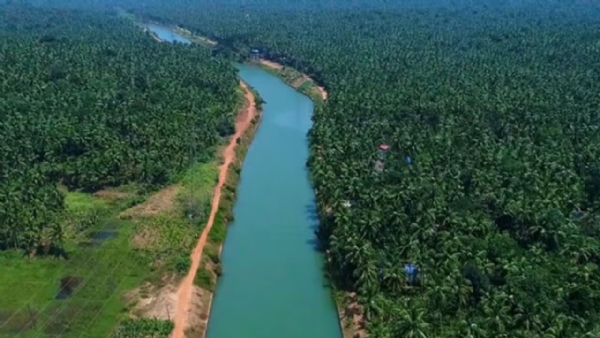
At the centre of the programme is the 616-km West Coast Canal, envisioned as a navigable route from Kovalam in Thiruvananthapuram district to Bekal in Kasaragod. The project combines natural rivers, lakes, backwaters and man-made canals, reviving waterways that once carried passengers and agricultural goods before road transport became dominant.
The government expects the corridor to reduce pressure on Kerala’s congested highways, lower freight costs and create a cleaner transport alternative. It is also designed to support passenger services, backwater tourism, water sports and small commercial hubs around jetties. Feeder canals are ultimately expected to connect towns, industrial centres, farms, fishing communities and tourism destinations with the principal route.
A major operational segment is the 280-km Akkulam-Chettuva waterway, inaugurated in February 2026 after cleaning, dredging and renovation works. The stretch passes through important water bodies in southern and central Kerala and incorporates parts of National Waterway-3. The 205-km national waterway consists of the Kollam-Kottapuram section and the Champakara and Udyogmandal canals around Kochi.
Kerala Waterways and Infrastructures Limited, a special-purpose company formed by the State government and Cochin International Airport Limited, is implementing substantial parts of the scheme. The Irrigation Department, the Kerala Infrastructure Investment Fund Board and central agencies, including the Inland Waterways Authority of India, have roles in financing, regulation and development across different sections.
The wider project was earlier estimated to cost about ₹6,500 crore, with works being taken up in stages. The first stage focused on removing weeds and silt and making existing channels navigable without substantially altering their width. The second involves widening narrow sections, removing encroachments and completing land acquisition and rehabilitation. The final stage envisages terminals, jetties, cargo facilities, tourism amenities and stronger connections to feeder routes.
Officials also envisage extending the southern corridor towards Vizhinjam port, allowing the waterway to form part of a multimodal logistics chain linking maritime trade with inland cargo movement and tourism services across Kerala.
The restored Chilakoor tunnel at Varkala is among the project’s most visible components. Built during the Travancore era, the historic tunnel has been renovated as both a navigation link and a tourism attraction. Plans include electric-boat trips, projection-based presentations and visitor facilities, reflecting the government’s attempt to combine transport infrastructure with heritage tourism.
However, completing an uninterrupted Kovalam-Bekal route remains difficult. The 16-km Kovalam-Akkulam stretch along the polluted Parvathy Puthanar canal has been held up by land acquisition, rehabilitation disputes and delayed funding. Hundreds of families living along the canal require relocation, while sections must be widened, dredged and protected with retaining walls. Boat jetties, pedestrian bridges and landscaping are also proposed.
Northern Kerala presents another engineering challenge because missing canal links must be created between existing rivers and backwaters. Development of the Mahe-Valapattanam sector, including artificial canal portions, is crucial for extending navigation through Kozhikode and Kannur towards Kasaragod. Bridge clearances, shallow reaches, waste discharge, water hyacinth and recurring siltation add to the maintenance burden across the network.
For the project to become commercially viable, navigability alone will not be enough. Kerala will need reliable scheduled services, suitable vessels, last-mile road connections, cargo aggregation points, safety systems and year-round maintenance. Preventing sewage and solid-waste discharge will also be essential, particularly in densely populated urban stretches where canals have long functioned as drains.
If these gaps are addressed, the waterway could reshape movement in a State constrained by limited land and heavy road traffic. Bulk commodities, construction material, agricultural produce and selected industrial cargo could be shifted to water, while passenger and tourism services could generate local employment. The project’s success will ultimately depend on converting inaugurated stretches into a dependable network and completing the difficult links without compromising communities or fragile wetland ecosystems.
---------------
Hindusthan Samachar / Arun Lakshman