Kathmandu, 30 August (H.S.): The risk of epidemics and infectious diseases is rising in flood-hit areas of Nepal as the bodies of people and animals killed in the devastating floods begin to decompose. Hundreds of people remain missing, with only a small number found alive, while the bodies of many victims have yet to be recovered.
Thousands of animals were swept away or killed in the floods, but authorities have so far been unable to establish an adequate system for managing their remains. Doctors have warned that the situation could develop into a serious public health crisis unless timely preventive measures are taken.
Infectious disease specialists are particularly concerned about the possible spread of cholera, diarrhoea, scrub typhus, rotavirus, typhoid, hepatitis A and E, leptospirosis, dengue, malaria, skin infections and respiratory illnesses due to bodies lying scattered across affected areas.
Senior infectious disease specialist Dr Sher Bahadur Pun warned that an immediate public health response was essential to prevent a wider crisis.
“Not only people, but thousands of animals have also died. Their bodies are now gradually beginning to decompose, so vigilance is essential. Unnecessary visitors can also be seen entering the affected areas, with some coming merely out of curiosity. If even one person contracts an infectious disease, it could spread across the country. The floods could not have been predicted, but the possibility of disease outbreaks can be anticipated. The government and civil society must remain alert in time,” he said.
At present, many flood-affected people are living together in temporary settlements, sharing food and accommodation. According to Dr Pun, people staying in tents or open spaces are vulnerable to mosquito and insect bites, which can contribute to the transmission of infections.
He warned that conditions could deteriorate further if drinking water and essential non-food supplies are not distributed systematically at temporary shelters. Waterborne diseases, airborne infections and diarrhoeal illnesses pose particular risks, while the threat of scrub typhus is also significant. Vector-borne diseases are another major concern in such circumstances.
Dr Pun advised people to drink water only after boiling it or treating it with chlorine, wash their hands regularly with soap and water, ensure proper toilet and waste management at temporary camps, and immediately seek medical attention if symptoms such as fever, diarrhoea, vomiting or skin infections develop.
The floods have completely destroyed thousands of homes and other structures in Rasuwa and Nuwakot. Many residents of these areas remain missing, while large numbers of livestock have also died. Bodies carried downstream by the floods have been recovered as far as Dhading, Gorkha, Tanahun, Chitwan and Nawalparasi East.
While authorities are already struggling to manage the recovery of human remains, the disposal of dead animals has not received adequate attention. The decomposition of livestock carcasses and the resulting risk of bacterial contamination are becoming increasingly serious concerns.
In the worst-hit areas, local health facilities, except Rasuwa and Trishuli hospitals, have either been completely destroyed or rendered non-functional. The Nepal Army, Nepal Police and the Ministry of Health have been operating health camps, although these facilities remain insufficient to meet the treatment needs of affected communities.
Former Health Minister Dr Sudha Sharma said the risk of infectious disease transmission was particularly high at present and called for heightened vigilance.
“Bodies are lying scattered in several places, and some may even be in pieces. Animals have died in even greater numbers. This creates a risk of potentially fatal diseases spreading. Displaced people are being housed collectively, and even a slight lapse in hygiene could trigger illnesses such as diarrhoea and pneumonia. Pregnant women, children and newborns could face greater risks and therefore require special attention. Human remains and animal carcasses must be managed as quickly as possible,” she said.
Dr Sharma recommended measures including spraying insecticides in flood-affected areas, paying particular attention to temporary shelters, monitoring food and sanitation, ensuring the distribution of clean drinking water, safely managing human remains and locating and properly burying dead animals. Such measures, she said, could help reduce the risk of epidemics and infectious diseases.
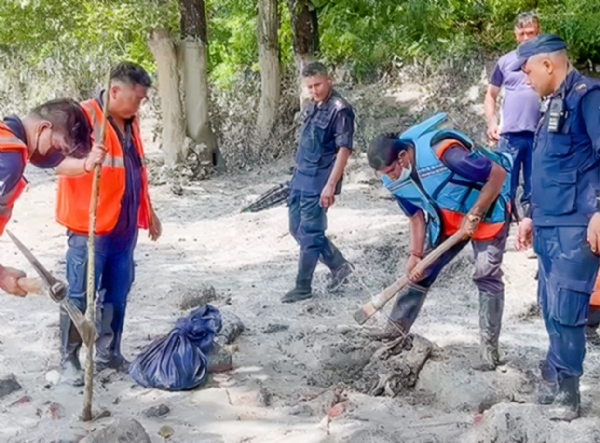
Nuwakot Chief District Officer Shambhu Prasad Regmi said the number of dead animals was particularly high in the Trishuli, Betravati and Bidur areas. Some carcasses are also suspected to be buried beneath debris.
Given the risk of disease transmission, authorities began spraying disinfectants and medicines in the affected areas on Saturday and started systematically burying recovered animal carcasses.
“The priority is to save people’s lives. Considering the risk of an epidemic, we began working in coordination with the Ministry of Health from Saturday. Medicines are being sprayed wherever possible, while efforts are also being made to locate and properly dispose of dead animals. However, the situation is not yet such that we can reach every location and carry out these operations,” Regmi said.
---------------
Hindusthan Samachar / Jun Sarkar

18 Aug 2026