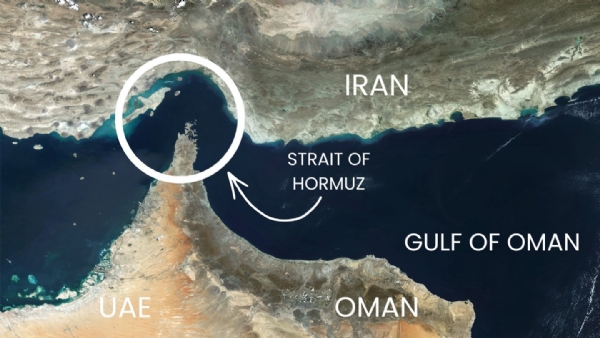
Tehran, 24 August (H.S.): Iran has adopted a stringent approach towards vessels transiting the strategically vital Strait of Hormuz. The Persian Gulf Strait Authority (PGSA) has warned that vessels violating its prescribed regulations could face restrictions on future passage through the waterway, including fines, detention and seizure.
Iran's international news network Press TV and Türkiye's state-run Anadolu Agency reported that the PGSA, in a statement posted on its official social media platform X on Sunday, urged shipping companies and cargo owners transporting goods from the Persian Gulf to check the updated list of non-compliant vessels (NCVs) before chartering any vessel.
The Iranian authority said that vessels cooperating with those included on the list could also be immediately added to the NCV list. Such activities include ship-to-ship (STS) transfers, transshipment and other similar operations.
According to the PGSA, vessel owners seeking removal of their names from the list must submit a formal application citing appropriate reasons. The authority has provided a procedure for submitting such applications via [info@pgsa.ir](mailto:info@pgsa.ir).
Iran's announcement comes at a time when maritime traffic through the Strait of Hormuz has already been severely disrupted. According to Reuters, only 89 cargo vessels exited the strait and 103 entered during the week ending August 23, representing around a 90 per cent decline in activity compared with pre-conflict levels.
According to the International Maritime Organization (IMO), 68 confirmed maritime incidents had been recorded in and around the Strait of Hormuz as of August 21, resulting in the deaths of 19 seafarers.
The Strait of Hormuz is one of the world's most important energy corridors. Large volumes of oil and gas from the Persian Gulf region pass through the waterway to international markets. Any restrictions on vessel movements through the strait could therefore have significant implications for global energy markets and shipping costs.
Iran has previously maintained that its conditions and security concerns regarding the Strait of Hormuz cannot be ignored. In August, Tehran said the United States would have to change its conduct for the waterway to be fully reopened under normal conditions.
Tensions between Iran and the United States over the Strait of Hormuz are rising at a time when diplomatic efforts between the two countries have also reached an impasse. In June, an interim agreement was reached between the two sides with mediation by Pakistan and Qatar. However, differences subsequently emerged over its implementation and the movement of vessels through the strait.
Even after the agreement's deadline expired on August 17, no permanent arrangement could be reached. Meanwhile, the sharp decline in vessel traffic through the strait has left a large number of commercial ships stranded in the Gulf region.
Against this backdrop, the PGSA's latest warning could increase compliance pressure on shipping companies and further deepen uncertainty surrounding international trade through the Strait of Hormuz.
---------------
Hindusthan Samachar / Jun Sarkar

18 Aug 2026