Kochi, 24 August (H.S.):
Cochin International Airport has turned the electricity demand of an aviation hub into an opportunity for clean-energy innovation, building a network of solar installations that has made it a model for airport operations.
The journey began in 2013 with a 100-kilowatt-peak pilot project. Its success was followed by a one-megawatt plant, installed near the airport museum and on the rooftops of the aircraft maintenance hangar and aviation academy. It was Kerala’s first megawatt-scale solar photovoltaic installation and gave Cochin International Airport Limited the confidence to attempt a much larger project.
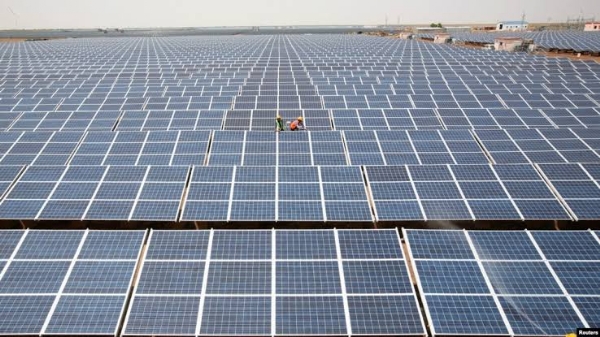
The expansion came in August 2015, when CIAL commissioned a 12 MWp solar plant across 45 acres adjoining the cargo terminal. Together with the installations, it raised capacity to 13.1 MWp and enabled Cochin to become the world’s first airport fully powered by solar energy. The achievement demonstrated that the power requirements of terminals, baggage systems, air-conditioning, runway lighting and airport facilities could be balanced through renewable generation.
Expansion continued as passenger traffic and terminal infrastructure grew. A 2.4 MWp plant was commissioned in 2016. In 2017, CIAL added a 3 MWp facility near the maintenance hangar, a 2 MWp plant south of the airport and a 2.7 MWp solar carport in front of the international terminal. A six-megawatt canal-top project followed in 2018, though it was relocated after the Kerala floods of 2018 and 2019.
The renovated domestic terminal triggered a round of additions. These included a 2.6 MWp carport project, 6.7 MWp spread across four airport locations and a 500-kilowatt floating solar plant commissioned in January 2020. The airport-based installations consequently reached 39 MWp, producing an average 1.56 lakh units of electricity daily. Solar roofs over parking areas also serve two purposes: sheltering vehicles while generating about 20,000 units a day.
CIAL then carried its renewable-energy programme beyond the airport boundary. An 11.6 MWp plant was developed on 35 acres at Payyannur in Kannur district. The terrain-based design preserved the land’s natural gradient instead of levelling it. By reducing the distance between module arrays, the approach required roughly 2.75 acres per megawatt against about 3.75 acres for a conventional flat-land installation and accommodated 35 per cent more panels.
The Payyannur innovation earned CIAL recognition at the Airports Council International Asia-Pacific and Middle East Green Airports Recognition 2025 awards. With this project, the airport company’s total installed solar capacity stands at about 50 MWp. CIAL says its airport solar installations have generated more than 25 crore units of green electricity and avoided around 1.6 lakh tonnes of carbon emissions. It feeds nearly four crore surplus units into Kerala’s electricity grid annually.
Its green credentials extend beyond the panels. Vacant spaces between solar arrays are used for agro-photovoltaic farming, producing about 90 tonnes of pesticide-free vegetables while retaining the land’s productive use. CIAL also operates a 4.5 MW hydroelectric project at Arippara in Kozhikode district, supplementing solar power when sunshine is unavailable.
Energy efficiency within the buildings is another part of the strategy. Terminals 1, 2 and 3 and the import and export cargo buildings have received the Indian Green Building Council’s Net Zero Energy operations pre-certification. The assessment covers renewable-energy use, efficient air-conditioning, smart lighting, high-efficiency equipment and passenger comfort. A net-zero-energy building produces as much energy as it consumes over a year.
CIAL has installed fast-charging stations for electric vehicles at its domestic and international parking areas and is developing green-hydrogen infrastructure with Bharat Petroleum Corporation Limited. Plans to operate hydrogen fuel-cell buses for passenger movement are intended to reduce emissions from ground transportation.
The description ‘green airport’ therefore rests on more than a single solar farm. It reflects a sustained programme of distributed generation, efficient buildings, productive land use, cleaner transport and continuing experimentation. As aviation faces pressure to limit its environmental footprint, Cochin airport’s experience shows how an airport can steadily reduce emissions from the operations it directly controls while remaining a major transport gateway.
---------------
Hindusthan Samachar / Arun Lakshman