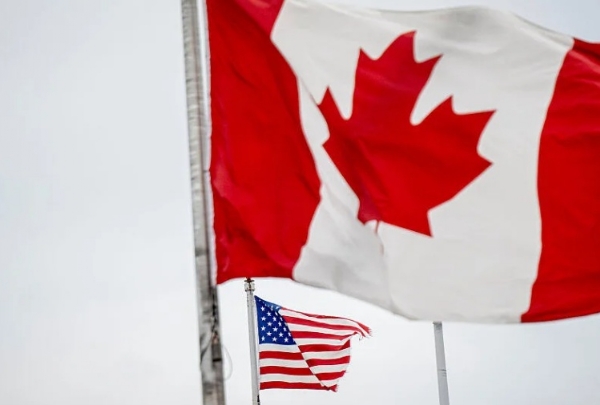
Washington/Ottawa, 23 August (H.S.): The United States on Saturday imposed a 50 per cent tariff on Canadian products worth around $20 billion, after last-ditch efforts to ease a recent deterioration in relations between the long-standing allies failed. Canadian Prime Minister Mark Carney said Ottawa would announce a strong retaliatory response, with the measures set to take effect from September 8.
According to reports, US Trade Representative Jamieson Greer told reporters late Friday that Canada had declined to finalise a trade agreement based on terms agreed earlier in the week. He said on Saturday that there were currently no plans for fresh negotiations with Canada.
Greer said Washington was taking steps to respond to Canadian retaliation. He argued that the United States had spent a year dealing with Canadian countermeasures before deciding that the situation had gone too far. According to him, the latest US measures were aimed at protecting American workers and supply chains. He said Washington had repeatedly offered Canada a path towards an agreement, including proposals to reduce tariffs on steel, automobiles and lumber.
Carney said on Saturday that Canada would announce details of its new tariff measures in the coming days and that the countermeasures would take effect from the Tuesday following Labour Day. He said Ottawa's dollar-for-dollar response would target steel, dairy products, appliances, agricultural machinery, pulp and paper, and electronics.
US President Donald Trump responded on Sunday morning through Truth Social, accusing Canada of seeking to benefit from its relationship with the United States without being part of the country. Trump also criticised Canada's long-standing tariffs on American agricultural products.
Carney said Canada had been prepared to remove its remaining retaliatory tariffs on US steel, aluminium and automobiles if Washington had significantly reduced its tariffs and encouraged Canadian provinces to restore sales of American alcoholic beverages. However, he said the final demands from Washington had gone too far.
The Canadian prime minister blamed Washington for the collapse of the negotiations, saying last-minute changes to the US proposals were unfair and economically misguided and raised questions about the credibility of any potential agreement. He said Washington had halted the talks and instructed the Canadian negotiating team to return to Ottawa.
The new US tariffs are expected to affect roughly 5 per cent of the goods Canada exports annually to the United States, ranging from products such as hockey sticks to tongue depressors. However, the political consequences could prove considerably greater than the direct economic impact. Canada's threat to impose additional retaliatory tariffs could further intensify the trade dispute between the two neighbours.
The United States and Canada exchanged goods worth approximately $880 billion last year, underscoring the scale of their economic relationship.
The latest tariff measures were originally scheduled to take effect at 12:01 a.m. Wednesday. Trump extended the deadline by three days to allow negotiations to continue, but the two countries failed to reach an agreement within the extended period. Before Saturday's increase, the Trump administration had imposed a 10 per cent tariff on goods entering the United States from Canada.
Canada is the United States' second-largest trading partner after Mexico. Relations between the two countries have also been strained by disagreements over trade, NATO, a bridge connecting the Detroit area and Trump's repeated suggestion that Canada could become the 51st US state.
Ontario Premier Doug Ford, whose province is Canada's most populous, backed Carney's response and said the prime minister had his full support.
About 72 per cent of Canada's total merchandise exports were shipped to the United States last year, highlighting Ottawa's substantial dependence on the American market.
The Trump administration could face political pressure over any further tariff increases ahead of the midterm elections scheduled for November. Tariffs are paid initially by US importers, who can pass higher costs on to consumers through increased prices. American voters are already concerned about inflation, while the ongoing conflict involving Iran has added further pressure to the economic situation.
---------------
Hindusthan Samachar / Jun Sarkar

18 Aug 2026