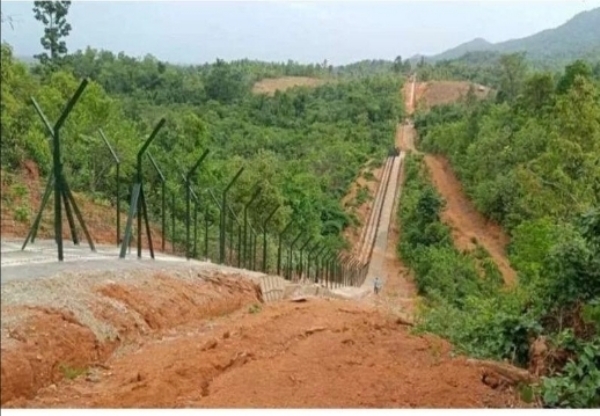
The India–Myanmar border remains a strategically significant frontier, shaped by a complex combination of history, geography, security concerns and long-standing ties between communities on both sides. Stretching 1,643 kilometres across Arunachal Pradesh, Nagaland, Manipur and Mizoram, the border has evolved from the administrative boundaries of the colonial period into an international frontier between two sovereign states.
While significant portions of the boundary have been surveyed and demarcated, certain stretches remain unresolved because of difficult terrain, historical complexities and traditional cross-border community linkages. India and Myanmar have continued diplomatic engagement over the years to address these issues and work towards a mutually acceptable settlement.
Recent reports have drawn attention to discussions concerning unresolved sections of the border, particularly in the Manipur sector around the Kabaw Valley. Some reports have suggested that a territorial adjustment or land exchange could form part of a possible solution. However, the Ministry of External Affairs has clarified that discussions are still underway and that no final agreement on any land swap has been reached.
The ongoing talks are aimed at resolving outstanding boundary issues through technical assessments, historical records and diplomatic negotiations. Any eventual settlement would require agreement between both governments and would need to take into account the broader strategic, administrative and security implications for the region.
A clearly demarcated and mutually recognised border could significantly strengthen India's ability to address security challenges along its northeastern frontier. The region has long faced concerns relating to illegal cross-border movement, insurgent activities, arms trafficking, narcotics smuggling and other forms of transnational crime. Greater clarity over the boundary could improve coordination between Indian and Myanmar authorities and strengthen administrative control in remote and difficult-to-access areas.
A comprehensive border settlement could also have wider economic and strategic implications. A stable frontier would provide greater certainty for infrastructure development, connectivity projects and legitimate cross-border trade. It could further support India's Act East Policy, under which Myanmar serves as an important land bridge connecting India with Southeast Asia.
For border communities, however, the issue extends beyond questions of territory and security. Many communities living along the frontier share ethnic, cultural, linguistic and historical links that predate the modern international boundary. Any proposed territorial adjustment or final settlement would therefore need to carefully consider the concerns and interests of local populations, state governments and security agencies.
Transparency and consultation will be particularly important if the two countries move towards a concrete agreement. Any perception that local interests have been overlooked could generate public concern in the border states. A sustainable settlement would therefore require not only diplomatic consensus between New Delhi and Naypyidaw but also sensitivity towards the social and economic realities of communities living along the frontier.
The India–Myanmar border discussions reflect an effort to address a long-standing issue through diplomacy and cooperation rather than confrontation. While reports of a possible land exchange have generated considerable attention, the official position remains that negotiations concerning unresolved boundary sections are continuing.
A balanced and mutually acceptable settlement—one that protects India's sovereignty and national security while addressing regional development and the concerns of border communities - could mark an important step towards strengthening India–Myanmar relations and promoting long-term peace and stability in Northeast India.
---------------
Hindusthan Samachar / Satya Prakash Singh