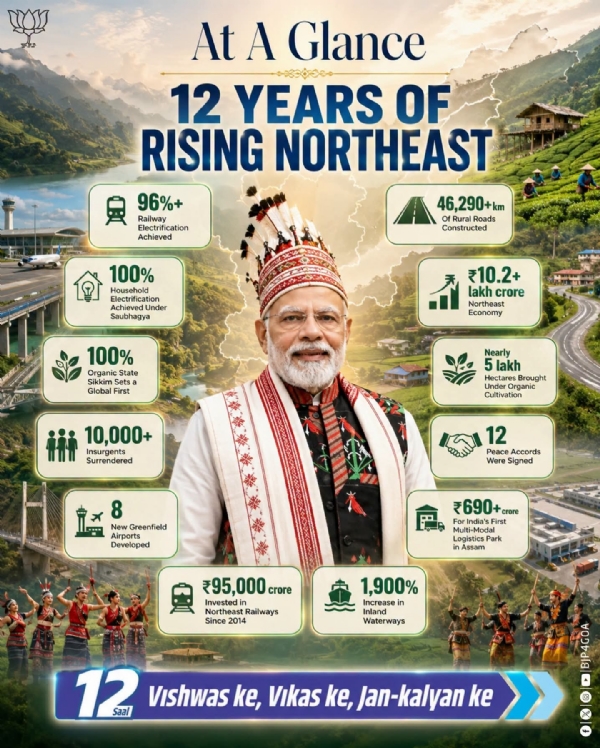
Guwahati, 21 August (HS): For decades, difficult terrain, limited transport infrastructure and long distances from mainland India made connectivity one of the biggest challenges facing Northeast India. Under the BJP-led Central Government, however, the region has witnessed a major push to overcome these historical deficits through the Act East Policy, PM-DevINE and NESIDS, with infrastructure development emerging as a key driver of economic integration and strategic mobility.
The transformation is most visible in the road network. The total length of National Highways in the Northeast has increased from around 10,900 km in 2014 to more than 16,200 km, supported by large-scale public investment. Strategic projects are also reshaping movement across difficult terrain. The Sela Tunnel in Arunachal Pradesh has provided an all-weather route to Tawang, while the approved ₹22,634-crore Guwahati-Silchar high-speed corridor is expected to significantly reduce travel time between Assam’s largest city and the Barak Valley.
Along India’s frontier, the 1,748-km Arunachal Frontier Highway is being developed close to the Line of Actual Control, strengthening connectivity to remote border areas while improving logistics and mobility. Across the Brahmaputra, landmark bridges such as the Bogibeel Bridge and Dhola-Sadia Bridge (Bhupen Hazarika Setu) have transformed inter-bank connectivity, reducing journeys that once involved lengthy detours.
Rail connectivity has also entered a new phase. The pace of railway expansion in the Northeast has more than doubled compared with the pre-2014 period, with around 167 km of new railway lines being laid annually. Mega projects such as the Jiribam-Imphal in Manipur and Bairavi-Sairang in Mizoram railway line are taking rail connectivity deeper into the region, while the massive bridge structures associated with the project symbolise the engineering effort required to overcome the Northeast’s challenging geography.
Aviation has emerged as another important pillar of regional integration. The number of operational airports in the Northeast has risen from nine in 2014 to 17, aided by the UDAN regional connectivity programme, which has helped operationalise nearly 90 routes. New and upgraded airports, including Pakyong in Sikkim and Donyi Polo Airport in Arunachal Pradesh, have brought air connectivity closer to previously isolated areas.
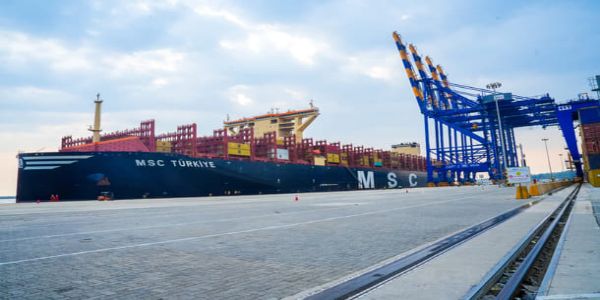
The connectivity push is not limited to roads, railways and airports. Inland waterways are being revived as an alternative transport network, with the development of multimodal logistics facilities such as the Jogighopa terminal in Assam. By linking waterways with road and rail networks, such projects seek to create an integrated logistics chain and reduce transportation costs.
The digital landscape is changing as well. Through BharatNet and dedicated telecom infrastructure projects, thousands of Gram Panchayats have been made service-ready for high-speed internet, while new 4G towers are being installed in difficult and remote areas. Improved digital connectivity is helping bridge not only physical distances but also gaps in access to education, public services, commerce and communication.
Taken together, these developments represent more than an expansion of infrastructure. They are gradually changing the Northeast’s strategic and economic geography. Better roads, railways, airports, waterways and digital networks are linking remote communities with markets and services while strengthening India’s connectivity with neighbouring countries under the broader Act East vision.
The impact will ultimately be measured not only in kilometres of highways or railway tracks, but in shorter travel times, greater economic opportunities, improved access to essential services and stronger integration of the Northeast with the rest of India and Southeast Asia. For a region once defined by connectivity constraints, the infrastructure push is increasingly creating the foundation for a more connected and economically integrated future.-----------
Hindusthan Samachar / Sriprakash