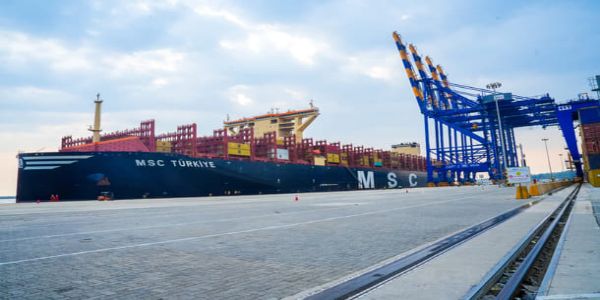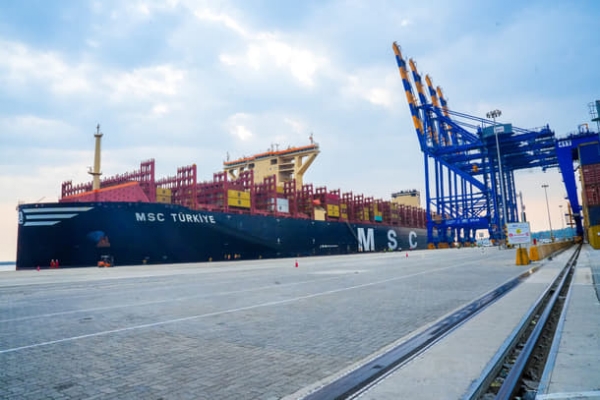
Thiruvanamthapuram, 17 August (H.S.): Kerala will enter a decisive new phase in its maritime history on Tuesday when direct export-import container movement begins at the Vizhinjam International Seaport, transforming the facility from a transshipment hub into a gateway connecting businesses directly with global markets.
Chief Minister V.D. Satheesan will flag off the first export container, carrying about 4,000 kg of Kerala products, including banana chips, jackfruit chips and Marayoor jaggery, to Valencia in Spain. The shipment carries significance beyond its modest volume: it demonstrates how agricultural produce and value-added goods from Kerala can reach overseas markets directly from the State.
Until now, Vizhinjam primarily handled transshipment cargo, transferring containers between large mother vessels and smaller feeder ships. Cargo intended for Kerala and neighbouring regions had to be routed through ports such as Kochi, Chennai or Thoothukudi before reaching its final destination.
Direct EXIM operations will allow eligible containers to leave Vizhinjam by road after Customs clearance, while export cargo can be transported directly to the terminal for loading. This could shorten transit time, reduce handling expenses and make Kerala-based products more competitive internationally.
The port has already handled two million twenty-foot equivalent units within 18 months of commencing commercial operations and accommodated some of the world’s largest container ships. Its natural depth and location close to the international east-west shipping route provide Vizhinjam with an advantage unavailable to most Indian ports.
The immediate economic gains are expected to emerge in container transportation, warehousing, Customs services, freight forwarding, shipping agencies, packaging and distribution. Over time, food-processing units, seafood exporters, cold-storage facilities, logistics parks and manufacturing companies could establish operations around the port.
Vizhinjam could also serve industries in southern Tamil Nadu, including the textile, engineering and automobile clusters around Coimbatore, Tiruppur and Tirunelveli. If the port offers competitive tariffs and faster vessel connections, it could develop a cargo hinterland extending well beyond Kerala.
The larger opportunity lies in port-led industrialisation. Kerala has historically depended heavily on services, tourism, remittances and consumption. A maritime economy centred on Vizhinjam could add a stronger production and logistics component, generate skilled and semi-skilled employment and create new revenue streams for the State.
The government will unveil Mission Samudra alongside the EXIM launch. The programme seeks to integrate ports, manufacturing zones, logistics networks, inland waterways and road and rail connectivity. The State Budget earmarked Rs 400 crore for the initiative, which also envisages green bunkering, shipbuilding and maritime services.
However, the transformation will not happen overnight. Vizhinjam does not yet have an operational container freight station, restricting the initial phase largely to full-container-load cargo eligible for direct port delivery or direct port entry. Less-than-container-load consignments and cargo requiring examination or repacking cannot be handled until the proposed freight station becomes operational.
Adani Ports plans to establish a 100-acre container freight station, but road transport will remain the principal mode of cargo evacuation in the initial years. The proposed rail connection to Balaramapuram is not expected to be completed before 2029 or 2030.
The government must therefore accelerate rail and highway connectivity, prevent congestion, protect coastal communities and ensure that local workers and businesses receive a fair share of the benefits.
Tuesday’s launch is consequently a beginning rather than the culmination of Vizhinjam’s journey. Its lasting value will depend on whether Kerala can build industries, skills and transport networks around the port. If that ecosystem takes shape, Vizhinjam could alter the State’s economic geography and turn Kerala’s coastline into a powerful engine of trade, investment and employment.
---------------
Hindusthan Samachar / Arun Lakshman