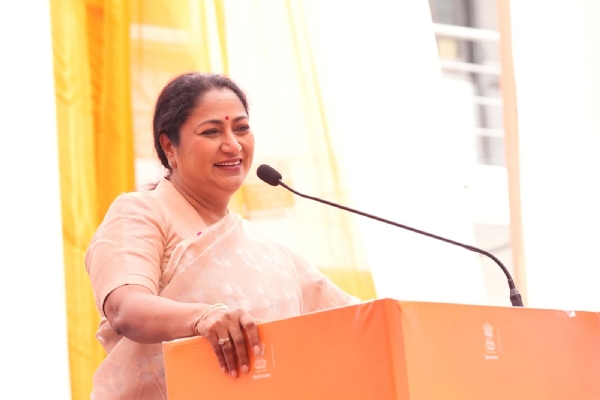
New Delhi, 16 August (H.S.): The Delhi government is set to introduce a modern e-Cabinet system aimed at making the functioning of the state Cabinet more paperless, secure, efficient and transparent. Chief Minister Rekha Gupta held detailed discussions with experts from the National Informatics Centre (NIC) as part of the initiative.
During the meeting, discussions focused on developing a digital platform through which the entire process related to Delhi government Cabinet meetings could be managed electronically, reducing dependence on physical documents and speeding up decision-making.
In a statement issued on Sunday, the Chief Minister said the effective use of technology in governance and administration had become essential. She said the Delhi government was working towards a system that would simplify administrative procedures, facilitate faster decisions and enable continuous monitoring of their implementation.
Under the proposed e-Cabinet system, documents related to Cabinet meetings, including Cabinet notes, agendas, annexures, decisions and minutes of meetings, could be prepared, shared and accessed by authorised officials through a secure digital platform. This would substantially reduce dependence on paper and make the overall process more organised and efficient.
The Chief Minister said a key feature of the proposed system would be role-based digital access. Ministers, the Chief Secretary, Principal Secretaries, departmental Secretaries and other authorised officials would be able to access documents according to their respective responsibilities and requirements.
She said such controlled access would provide an additional layer of protection for confidential government information and ensure that sensitive documents were available only to authorised personnel.
The proposed system would also allow the entire process, from submission and scrutiny of Cabinet notes to their approval, circulation among concerned officials and secure preservation as official records, to be carried out digitally.
According to the Chief Minister, this would help reduce unnecessary delays and improve the speed and efficiency of administrative work.
The system could also be accessed securely through tablets during Cabinet meetings, allowing ministers and senior officials to view necessary documents instantly while deliberations are underway. This would make it easier for participants to access relevant information and support a more streamlined decision-making process.
Another significant feature would be the ability to monitor follow-up action taken by departments after Cabinet decisions are approved. Continuous tracking of implementation would help ensure that decisions are executed within the stipulated timelines while strengthening accountability across departments.
Gupta said the introduction of the digital system would largely eliminate the need for paper-based Cabinet files. It is expected to reduce the time required to process Cabinet proposals, improve transparency and accountability in government functioning, strengthen the security of confidential documents and facilitate faster implementation and monitoring of Cabinet decisions.
The system could also help reduce expenditure on printing and the physical maintenance of government documents.
During the meeting, NIC experts briefed the Chief Minister on the functioning of e-Cabinet systems already implemented in various states and shared their experiences and operational practices.
---------------
Hindusthan Samachar / Jun Sarkar

16 Aug 2026