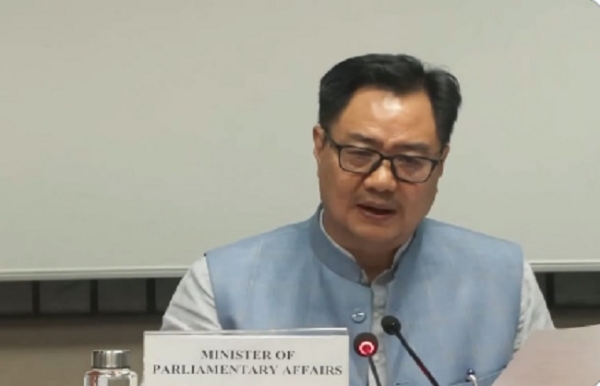
New Delhi, 13 August (H.S.): Both Houses of Parliament — the Lok Sabha and the Rajya Sabha — were adjourned sine die on Thursday, bringing the Monsoon Session to a close amid prolonged disruptions and a political deadlock. Despite the repeated disruptions, the government succeeded in securing the passage of 12 Bills during the session.
Addressing a press conference here, Parliamentary Affairs Minister Kiren Rijiju said 12 Bills were passed during the Monsoon Session, but the quality of parliamentary debate was not satisfactory because of continuous Opposition protests and disruptions. He said 11 Bills were introduced in the Lok Sabha and two in the Rajya Sabha, while the Lok Sabha passed 12 Bills and the Rajya Sabha passed or returned 12 Bills.
Rijiju said the government had remained prepared for debate and was willing to respond to questions raised by the Opposition, but alleged that the Opposition chose to avoid discussions. The Lok Sabha recorded productivity of 19 per cent, while the Rajya Sabha’s productivity stood at 39 per cent. Although the Lok Sabha was repeatedly disrupted, some Opposition members participated in debates in the Rajya Sabha despite walkouts by certain Opposition parties.
During the session, the Foreign Contribution (Regulation) Amendment Bill, 2026, was referred by the Lok Sabha to a Joint Parliamentary Committee (JPC). The Opposition had demanded that the Bill be withdrawn. Parliament also passed the Public Examinations (Prevention of Unfair Means) Amendment Bill, 2026, which provides for stringent punitive action in cases involving examination paper leaks. This was the only Bill to be discussed in the Lok Sabha, while the remaining Bills were passed without debate.
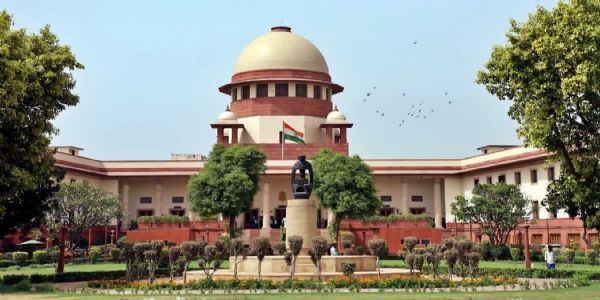
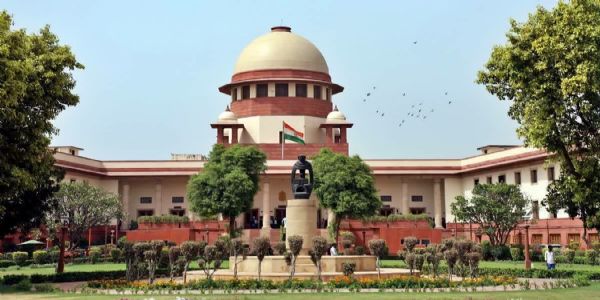
Other major legislative measures cleared during the Monsoon Session included the Prevention of Insults to National Honour (Amendment) Bill, 2026, which seeks to accord Vande Mataram a status of respect similar to that accorded to the national anthem; the Supreme Court (Number of Judges) Amendment Bill, 2026, aimed at increasing the sanctioned strength of Supreme Court judges; and the Kerala (Name Change) Bill, 2026, providing for the state to be officially renamed Keralam.
Other Bills passed during the session included the Registration of Births and Deaths (Amendment) Bill, 2026; the Appropriation (No. 3) Bill, 2026; the Micro, Small and Medium Enterprises Development (Amendment) Bill, 2026; the Bankers’ Books Evidence Bill, 2026; the Taxation and Other Laws (Amendment) Bill, 2026; the National Cooperative Development Corporation (Amendment) Bill, 2026; the Tribunals Reforms Bill, 2026; and the Mines and Minerals (Development and Regulation) Amendment Bill, 2026.
Rijiju said Opposition parties had traditionally engaged with the government through discussions, but alleged that the current Opposition was avoiding debate despite being in Opposition. He described the session as satisfactory in terms of legislative output, but disappointing in terms of the quality of parliamentary discussion.
The Parliamentary Affairs Minister also said that merely raising slogans and displaying placards as a form of protest was not appropriate in a parliamentary democracy. He expressed particular concern that newly elected MPs did not get adequate opportunities to participate in meaningful debates and discussions.
Rijiju expressed hope that all political parties would engage in introspection and extend greater cooperation during the Winter Session, leading to more meaningful and constructive parliamentary proceedings.
The Monsoon Session of Parliament began on July 20 and concluded on August 13 with both Houses being adjourned sine die. The session comprised 19 sittings of Parliament.
---------------
Hindusthan Samachar / Jun Sarkar