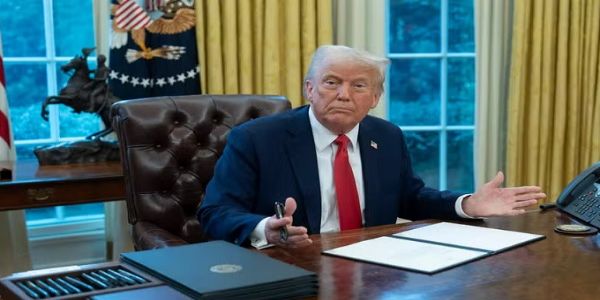
Washington, 01 August (H.S.): US President Donald Trump has reportedly directed the American military to prepare a fresh round of strikes against Iran that could begin as early as this weekend, according to a report published by The Wall Street Journal, citing senior US officials familiar with the matter.
The report said the proposed military operation is intended to increase pressure on Tehran and force the Iranian leadership back to the negotiating table amid deteriorating diplomatic relations and continuing hostilities in the region.
Speaking during a Cabinet meeting at Camp David on Friday, President Trump signalled the possibility of intensified military action, stating that the United States would respond forcefully to Iran's recent actions.
We'll be hitting them very hard, Trump said, adding that continued pressure would eventually compel Iran to reconsider its position.
Separately, CBS News reported that the United States is also considering strikes on Iran's energy infrastructure, including electricity generation facilities and oil refineries. However, international legal experts and human rights organisations have warned that deliberate attacks on civilian infrastructure could raise serious concerns under international humanitarian law and may amount to potential war crimes if civilian facilities are intentionally targeted.
The reports immediately affected global energy markets. Benchmark West Texas Intermediate (WTI) crude oil futures rose above 86 US dollars per barrel in post-settlement trading as investors reacted to the prospect of a broader regional conflict and potential disruptions to global energy supplies.
Responding to the reports, White House Press Secretary Karoline Leavitt said Iran would continue to face consequences until it engaged in what President Trump considers meaningful negotiations.
Although President Trump has previously issued strong military warnings before opting for diplomatic alternatives, reports suggest the current conflict has placed considerable strain on US military resources, particularly advanced air defence interceptor systems used to protect American forces and strategic installations.
The latest developments come against the backdrop of an escalating conflict that began on February 28 following joint military operations by the United States and Israel against Iranian-linked targets. Since then, the confrontation has widened across the region, significantly increasing geopolitical instability.
Iran subsequently closed the Strait of Hormuz, one of the world's most critical maritime energy corridors, disrupting shipments of crude oil, liquefied natural gas and fertilisers. Iranian missile and drone attacks targeting strategic locations in the Gulf region have further intensified regional security concerns.
The conflict expanded further this week after two liquefied natural gas carriers were reportedly struck by drones at Egypt's Damietta Port, raising fears over the security of international shipping routes and global energy supplies.
The prolonged crisis has contributed to rising oil prices, increasing fuel and transportation costs, and renewed concerns about inflation in several economies. The economic impact has also become a major political issue in the United States ahead of the congressional midterm elections scheduled later this year.
Meanwhile, diplomatic relations between Washington and Tehran remain deeply strained. Iranian officials continue to accuse the United States of failing to honour previous commitments, while President Trump has publicly expressed diminishing confidence in negotiations, accusing Tehran of misrepresenting its intentions.
---------------
Hindusthan Samachar / Jun Sarkar
01 Aug 2026