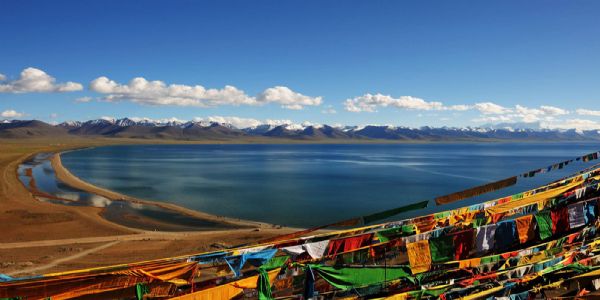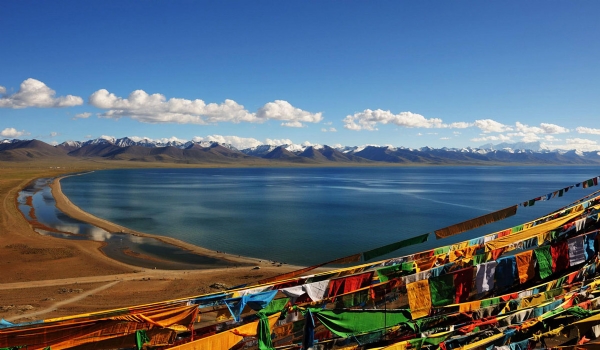
Kolkata, 31 July (HS): Perched at 4,718 metres above sea level, Namtso is not only one of the world's highest large saltwater lakes but also a sacred pilgrimage destination, a haven for wildlife, and a key site for climate research.
Nestled about 240 kilometres northwest of Lhasa in the Tibet Autonomous Region, Namtso is far more than a spectacular alpine lake. Revered as one of Tibet's holiest water bodies, it occupies a unique place at the intersection of natural beauty, Buddhist spirituality, ancient culture, and modern scientific research.
Known in Tibetan as Gnam Tso, meaning Heavenly Lake, Namtso has for centuries drawn pilgrims seeking spiritual merit, travellers captivated by its breathtaking landscapes, and scientists studying the fragile ecology of the Tibetan Plateau.
------
One of the World's Highest Great Saltwater Lakes
Situated at an elevation of approximately 4,718 metres (15,479 feet), Namtso ranks among the highest large saltwater lakes on Earth. Covering nearly 1,920 square kilometres, the lake stretches about 70 kilometres in length and 30 kilometres in width, with a maximum depth of roughly 125 metres.
Its waters are primarily replenished by glacial melt from the majestic Nyenchen Tanglha Mountains and seasonal streams flowing into the basin. The lake's vivid turquoise waters, framed by snow-capped peaks and expansive grasslands, create one of Asia's most dramatic high-altitude landscapes. During winter, the lake freezes into an immense sheet of ice, transforming the region into a striking frozen wilderness.
------
A Sanctuary for Wildlife
Despite its harsh climate and thin mountain air, the Namtso region supports remarkable biodiversity.
The surrounding grasslands are home to iconic species such as the Tibetan antelope (chiru), kiang (Tibetan wild ass), blue sheep, Himalayan marmot, and Tibetan fox. The wetlands around the lake also provide critical breeding and resting habitats for migratory birds, including the bar-headed goose, ruddy shelduck, brown-headed gull, and the endangered black-necked crane, one of the Tibetan Plateau's most celebrated bird species.
------
Home of the Nomadic Drokpa
For generations, Namtso has been the homeland of the Drokpa, Tibet's traditional nomadic pastoralists. Their livelihoods depend largely on herding yaks, sheep, and goats, while their culture remains deeply connected to the rhythms of the plateau.
Traditional black yak-hair tents, butter tea, handwoven woollen garments, and centuries-old pastoral traditions continue to define the region's distinctive cultural landscape.
-----
A Sacred Destination in Tibetan Buddhism
Namtso is regarded as one of the four sacred lakes of Tibetan Buddhism. Pilgrims believe that praying at the lake and completing its circumambulation, known as the Namtso Kora, brings spiritual purification and accumulates religious merit.
The pilgrimage route, measuring approximately 70 to 80 kilometres, is typically completed over several days. Some devotees undertake the journey by performing full-body prostrations throughout the entire circuit, an extraordinary demonstration of faith and endurance.
According to the Tibetan lunar calendar, the Year of the Sheep, which occurs once every twelve years, holds exceptional religious significance. During this sacred period, thousands of pilgrims gather at Namtso to perform rituals and complete the holy circuit.
-------
Spiritual Roots Beyond Buddhism
Long before the spread of Buddhism, Namtso was already revered by followers of the indigenous Bon religion. Many of these ancient beliefs were later incorporated into Tibetan Buddhist traditions.
Nearby Mount Nyenchen Tanglha is regarded as the divine consort of the lake in Tibetan spiritual tradition, symbolising the sacred union of mountain and water.
Scattered across the lake's rocky islands are caves and ancient hermitages where Buddhist monks historically spent months in deep meditation. Historical accounts suggest that many practitioners remained isolated on these islands throughout the summer, returning to the mainland only after the lake froze during winter.
-----
A Natural Laboratory for Climate Science
Beyond its spiritual importance, Namtso has emerged as one of the Tibetan Plateau's most significant centres for environmental research.
Scientists at the Namtso Multisphere Observation and Research Station conduct long-term studies on hydrology, glaciology, climate change, and ecosystem dynamics. Their research indicates that rising temperatures, shifting precipitation patterns, and the accelerated melting of Himalayan glaciers are already influencing the lake's water levels and the broader hydrological systems of the Tibetan Plateau.
Because the plateau plays a crucial role in supplying water to many of Asia's major rivers, changes observed at Namtso provide valuable insights into regional and global climate trends.
------
Balancing Tourism and Conservation
Improved infrastructure has made Namtso increasingly accessible to visitors in recent years. Tashi Dor Peninsula has become the principal gateway for tourists seeking to experience the lake's spectacular scenery and spiritual atmosphere.
However, growing tourism has also brought new environmental challenges, including waste management, habitat disturbance, and pressure on the fragile high-altitude ecosystem. Regional authorities have introduced a range of conservation measures aimed at balancing tourism development with ecological protection.
A Living Symbol of Tibet's Natural and Cultural Heritage
Namtso is far more than a scenic destination. It represents the enduring relationship between nature, spirituality, traditional nomadic culture, and environmental stewardship on the Tibetan Plateau.
Whether viewed as a sacred pilgrimage site, a biodiversity hotspot, or a natural observatory for climate science, the Heavenly Lake continues to inspire pilgrims, researchers, photographers, and travellers from around the world. Its timeless beauty and profound cultural significance make Namtso one of the most extraordinary landscapes in Asia.
Hindusthan Samachar / Satya Prakash Singh